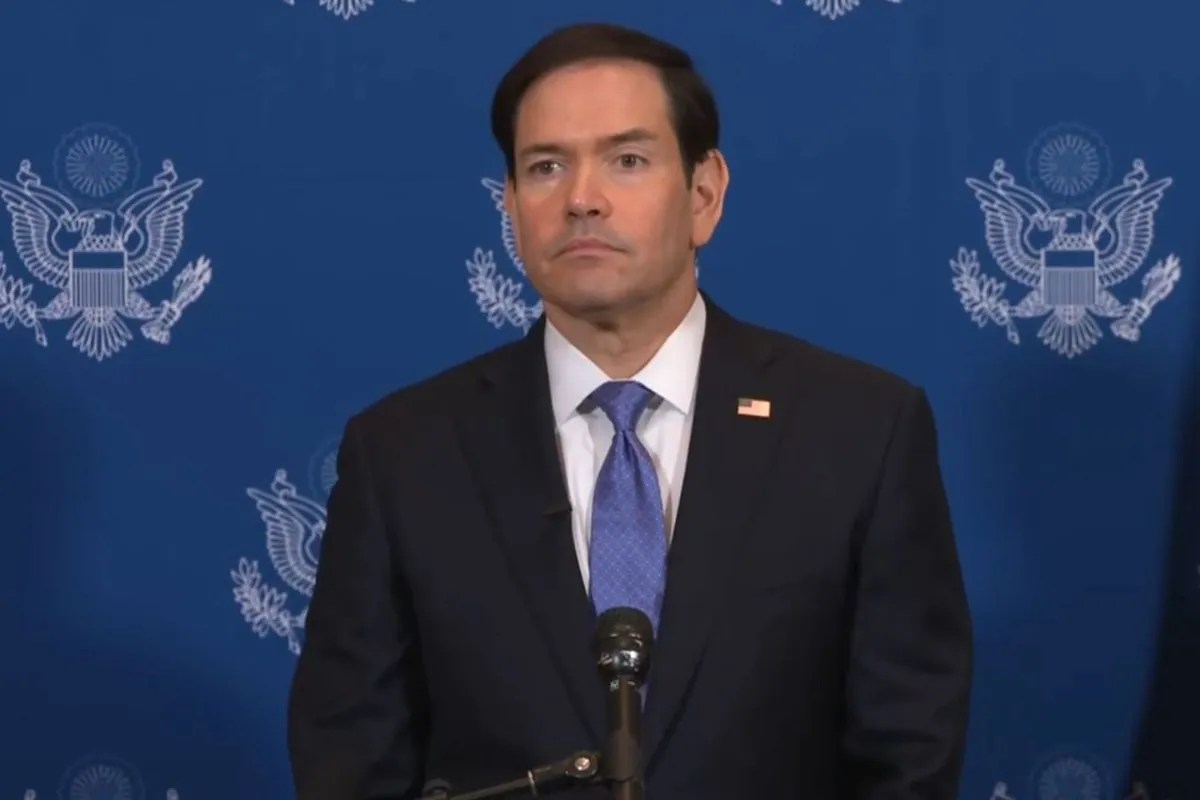
When a photojournalist holding American citizenship is assaulted during an altercation in the occupied West Bank, diplomatic outrage arrives on a predictable script—yet the underlying escalation mechanics rarely get examined. Coverage centered on U.S. Secretary of State Marco Rubio expressing alarm and warning Israeli authorities over violence involving an American reporter often stops at surface drama: anger in Washington, pressure on Jerusalem, and a volatile conflict. That framing treats an incident as a self-contained diplomatic flare-up rather than a symptom of structural friction across territorial control, press access, and alliance management.
To understand what actually drives these confrontations—and where diplomatic leverage hits hard limits—requires separating verified facts from strategic inference. Known facts include public statements by U.S. officials condemning violence against an American photojournalist in the West Bank, calls for investigation and accountability, and diplomatic requests for information from the embassy in Jerusalem. What remains an educated hypothesis is how strongly rhetorical warnings alter on-the-ground enforcement patterns over a multi-month horizon without binding operational penalties attached.
This analysis maps the structural flaws in conventional coverage of such episodes, breaks down the incentives shaping each actor's behavior, examines the causal chain linking localized attacks to broader regional instability, and outlines a concrete strategic approach for managing risk without pretending rhetoric alone solves structural disputes.
Why Surface Headlines Miss the Strategic Mechanics
Standard breaking-news coverage of diplomatic warnings over attacks on journalists typically relies on three shortcuts that obscure how international pressure works in contested territory.
The first shortcut is treating diplomatic condemnation as an automatic enforcement mechanism. A senior official calling an attack disturbing or demanding accountability signals political priority and creates domestic or media pressure, but verbal warnings do not directly police a disputed hillside or compel local prosecution on their own. Between a press briefing and a courtroom verdict sit jurisdictional friction, evidentiary hurdles, command-and-control realities, and competing political incentives.
The second shortcut is flattening complex local clashes into a single bilateral quarrel between Washington and Jerusalem. In the West Bank, incidents frequently erupt around land disputes, agricultural seasons such as olive harvests, checkpoints, or settler-Palestinian friction. When a foreign journalist is caught in or targeted during such an event, citizenship instantly elevates the story in Washington's diplomatic calculus, even when the local trigger began as a territorial or communal confrontation.
The third shortcut is assuming that shared strategic interests guarantee uniform restraint. Governments routinely balance multiple priorities at once: avoiding a wider West Bank crisis, preserving alliance cohesion, managing regional flashpoints elsewhere, and responding to domestic constituencies. A warning issued to prevent escalation coexists with broader security and political calculations that constrain how far any outside actor is willing to push.
The Four Pillars of Escalation Risk in the West Bank
Analyzing incidents involving journalists in the West Bank becomes far clearer when broken into four structural pillars rather than treated as isolated acts of bad behavior.
1. Jurisdictional Ambiguity and Enforcement Gaps
Authority and policing in the West Bank are fragmented across administrative zones, military oversight, and civilian governance. When violence breaks out in rural or contested areas, rapid response and credible follow-through face friction that does not exist inside a standard municipal jurisdiction. Delays in identifying perpetrators, gathering verifiable footage or witness accounts, and bringing cases to trial widen the gap between official pledges and visible consequences.
2. Information Chokepoints and Witness Vulnerability
Journalists serve as independent verification nodes in environments where competing narratives are intense and official accounts often diverge. When reporters are assaulted, intimidated, or obstructed, the immediate cost is physical harm to the individual; the secondary cost is an information deficit. Fewer independent eyes on the ground make it harder for diplomats, international observers, and the public to reconstruct sequence, intent, and responsibility—increasing the odds that rumors or partisan claims fill the vacuum.
3. Citizenship as a Diplomatic Multiplier
Attacks on local residents or non-citizen observers often generate brief international concern before fading from major foreign capitals' daily agendas. When the injured reporter holds U.S. citizenship, the incident crosses an internal threshold for consular attention, embassy reporting cables, and senior executive comment. That multiplier raises the political stakes in Washington, forcing officials to weigh visible firmness against the desire to avoid an open rupture with an ally.
4. Spillover Sensitivity Across Adjacent Fronts
Washington's stated desire to prevent a new crisis in the West Bank reflects a broader portfolio management problem. When policymakers are already tracking military tensions, maritime risks, or diplomatic negotiations elsewhere in the Middle East, an uncontained flare-up in the West Bank acts as a compounding distraction. Every localized clash carries the risk of drawing in security forces, triggering retaliatory cycles, and complicating broader regional de-escalation.
Causal Chains Conventional Coverage Overlooks
A rigorous strategy look at this issue requires tracing second- and third-order effects that headline summaries rarely connect.
Consider what happens when an assault on a journalist goes unpunished or is addressed only through general appeals for calm. First, perpetrators and aggressive actors face lower perceived near-term cost, which can encourage riskier behavior during future flashpoints. Second, journalists and camera crews operating in high-friction areas must make harder safety calculations—pulling back from volatile spots or altering how they cover events—which reduces external visibility precisely when objective documentation matters most.
Another overlooked causal link runs from embassy fact-finding to diplomatic credibility. When senior officials state that they are awaiting detailed reporting from the embassy or urging a crackdown, expectations are set publicly. If subsequent investigations stall or produce minimal visible accountability, critics argue that warnings lack teeth; conversely, if allies push back hard on enforcement, diplomats face a choice between quiet compromise and public escalation.
There is also a domestic political feedback loop inside both the United States and Israel. In Washington, attacks on American citizens draw scrutiny from press freedom advocates, lawmakers, and voters across the political spectrum, while foreign policy leaders manage broader strategic alignments. In Israel, coalition dynamics, security doctrines, and domestic debates over West Bank policy shape how the government responds to external pressure. Treating either capital as a monolith misses the internal bargains driving every public statement.
How Diplomatic Leverage Actually Operates
Anyone evaluating U.S. or international responses to journalist assaults in the West Bank should look past adjectives like "angry" or "stern" and track concrete operational levers.
- Information and Verification: Embassy cables, diplomatic inquiries, and requests for factual briefings establish what Washington officially treats as verified. Watch whether officials cite specific investigative steps or keep remarks focused on general concern.
- Accountability Benchmarks: Public calls for investigation, arrest, and prosecution create measurable yardsticks. Real leverage shows up when external actors track concrete outcomes—identifications, charges, or disciplinary actions—rather than accepting generic assurances.
- Escalation Management: Statements emphasizing the avoidance of a broader West Bank crisis reveal a core objective: containment. Washington frequently uses public warnings as an early-braking signal intended to stop a localized incident from spiraling into wider instability.
- Bilateral Linkage: The strongest test of diplomatic resolve is whether press safety and rule-of-law concerns remain siloed in press remarks or become linked to broader security, diplomatic, or political discussions.
Practical Risk Controls and Their Limits
For news organizations, analysts, and policymakers dealing with West Bank volatility, operational discipline matters more than outrage.
Newsrooms deploying correspondents and photojournalists into contested areas should treat physical protection, de-escalation protocols, clear identification, and rapid extraction planning as baseline operating requirements—never optional extras. Relying on citizenship or press credentials alone as a shield in volatile crowds is a dangerous assumption; clear sightlines, buddy systems, and pre-agreed retreat triggers reduce exposure before violence peaks.
Policymakers and analysts, meanwhile, should apply strict evidentiary discipline. Distinguishing eyewitness accounts, video evidence, official statements, and unverified claims prevents premature conclusions during fast-moving incidents. At the same time, recognizing the limits of outside pressure is essential for realistic forecasting: no external government can single-handedly resolve deep territorial disputes or guarantee instant local law enforcement in contested terrain. Diplomatic warnings can raise political costs and shape behavior at the margins, but they are not a substitute for durable security and political arrangements on the ground.
Strategic Recommendation
For decision-makers and analysts tracking West Bank flashpoints, the highest-value move is to shift from headline sentiment tracking to accountability and containment auditing. Rather than judging a diplomatic response by how sharp the initial condemnation sounds, track three observable indicators over the next 30 to 90 days: whether specific investigative or prosecutorial steps are publicly confirmed regarding attacks on journalists, whether independent reporting access and safety conditions in high-friction areas stabilize or deteriorate, and whether containment efforts prevent localized clashes from triggering broader West Bank escalation. Pairing disciplined verification with clear-eyed tracking of those three benchmarks provides a far sharper read on real leverage than diplomatic rhetoric alone.