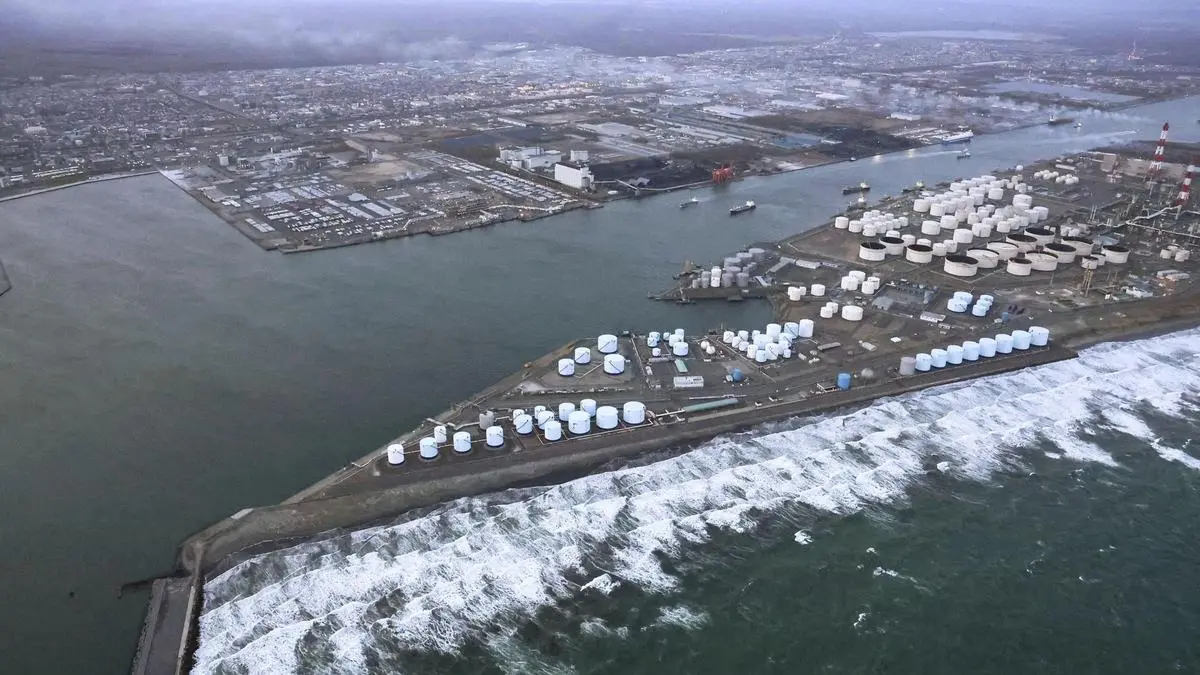
In the windowless briefing rooms of the Pentagon, the maps of the Middle East look like a tangled web of red and blue arteries. To an Admiral, these aren't just geographical coordinates. They are the pulse points of global survival. When retired Rear Admiral John Kirby or his contemporaries look at the Persian Gulf, they don't see a body of water; they see a pressure cooker with a malfunctioning valve.
The strategy currently unfolding on the global stage regarding Iran isn’t a standard military maneuver. It is an exercise in psychological and economic strangulation that one might call a masterclass in leverage. For years, the approach to Tehran was a seesaw of diplomacy and half-measures. But the current architecture of "Maximum Pressure" operates on a different logic. It assumes that a regime’s survival instinct is its only predictable trait. Recently making headlines in this space: The Myth of the Nuclear Retreat and Why Chaos is Trump's Only Real Currency.
Consider a merchant in a small stall in Tehran. Let’s call him Ahmad. Ahmad doesn't care about enriched uranium or the nuances of the JCPOA. He cares that the price of eggs has tripled in a month. He cares that his daughter’s medicine, once easily found, is now a luxury item traded in hushed tones. Ahmad is the human face of a macroeconomic war. He is the "concede" in "concede defeat."
The brilliance of the current plan, as articulated by military minds watching the board, lies in its refusal to fire a single kinetic shot while achieving the effects of a total blockade. More information regarding the matter are explored by The New York Times.
The Mathematics of Desperation
Money is the oxygen of any revolutionary movement. Without it, the lungs of the IRGC begin to burn. The strategy is built on a simple, brutal equation: total revenue minus the cost of regional influence. By driving Iran’s oil exports toward zero, the United States isn't just emptying a bank account. It is forcing a choice.
Do you fund the Hezbollah rockets in Lebanon? Or do you keep the lights on in Isfahan?
The Iranian leadership has spent decades mastering the art of "strategic patience." They are experts at waiting out Western election cycles. However, the current iteration of American policy has introduced a variable they didn't account for: a total indifference to the old rules of engagement. By labeling the IRGC a terrorist organization and targeting the shadow banking systems that keep the regime afloat, the U.S. has moved the front line from the desert to the digital ledger.
The Admiral’s perspective is that this isn't just about toughness. It is about clarity. Iran has long operated in the "gray zone"—that murky area where they can cause chaos through proxies while maintaining plausible deniability. The current plan removes the gray. It says, "We see the hand behind the proxy, and we will cut off the blood supply to that hand."
The Silent Corridor
If you were to stand on the deck of a Carrier Strike Group in the Strait of Hormuz, the tension is a physical weight. You can feel it in the salt air. Every fast-attack craft that buzzes the hull is a test of nerves. But the real battle is happening in air-conditioned offices in Washington and the secret exchanges of Dubai.
The plan is often described as "brilliant" because it utilizes the global dominance of the U.S. dollar as a weapon system. When the U.S. Treasury tells a foreign bank that they can either do business with Iran or do business with the United States, it isn't a choice. It's an ultimatum. This is the invisible hand of the market turned into a fist.
Hypothetically, imagine a European shipping magnate. He wants to move Iranian crude. He has the ships, the crew, and the buyers. But the moment his vessel touches Iranian oil, his entire global fleet becomes radioactive. No insurance company will touch him. No port will let him dock. The risk outweighs the reward by a factor of a thousand.
This is how you win a war without a declaration. You make the status quo unbearable.
The Crack in the Monolith
Inside Iran, the narrative of "resistance" is fraying at the edges. It is easy to shout slogans when the currency is stable. It is much harder when your life savings have evaporated. The brilliance of the strategy isn't found in the sophistication of the sanctions, but in the timing.
We are witnessing a generational shift. The youth of Tehran are connected to the world via VPNs and satellite dishes. They see the prosperity of their neighbors and compare it to the isolation of their own lives. When the U.S. intensifies the pressure, it isn't just hoping for a change in the Supreme Leader’s heart. It is betting on the inevitability of internal friction.
The Admiral notes that the goal isn't necessarily a change of government, but a change of behavior. A regime backed into a corner has two choices: lash out or negotiate. Lashing out is dangerous, but in the modern era of precision surveillance and rapid response, it is often suicidal. Negotiation, therefore, becomes the only logical exit ramp.
The tragedy of this "brilliant" plan is the collateral damage. The Ahmads of the world are caught in the gears of history. They are the pawns in a grand geopolitical chess match where the grandmasters are thousands of miles away. It is a cold reality. It is a necessary reality, according to those who believe a nuclear Iran is the ultimate catastrophe.
The End of the Long Game
We are approaching a tipping point. The reserves are running dry. The proxies are starting to wonder if the checks will clear. The "Maximum Pressure" campaign is no longer a theory; it is a lived experience for 85 million people.
Critics argue that this strategy is a gamble. They suggest that a desperate regime is an unpredictable one. But the military mind views the world through the lens of capabilities and intentions. If you remove the capability, the intention becomes irrelevant. You can want to destabilize the region all you like, but if you can’t pay your soldiers, your desires are just ghosts.
The board is set. The pieces are moving. The silence from Tehran isn't a sign of peace; it is the sound of a regime holding its breath, waiting for a reprieve that may never come.
In the end, the most effective weapon in the American arsenal isn't the Tomahawk missile or the F-35. It is the ability to turn off the world’s participation in another country's existence. It is a slow, agonizing, and ultimately effective way to force a concession.
The Admiral knows. The merchants in Tehran know. And soon, the history books will record whether the pressure was enough to break the steel or if the valve simply exploded.
The shadow of a single aircraft carrier on the horizon is a powerful image, but the ledger of a frozen bank account is what finally brings a nation to its knees. Over the next few months, the world will watch as the invisible hand closes its grip, leaving no room for anything but a surrender to reality.