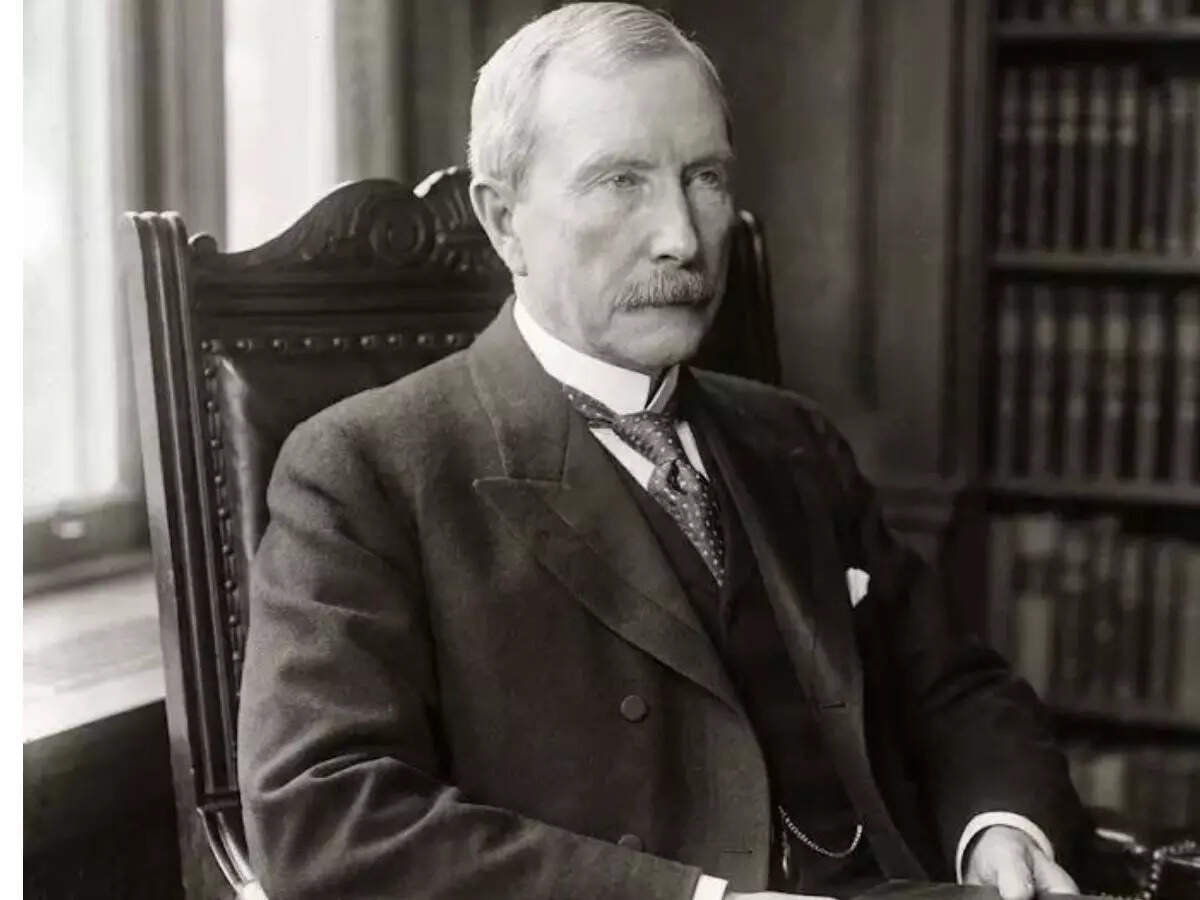
John D. Rockefeller did not build the University of Chicago out of theological devotion or civic sentimentality. When the Standard Oil magnate famously declared the institution the best investment he ever made, he was evaluating higher education through the cold, calculating lens of a corporate raider looking for capital efficiency.
The transaction succeeded because Rockefeller refused to treat philanthropy as a unilateral handout. By transforming his wealth into conditional seed capital, he forced local markets to assume structural risk, engineered an aggressive governance framework that stripped away his own control, and established a blueprint for the modern American research university.
The Syndicate of Risk
Standard Oil grew to dominance by crushing inefficiencies and consolidating fragmented markets. When Rockefeller turned his attention to higher education in the late 1880s, he found a sector plagued by fiscal mismanagement and regional parochialism. The original University of Chicago had collapsed into bankruptcy in 1886, a public humiliation that horrified the Baptist educational elite.
Rockefeller saw an opening not to salvage a failure, but to build a corporate entity from the wreckage.
His initial 1889 pledge of $600,000 carried a ruthless stipulation. The American Baptist Education Society had to raise a matching $400,000 from local Chicago donors within a strict timeframe. If the community failed to validate the venture with its own capital, Rockefeller’s money would vanish.
This was not a gift. It was a leveraged buyout of academic prestige.
By demanding matching funds, Rockefeller forced local industrial barons like department store magnate Marshall Field, who donated the land, to share the financial risk. This syndication of capital ensured that the university possessed a diversified, highly motivated local base of stakeholders from day one. It prevented the institutional complacency that typically rots organizations dependent on a single, bottomless wallet.
Structural Ironclad Disengagement
The most radical aspect of Rockefeller’s investment strategy was his deliberate institutional erasure. Traditional nineteenth-century philanthropy demanded immortality. Donors slapped their names on facades, dictated curricula, and treated trustees as personal clerks.
Rockefeller did the exact opposite. He insisted that his name never appear on a single university building.
He understood a fundamental corporate truth. Absolute ownership breeds absolute vulnerability. Had the school been branded a Rockefeller monopoly, it would have inherited the fierce political enmity, antitrust scrutiny, and public labor fury targeted at Standard Oil.
Furthermore, total control would have stifled institutional agility. Rockefeller surrendered governance to a localized board of trustees led by Martin A. Ryerson, entirely divesting himself of operational veto power.
This hands-off architecture allowed the university’s first president, William Rainey Harper, to aggressively build an academic powerhouse without waiting for permission from New York. Harper combined the traditional English undergraduate college with the rigorous, elite graduate research framework of German universities. He raided rival faculties across the country, offering unprecedented salaries and complete academic freedom.
Because the founder had intentionally legally blindfolded himself to the daily operations, the faculty operated without fear of corporate or ideological censorship. This structural autonomy attracted world-class thinkers who would have otherwise shunned a billionaire’s vanity project.
Re-Engineering the Capital Loop
The University of Chicago did not survive on its initial endowment. It thrived because of how Rockefeller structured subsequent tranches of capital.
Between 1890 and 1910, Rockefeller poured roughly $35 million into the institution. However, each injection functioned as a matching grant or a specific performance-based milestone. The university administration could not budget based on anticipated generational wealth; they had to constantly demonstrate operational efficiency to unlock the next level of funding.
Consider the baseline mathematics of the university's rapid expansion.
| Year | Rockefeller Total Contributions | Total Institutional Capitalization | Faculty Size |
|---|---|---|---|
| 1891 | $600,000 | $1,000,000 | 120 |
| 1896 | $7,400,000 | $11,500,000 | 190 |
| 1910 | $35,000,000 | $53,000,000 | 320 |
This approach fundamentally altered the organizational behavior of the academy. It forced the university to run on a multi-quarter system, keeping the physical plant operational year-round to maximize tuition revenue and facility utilization. It treated the production of knowledge as a tangible commodity, prioritizing the physics and chemistry departments because their real-world applications drove industrial interest and additional corporate partnerships.
The system was not without its flaws. Harper’s insatiable appetite for growth frequently pushed the university to the brink of deficit, forcing tense showdowns with Rockefeller’s primary philanthropic advisor, Frederick T. Gates. Gates viewed Harper’s academic spending sprees with deep suspicion, acting as the disciplined chief financial officer to Harper's visionary chief executive. This creative friction between academic ambition and fiscal austerity defined the institution's golden era.
The Yield on Applied Intellectual Capital
The final metric of any investment is its long-term yield. By treating his philanthropy as a venture capital fund rather than a monument to his ego, Rockefeller secured a compounding return of global influence.
The institutional framework he financed yielded the first self-sustaining nuclear chain reaction, the discovery of REM sleep, the creation of Carbon-14 dating, and the foundation of the dominant free-market economic school of the twentieth century.
Had Rockefeller built a standard, compliant corporate college, its intellectual output would have been stifled by the rigid boundaries of his personal worldview. By investing in an autonomous system designed to outlive and outgrow its founder, he created an engine of intellectual disruption that altered global geopolitics and industrial manufacturing.
True capital efficiency is achieved when the creator becomes obsolete, leaving behind an independent machine that generates immense, self-sustaining societal value long after the initial seed capital has been spent.