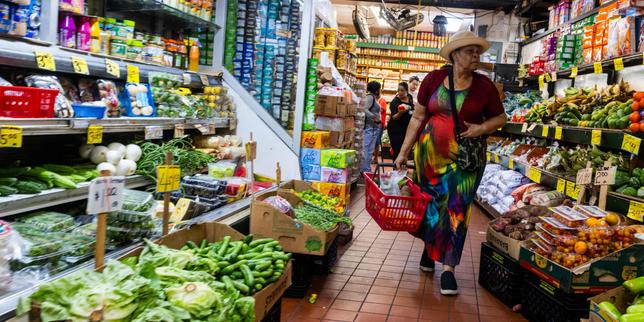
The fluorescent lights of the grocery store on the outskirts of Cleveland do not flatter anyone, least of all Sarah.
She stood in aisle four, staring at a carton of eighteen large brown eggs. The price tag read $4.89. Two years ago, she barely looked at the price of eggs. Today, she calculated the cost per egg in her head. She compared it to the price of a gallon of milk, then to the remaining balance on her debit card. Recently making headlines lately: The Strait of Hormuz Cost Function Decoding the United States Toll Reversal.
This is where macroeconomics actually lives. It does not live in the clean, air-conditioned offices of the Federal Reserve in Washington. It does not live in the talking points of cable news anchors. It lives in the quiet, anxious pauses of ordinary people standing in front of grocery shelves, trying to decide if they can afford both real butter and fresh berries in the same week.
For nearly three years, those pauses have been filled with a low-grade, constant dread. More details into this topic are explored by NPR.
But something shifted in June.
The numbers released by the Bureau of Labor Statistics showed that the Consumer Price Index actually dipped. Not just slowed down in its relentless climb, but actually ticked downward for the first time in four years. On paper, it was a fraction of a percent. In the grand theater of American politics, however, it was a seismic tremor that reshaped the entire battlefield.
The Invisible Tax on Peace of Mind
To understand why a tiny drop in June’s inflation numbers matters so much, you have to understand what inflation does to the human psyche.
Inflation is not just an economic metric. It is a psychological assault. When prices rise faster than wages, people feel like they are running on a treadmill that is slowly speeding up. You work the same hours. You do the same job. Yet, at the end of the month, your bank account is emptier. It feels like a betrayal.
Consider a hypothetical family: the Millers. Mark works in auto repair; Elena teaches at a local middle school. Together, they earn a decent living. In normal times, they are firmly middle class. But over the last few years, they found themselves making trade-offs they thought they had outgrown in their twenties.
They skipped the summer road trip. They delayed fixing the rattle in the minivan's suspension. They bought the store-brand cereal that their kids complained tasted like cardboard.
"You feel like you're failing," Mark said to me recently over a cup of black coffee. "Even when you're doing everything right."
When the June inflation data dropped, showing a 0.1% decline from the previous month and bringing the annual rate down to 3%, the reaction in Washington was instantaneous. But for the Millers, the news did not trigger a celebration. It triggered a cautious, deeply skeptical sigh of relief.
The price of gasoline had fallen. The cost of used cars was finally drifting back toward sanity. Even the relentless climb of grocery prices seemed to have hit a temporary ceiling.
But the damage of the last three years had already been done. The higher prices are baked into the system. A cooling of inflation does not mean things are getting cheaper; it simply means they are stopping their frantic climb.
The Political Calculus of Cooling
In the high-stakes arena of the upcoming presidential election, these fractions of a percent are weaponized instantly.
For the incumbent administration, the June report was the long-awaited proof that their policies were working. They could finally point to a tangible downshift in the cost of living. They hoped this would translate into a surge of confidence from voters who had spent years punishing them in the polls for the price of bacon and gasoline.
But politics is rarely that straightforward.
For Donald Trump and his campaign, the cooling inflation numbers presented a complex rhetorical challenge—and, paradoxically, a strange kind of breathing room.
Throughout the campaign, the Trump strategy had been simple and highly effective: point at the grocery bill and blame the current administration. It was a visceral, highly relatable message. When inflation began to show genuine signs of tempering, that primary line of attack risked losing some of its sting.
Yet, the timing of the June cool-down offered a different kind of opportunity.
With the Federal Reserve now widely expected to cut interest rates in the autumn, the economic mood was shifting. For a challenger campaign, a suddenly stabilizing economy can be a double-edged sword. On one hand, it deprives them of the "disaster" narrative. On the other hand, it reduces the sheer desperation of the electorate, allowing voters to lift their heads from the daily struggle of survival and look at the broader choices before them.
Some political strategists argued that a calmer economic backdrop actually favored Trump. When voters are in a state of acute panic over their finances, they can be unpredictable, clinging to whatever stability they can find. But when the immediate panic subsides, they feel safer making a change. They have the mental bandwidth to contemplate a different direction.
The political battle is no longer about who caused the fire. It is about who can best rebuild the house now that the embers are finally cooling.
The Federal Reserve’s High-Wire Act
Behind the political theater lies the quiet, deliberate calculation of Jerome Powell and the Federal Reserve.
For two years, the central bank has been bludgeoning the economy with high interest rates. It was a blunt instrument. By making it expensive to borrow money for a house, a car, or a business expansion, they sought to cool demand. They wanted to slow the economy down just enough to stop prices from skyrocketing, without sending millions of people into unemployment.
It was an incredibly dangerous game. Walk too slow, and inflation becomes permanent. Run too fast, and you plunge the nation into a deep recession.
For months, the Fed resisted calls to lower rates. They wanted "greater confidence" that inflation was truly on a path back to their 2% target.
June gave them that confidence.
The cooling was not a fluke. It was the result of supply chains finally healing, housing costs beginning to plateau, and consumers simply refusing to pay exorbitant prices anymore. The American consumer, long the engine of the global economy, had finally started to say no.
This shift has profound consequences for anyone trying to buy a home.
In cities across the country, young couples have been locked out of the housing market by a toxic combination of high prices and mortgage rates hovering near 7%. They were stuck in a rental trap, watching their dreams of homeownership drift further out of reach.
If the Fed begins to cut rates in the coming months, those mortgage rates will edge downward. The frozen housing market might finally begin to thaw.
But even this hope is tinged with anxiety. If rates drop too quickly, a rush of buyers could flood the market, driving home prices even higher and erasing any gains from lower borrowing costs.
There are no easy victories in this economy. Every solution carries the seed of a new problem.
The Reality on the Ground
Back in the Cleveland grocery store, Sarah finally placed the carton of eggs into her cart. She added a loaf of whole wheat bread and a block of cheddar cheese.
She did not know the latest CPI percentage. She did not care about the Federal Reserve's dot plot or the political spin coming out of campaign headquarters. She only knew that her weekly grocery bill, which had ballooned to nearly $200 for her small family, was starting to stabilize.
"It doesn't feel like things are getting better," she whispered, looking at her receipt. "It just feels like they've stopped getting worse."
Perhaps that is the truest definition of the June economic relief. It is not prosperity. It is simply the absence of worsening pain.
For millions of Americans, that distinction is everything. It is the difference between keeping your head above water and slowly sliding under. As the political campaigns prepare for the final, brutal stretch of the election, they would do well to remember that the voters they are trying to reach are not reading the economic charts.
They are living them.
The quiet sigh of relief echoing through grocery store aisles this summer is a powerful force. Whichever candidate can truly understand that sigh—and convince the public that they have the keys to a genuine recovery—will likely find themselves holding the keys to the White House.
The data has spoken. Now, the human story begins.

