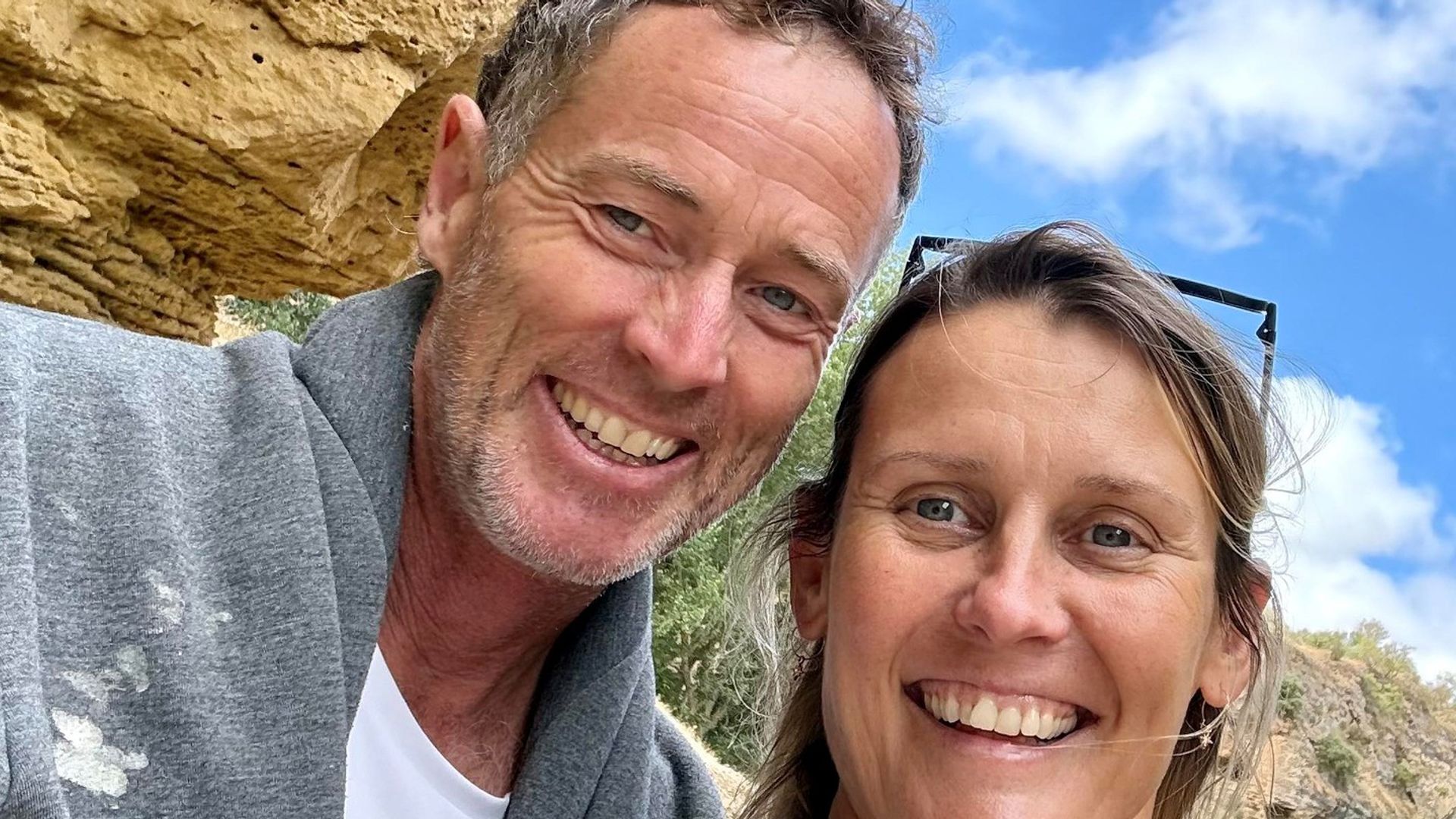
The wind in southeastern Iran carries the scent of dry clay and old stone. In January 2025, that wind was singing through the helmets of Craig and Lindsay Foreman.
They were in their fifties, a couple who had traded the quiet predictability of British middle age for the raw, unpredictable freedom of the open road. They were on an around-the-world motorcycle trip, a journey measured in chain grease, horizon lines, and the shared warmth of roadside tea. Iran was supposed to be a chapter in an adventure. They had the right papers, the licensed guides, the approved route. They had followed every rule.
But in the city of Kerman, the engine stopped.
The transition from traveler to prisoner is not a slow fade; it is a sudden, violent snap. One moment you are adjusting a rearview mirror; the next, you are looking into the cold, suspicious eyes of the state. The Iranian authorities claimed the couple were not tourists, but operatives. Spies.
They denied it. Of course they denied it. They were citizens of a country that suddenly felt very far away, caught in a system that does not require evidence to draft a conviction.
The Geometry of Isolation
To understand what has happened to Craig and Lindsay Foreman, one must understand the architecture of their captivity.
They began in Kerman, locked away in thirty days of solitary confinement. Solitary is a quiet thief. It steals your sense of time, your voice, the rhythm of your heart. When they were finally transferred to Tehran’s notorious Evin Prison, the isolation changed shape but grew no kinder.
They were split. Separate wings.
Imagine being in the same building as the person you love most, knowing they are breathing the same damp air, yet being completely unable to reach them. Evin is a place of concrete and metal. In the summer, the cells are sweltering, packed with fifty prisoners to a room. The metal bunks dig into your ribs. The air is thick with the smell of sweat, despair, and the slow decay of hope.
In February 2026, the state handed down its verdict: ten years.
Ten years for a motorcycle trip. Ten years for taking photographs of a country they wanted to understand.
When the system offers no legal escape, the body becomes the only weapon left. On May 9, 2026, Craig stopped eating. Nine days later, Lindsay joined him.
A hunger strike is not a passive act. It is a slow, agonizing declaration of war against one's own flesh. First, the gnawing hunger fades into a dull, heavy ache. Then, the body begins to consume itself. It devours its own fat, then its muscle. The mind grows foggy, lightheaded, easily bruised by the harsh light of the prison corridors. By June, their appeal was rejected. Still, they refused to eat.
They were disappearing.
The Extra Two Years
Then came July 2026.
For a man already starving, a man already facing a decade behind bars, the Iranian judiciary decided ten years was not enough. The family, watching helplessly from the UK, received the crushing news: Craig had been handed an additional two-year prison sentence.
Two more years.
In the language of international diplomacy, this is called hostage leverage. It is a calculated tightening of the screws, a message sent not to Craig himself, but to London. It is a reminder that the price of their freedom is rising, even as their physical bodies shrink to bone and shadow.
Back in the UK, Joe Bennett, Lindsay's son, lives in a different kind of prison. His is a world of silent phones, unanswered letters to the Prime Minister, and the agonizing weight of public indifference. He has watched his parents’ lives reduced to diplomatic talking points, their names spoken in brief, dry segments on the evening news.
"We are deeply concerned," the Foreign Office says, a phrase so worn by repetition that it has lost all its teeth.
Meanwhile, the communication has been cut. The phone calls that once offered a fragile thread of connection have stopped. There are no letters. There are only rumors, whispered through the prison walls, of two people wasting away in separate concrete boxes, waiting for a government that seems to have forgotten how to fight for its own.
The Ghost of the Road
Consider a hypothetical moment.
It is late afternoon in Tehran. The sun is setting, casting long, orange shadows across the courtyard of Evin Prison. In his cell, Craig Foreman lies on a thin mattress, his ribs pushing against his skin, his breath shallow. He does not hear the roar of his motorcycle anymore. He does not smell the desert wind.
He hears the heavy boots of the guards, the rattle of keys, the low, persistent hum of a city that continues to move outside the walls, entirely indifferent to his slow disappearance.
This is not a story about international law or geopolitical maneuvers. It is a story about two people who wanted to see the world, who trusted that a visa and an honest heart would keep them safe. Instead, they found the limit of the world's mercy.
The road they took was long, but it was supposed to lead them home. Now, the road has vanished, replaced by twelve years of concrete, silence, and the slow, quiet fading of two lives.
Craig Foreman's direct appeal from Evin prison
This video features Craig Foreman speaking directly from his confinement in Tehran, offering a raw and urgent plea to the British government to intervene before it is too late.