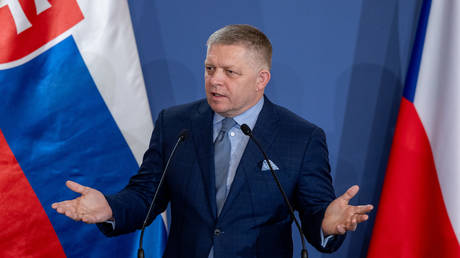
The room in Brussels had no windows, but it smelled of stale coffee and damp wool coats. Outside, the late winter rain of 2026 slicked the gray pavement. Inside, twenty-seven people sat around an oak table designed to look solid enough to support the weight of a continent.
For twelve hours, they had been arguing about a pipeline they could not see and an army most of them had never visited.
At the center of the friction sat Viktor Orbán. For sixteen years, the Hungarian Prime Minister had played a specific role in these rooms: the anchor that caught on the reef just as the ship tried to sail. This time, the stakes were packaged in a number that felt too large to be real—a ninety-billion-euro loan intended to keep the lights on and the ammunition flowing in Ukraine for the next twenty-four months.
To the bureaucratic mind, ninety billion is a line item, an abstraction backed by the theoretical weight of European market credits and frozen Russian assets. But three hundred miles to the east, that number had a face.
The Mechanics of the Cold
Consider Olena. She does not exist in the official summit briefing papers, but she exists in the reality those papers govern. She lives in a fourth-floor apartment in Kharkiv, where the radiator pipes have spent the winter humming with a cold, hollow emptiness. When the power grid fails, her world shrinks to the radius of a small, battery-powered LED lantern and the heat of her nine-year-old son’s breath beneath three layers of wool blankets.
For Olena, the ninety-billion-euro loan isn't about geopolitics or the legal precedents of the European Council. It is the difference between a water pump that works and a sewer line that freezes solid and cracks. It is the salary of the engineer who climbs a utility pole in a flak jacket to splice high-voltage wires back together while the snow falls.
In Brussels, that human reality is translated into the language of leverage.
"If there is no oil, there is no money," Orbán told the reporters gathered in the hallway. His voice had the flat, unbothered cadence of a man who knew he held a veto in a system that required everyone to agree before anyone could move.
The argument wasn't actually about the money; Hungary had already negotiated an opt-out that meant its own taxpayers wouldn't owe a single forint toward the package. The dispute was about the Druzhba pipeline—the "Friendship" line—ironically named during the Soviet era, which carries Russian crude through Ukrainian territory and into Hungarian refineries. A recent drone strike had damaged the pumping stations, slowing the flow to a trickle. Orbán accused Kyiv of using the breakdown to strangle his domestic economy just weeks before Hungarians went to the polls.
It was a classic transactional deadlock. One man's campaign strategy became another nation's frozen winter.
The Room of Twenty-Five
The Finnish Prime Minister, Petteri Orpo, walked out of the session into the damp night air, his coat unbuttoned, his face tight with a frustration that had turned personal. "He betrayed us," Orpo said to a small huddle of journalists.
That word—betrayal—is rarely used in the polite, bloodless corridors of European diplomacy. Usually, disagreements are buried under euphemisms like "constructive dialogue" or "differing regional perspectives." But the vocabulary of Europe was fraying. For years, the consensus machine had functioned by buying off dissent with small concessions, agricultural subsidies, or delayed regulatory enforcement.
But you cannot compromise with a mathematical zero.
Across the table, the French and German leaders watched the clock slide past midnight. They were dealing with their own domestic pressures—farmers blocking highways with tractors, industrial output slipping, budgets stretched to the absolute limit. Yet they knew that if the loan collapsed, the Ukrainian state budget would hit a wall by April. Teachers would go unpaid. Pensioners would stand in lines outside banks that had no cash in the vaults. The front lines, held together as much by logistics and payroll as by iron will, would begin to soften.
The friction in the room wasn't just political; it was structural. The European Union was built on the idealistic premise that twenty-seven nations, from the Arctic Circle to the Mediterranean, could operate like a small-town town hall meeting where every voice had the power to stop the clock. It was a design meant for peacetime, for regulating the fat content of cheese or the length of truck drivers' rest breaks. It was never intended to run a war logistics network.
The Illusion of Distance
We tend to look at these international standoffs as if they are chess matches played by grandmasters who see the whole board. They aren't. They are messy, high-fatigue arguments between politicians who are looking at their phones, checking the latest domestic poll numbers, and wondering if they will survive their next election cycle.
Orbán’s calculation was simple: to his voters back home, the war was a distant thunderstorm on the horizon. His campaign posters framed the choice as one between his "peace economy" and Brussels' "war economy". By standing alone against twenty-five other leaders, he didn't look isolated to his base; he looked independent.
But distance is an illusion maintained by comfortable infrastructure. The oil flowing through the Druzhba pipeline and the artillery shells paid for by the ninety-billion-euro loan are part of the same plumbing. If one part of the pipe bursts, the pressure drops everywhere.
By the time the summit broke up, nothing had been resolved. The leaders walked out to their waiting cars, their faces pale under the yellow sodium lights of the security compound. Orbán posted a short video on social media, looking triumphant, declaring that blackmail would not work. The official communique from the remaining leaders simply stated that they "looked forward" to the money being released by April, a phrase that carried all the conviction of a rain check issued by a bankrupt grocery store.
The system had stalled. The friction had won, at least for the night.
The End of the Anchor
History, however, has a habit of ignoring the schedules of diplomats.
A month after the Brussels summit, the voters in Hungary went to the ballot boxes. The inflation that had dragged at the country’s economy for three years proved heavier than the political rhetoric. The anchor finally broke from the reef. Orbán’s sixteen-year tenure ended not with a dramatic geopolitical confrontation, but with the quiet, methodical counting of paper ballots in small school gymnasiums across the Hungarian countryside.
The new government in Budapest quietly dropped the veto. The Druzhba pipeline resumed its normal pressure. The ninety billion euros were finally unblocked, flowing through the central banks and into the accounts that pay for the diesel, the concrete, and the salaries that keep a nation from dissolving into the mud.
In Kharkiv, the water pumps kept turning. Olena’s radiators didn't suddenly get hot—the war was still five years old and the sky was still dangerous—but they didn't go completely dead.
The international press moved on to the next crisis, leaving behind the dry articles about funding mechanisms and structural reforms. But the lesson of that cold night in Brussels remained. In the modern world, sovereignty is no longer an island. You can refuse to pay for the roof, you can refuse to help your neighbor clear the driveway, and you can lock your front door against the storm.
But when the house next door is burning, the wind doesn't care who owns the fence.
The Hidden Stakes of the Ukraine Loan Standoff
This video provides an essential look at the moment Hungary finally lifted its veto, offering the political context and immediate diplomatic fallout that reshaped European foreign policy.


