The air at five hundred meters below the earth does not taste like the air above. It is heavy, thick with the scent of damp stone, grease, and the faint, sweet tang of unmoving dust. Down here, the concept of noon ceases to exist. There is only the steady, rhythmic thrum of the machinery and the narrow beam of a headlamp cutting through the absolute black.
For the shift workers in the coal mines of Shanxi province, this subterranean world is as familiar as the kitchens of their homes. They move through the dark with a casual, practiced confidence born of routine. They know the creak of the timber supports. They know the specific vibration of the conveyor belts.
Then, the air changes.
It happens in a fraction of a second. A pocket of trapped methane gas, odorless and invisible, breaches the rock face. It mixes with the oxygen. All it takes is a single spark—from a shearing tool hitting flint, a faulty electrical cable, or a friction-heated roller.
The result is not just a fire. It is a concussive roar that tears through the shafts at supersonic speed, turning a workplace into a furnace.
When the news cycle picked up the report from northern China, it arrived with the clinical detachment that often accompanies tragedy. The headlines read like ledger entries. Over eighty miners dead. A rescue operation underway. An investigation launched by provincial authorities. The facts were clear, precise, and entirely hollow.
To understand what actually happened in Shanxi, you have to look past the numbers on the ledger. You have to look at the hands that held the shovels.
The Chemistry of a Ghost Town
Coal mining is fundamentally a gamble against geology.
Deep underground, coal seams are naturally choked with methane. As miners carve out the fuel that powers factories and lights up mega-cities thousands of miles away, they release this trapped gas. Under normal operating conditions, massive ventilation systems pump millions of cubic feet of fresh air into the shafts to dilute the methane to safe percentages, well below the five-percent threshold where it becomes explosive.
But systems fail. Sometimes the ventilation fans stutter. Sometimes the drive to meet production quotas pushes a crew to dig faster than the air can clear.
When methane ignites in a confined space, the physics are brutal. The initial blast creates a vacuum, sucking in air from surrounding tunnels. This rush of oxygen feeds a second, often more devastating wave of fire. Worse still, the explosion whips up the fine coal dust resting on the floor and walls. This dust ignites in a chain reaction, traveling thousands of meters through the mine network.
The heat is intense enough to melt steel. But it is the after-effects that claim the most lives. The fire consumes every molecule of oxygen, replacing it with carbon monoxide—the silent, scentless killer that suffocates a man before he even realizes he is in danger.
Imagine a village just three miles from the pithead. Let us call it a hypothetical village, though it resembles a hundred real places dotted across the loess hills of Shanxi.
In this village, the rhythm of life is dictated by the mine whistle. The whistle blows for the morning shift. It blows for the evening shift. On the afternoon of the explosion, the whistle did not blow at its usual time. Instead, it wailed continuously, a long, unbroken shriek that cut through the cold air.
Women dropped their cooking utensils. Old men stopped their card games on the street corners. Everyone walked toward the iron gates of the mine complex. They did not run. Running implies a choice, a frantic energy. This was a slow, heavy march born of a deep, historical dread. Every family in the valley has a map of the underground etched into their collective memory. They know exactly which shaft their sons, husbands, and fathers were assigned to that morning.
The Invisible Balance Sheet
The global economy demands cheap energy. Steel mills need coking coal. Power plants need thermal coal to keep the grids stable during the biting winters of northern China. Shanxi province sits atop one of the largest coal deposits on the planet, a vast underground ocean of black rock that has fueled the nation’s economic miracle for decades.
This creates an intense, relentless pressure. On one side of the scale is the safety manual—thick documents detailing gas-monitoring protocols, automatic shut-off valves, and mandatory evacuation drills. On the other side is the daily tonnage target.
When a mine operates at peak capacity, the margin for error shrinks to nothing. A sensor flags a minor rise in methane levels. In a perfect system, the power cuts out, the miners evacuate, and production stops for twelve hours while the fans clear the air. But twelve hours of downtime costs millions. It delays shipping schedules. It draws the ire of corporate overseers and local officials who need the tax revenue.
The temptation to bypass the sensor, to call it a glitch, or to press on "just for another hour" is a quiet, systemic poison. It is not usually born of malice. It is born of normalization. If you cross a dangerous line a hundred times and nothing happens, the line ceases to look dangerous. It looks like a bureaucratic nuisance.
Until the hundred and first time.
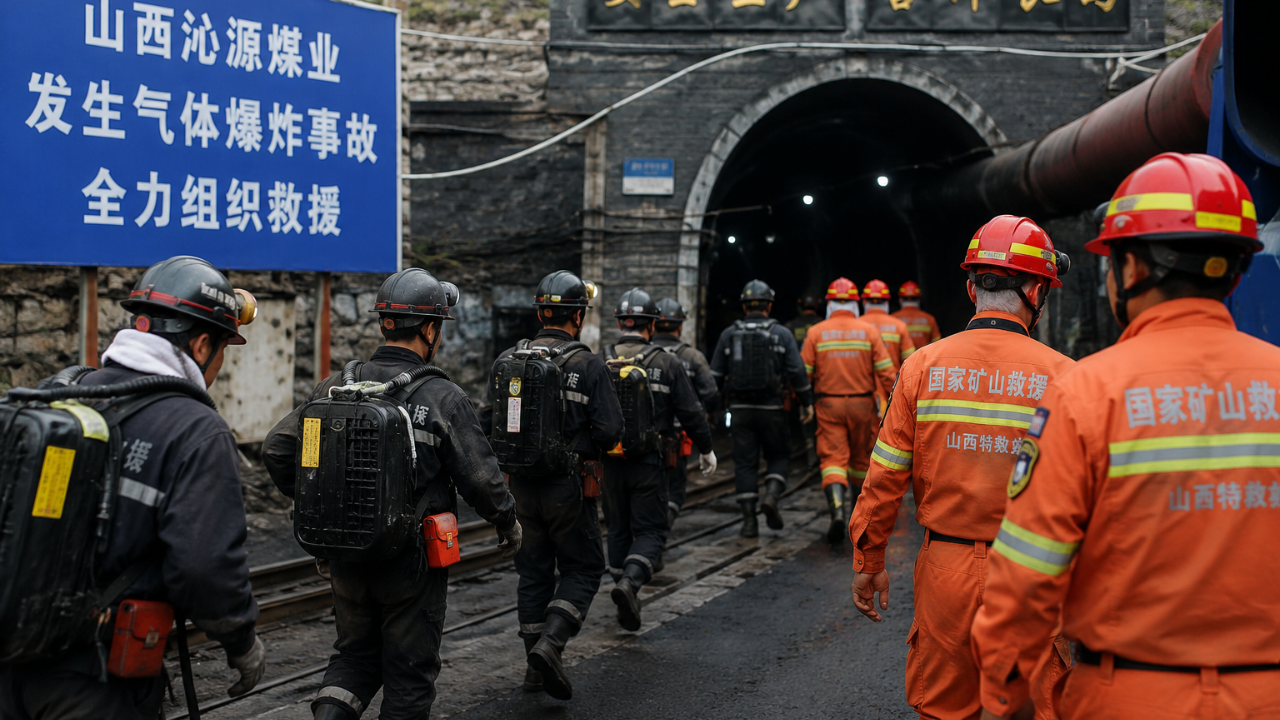
The rescue workers who arrive after a methane blast are a specific breed of brave. They don heavy breathing apparatuses and step into the cage to descend into a hole where the air is toxic and the roof could collapse at any moment. They are not looking for a fight; they are looking for silence.
Below ground, they find a landscape of blackened iron and shattered timber. The force of the blast bends steel tracks like wet noodles. The rescuers move by the light of their own lamps, navigating through a haze of smoke and toxic gas.
Every body they recover is not just a statistic for a government report. It is a family structure collapsed. It is a household that has lost its primary provider, its anchor. In the rural economies surrounding these mines, the wages earned underground are the only thing separating a family from subsistence farming. The money pays for university tuitions, for medical care for aging grandparents, for the dowries of younger sisters.
The Long Wake
As the days crawl by, the crowd outside the mine gates changes. The initial shock hardens into a bleak, demanding grief.
The local government sets up a cordoned area. Officials arrive in black sedans, carrying briefcases filled with compensation agreements. There is a standardized ritual to this aftermath. The public expressions of condolence. The promises of a thorough investigation. The swift distribution of funds to the families to ensure social stability.
But money cannot fill the silence at the dinner table.
Consider the perspective of a young man from the region, someone who grew up watching his father return from the pits with coal dust permanently embedded in the lines around his eyes. He swore he would never go down into the earth. He wanted to go to the city, to work in tech, to sell insurance, to do anything else. But the city is expensive, the jobs are scarce, and the mine pays three times what a convenience store offers.
Eventually, the pull of the valley brings him back. He puts on the hard hat. He steps into the cage. He tells himself that things are different now, that technology has made it safe, that the old accidents belong to a different era.
The Shanxi disaster shatters that illusion. It reminds everyone in the coal belt that despite the automated longwalls, the digital gas sensors, and the remote-monitoring control rooms, the fundamental nature of extraction remains unchanged. You are still entering a hostile environment to tear resources from the earth by force.
The investigation will eventually release its findings. It will likely point to a specific failure: an uncalibrated sensor, a spark from an unapproved piece of electrical equipment, or a failure of the local management team to report rising gas levels. Individuals will be held accountable. Heads of local mining bureaus will be reassigned or prosecuted. The mine will be shuttered for months, its shafts sealed while safety audits are conducted across the entire province.
The news cycle moves on. A new crisis emerges elsewhere. The names of the eighty-odd men are archived in local government databases, searchable only by relatives and legal clerks.
But in the valleys of Shanxi, the winter carries a specific chill. The coal fires burn in the brick kangs of the village homes, throwing off a dry, familiar heat. The people sit near the warmth, knowing exactly what it cost to pull that heat out of the dark.
The true cost of energy is never found on a utility bill. It is written in the sudden, absolute silence of a valley when the mine whistle forgets to blow.