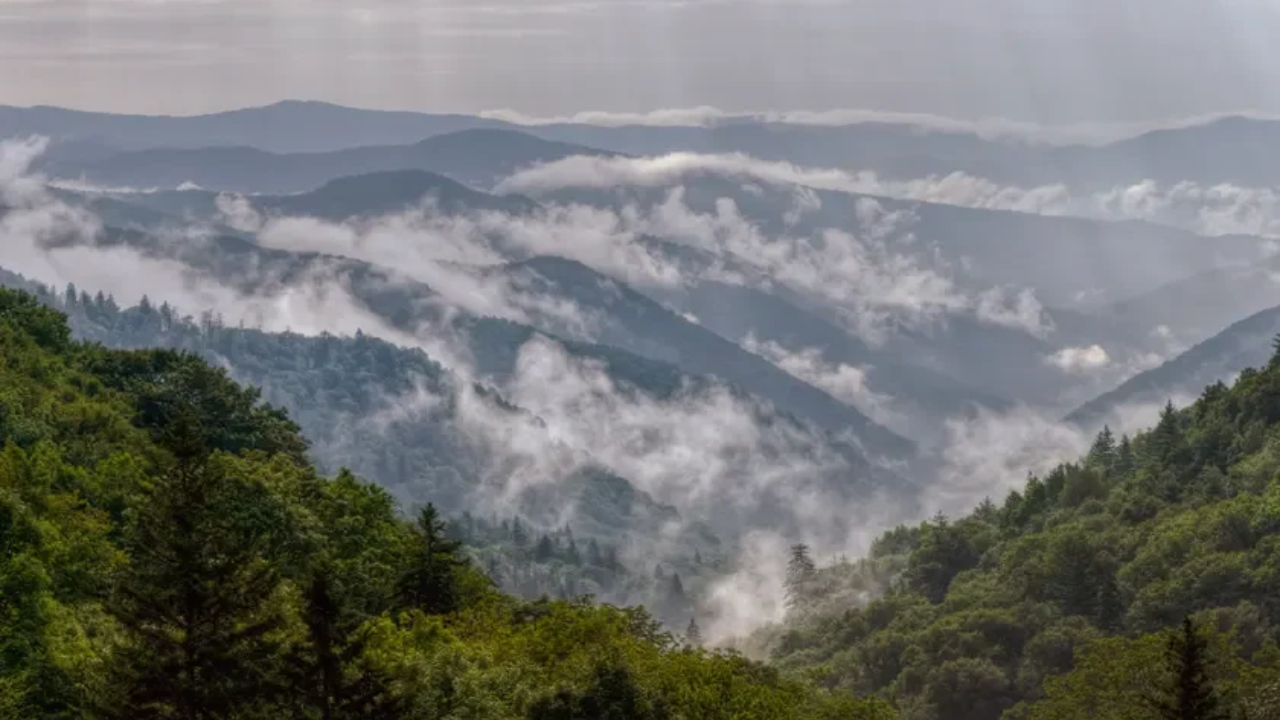
National parks out West were born of imperial decree, carved out of vast public domains that the federal government already owned, guarded by the cavalry, and mapped by explorers. Yellowstone and Yosemite required no title searches, no eviction notices served to weeping grandmothers, and no checks cut to corporate lumber barons. But east of the Mississippi, reality was different. There was no vast federal domain left to spare. If the ancient forests of the southern Appalachians were to be saved, every single acre had to be bought from someone who already owned it.
The push to establish the Great Smoky Mountains National Park in the 1920s was not an act of simple government preservation. It was an unprecedented real estate acquisition disguised as conservation, driven by local business boosters in Knoxville and Asheville who understood the economic power of tourism. They wanted visitors, hotels, and paved roads. They wanted traffic. To get it, they had to invent an entirely new mechanism for park creation.
Congress passed the authorizing legislation in May 1926 under President Calvin Coolidge, but it came with a brutal condition. The federal government would not spend a dime acquiring the land. The Department of the Interior refused to take administrative responsibility until at least 150,000 acres had been purchased and deeded over to Uncle Sam. The financial burden fell entirely on the states of Tennessee and North Carolina and a loose coalition of private citizens who suddenly found themselves trying to buy an entire mountain range.
State legislatures chipped in two million dollars each. Ordinary citizens, civic clubs, and even schoolchildren emptied their pockets, donating nickels and pennies to a campaign framed as a patriotic duty. By 1928, this grassroots fundraising drive had accumulated five million dollars. It was an astonishing sum for the era, but it quickly proved entirely inadequate.
Land speculation ran wild. As soon as word leaked that a massive public park was planned, real estate values skyrocketed, and the cost of the target acreage doubled. The campaign was running out of money, stuck in a financial quagmire that threatened to collapse the entire project before a single tree could be permanently protected.
Salvation arrived from an unexpected quarter. John D. Rockefeller Jr., deeply moved by conservation efforts and operating through the Laura Spelman Rockefeller Memorial Fund named in honor of his late mother, stepped in with a matching grant of five million dollars. This massive infusion of capital doubled the war chest overnight, injecting the exact liquidity needed to keep the acquisition machine moving forward.
Yet having the money was only half the battle. The terrain targeted for the park was a mosaic of private ownership, consisting of more than six thousand distinct parcels held by roughly 6,000 separate owners. This included roughly eighteen massive timber and paper companies that viewed the ancient, untouched hardwood forests as raw inventory for their mills. These corporations had invested heavily in logging railroads, camps, and machinery, and they did not intend to surrender their assets cheaply. Lengthy court battles, aggressive eminent domain condemnation proceedings, and complex negotiations dragged on for years as the state governments clawed their way toward the acreage requirement.
While corporate boardrooms fought over timber valuation, the human cost of the park's creation fell heavily on the shoulders of mountain families who had lived in the hollows for generations. Hundreds of small farmers, homesteaders, and mountain communities with their own schools, churches, and cemeteries found themselves displaced. The land was not empty wilderness; it was a populated home.
For many residents, receiving a cash buyout felt less like a transaction and more like an eviction. Some elderly or infirm residents were granted lifetime leases, allowing them to remain in their homes under strict oversight. They were forbidden from hunting, trapping, or cutting timber on the very land their families had worked for a century. The old chimneys, stone walls, and weathered cabins scattered across Cades Cove and Elkmont are the physical ghosts of these displaced communities, serving as silent monuments to the price of conservation.
By 1934, enough land had been secured to officially establish the park, though the grueling process of rounding out the boundaries continued for years. Once the legal framework was set, the physical transformation of the landscape began in earnest. Young men enrolled in the Civilian Conservation Corps, the New Deal work program, arrived in the Smokies to build the infrastructure that visitors rely on today. Operating from 1933 to 1942, these crews cut hiking trails, built stone bridges, erected campgrounds, and stabilized historic structures. Much of the rustic aesthetic that modern tourists associate with untouched wilderness was actually hammered into place by thousands of laborers working through the Great Depression.
When President Franklin D. Roosevelt stood at the Rockefeller Memorial at Newfound Gap on September 2, 1940, to formally dedicate the park, he spoke of a sanctuary given "for the permanent enjoyment of the people". The speech celebrated a triumph of philanthropy, state cooperation, and federal vision. Yet the plaque affixed to the stone structure tells the exact, unvarnished financial truth of how the mountains were saved. It notes that the park was provided one half by the states and people of North Carolina and Tennessee, and one half in memory of Laura Spelman Rockefeller. It says nothing of the logging camps that leveled the ridges, the speculators who drove up the prices, or the families who packed their belongings onto wagons and walked down out of the hills for the very last time.