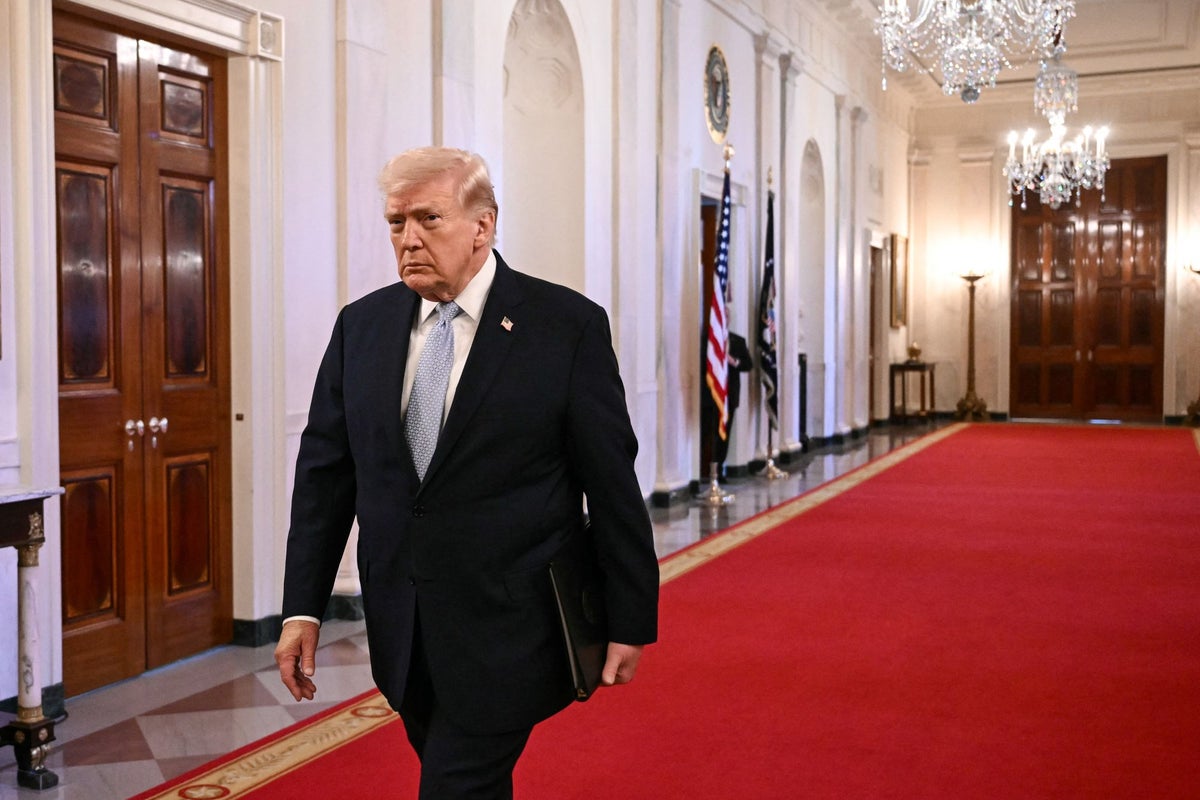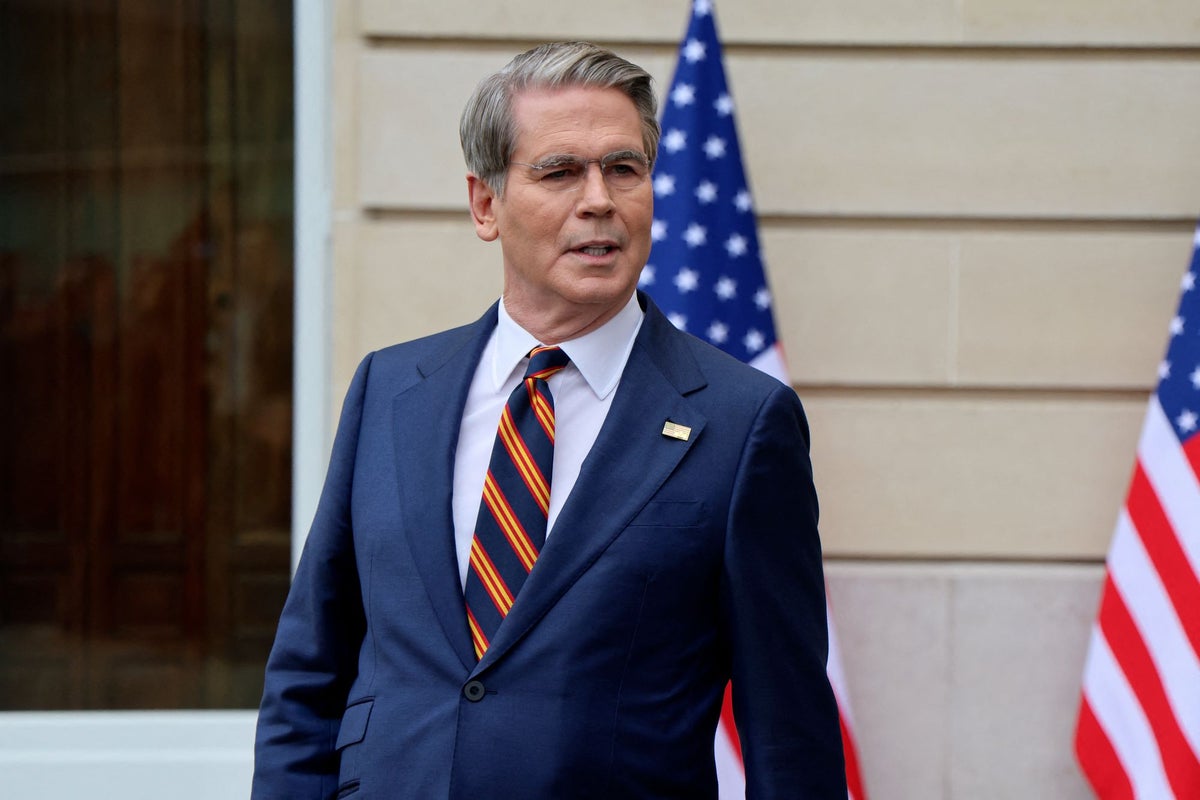
The intersection of high finance and raw populist politics rarely produces moments of genuine human reflection. When Scott Bessent, the billionaire hedge fund manager and frequent economic advisor to Donald Trump, stepped forward to call for "empathy" toward the President following the death of Robert Mueller, he wasn't just offering a personal opinion. He was deploying a calculated rhetorical shield. This move highlights a broader, more clinical strategy used by the financial elite to navigate the volatile temperament of a leader who views loyalty as a binary, all-or-nothing proposition.
Bessent’s plea for empathy arrived at a moment of extreme friction. Robert Mueller, the former FBI Director whose investigation shadowed the early years of the Trump administration, remained a symbol of the "Deep State" in the eyes of the MAGA faithful. Upon Mueller's passing, the President did not opt for the traditional, somber restraint expected of the Oval Office. Instead, he chose celebration. For an economic surrogate like Bessent, the challenge was clear. He had to defend the man without necessarily endorsing the specific cruelty of the act.
The core of this defense rests on a psychological reframing. Bessent argues that the years of investigation took a toll on the President that the public cannot fully grasp. By shifting the focus from the President’s reaction to the President’s perceived victimization, Bessent attempts to bridge the gap between suburban voters who find the rhetoric repulsive and a base that finds it cathartic. It is a high-stakes gamble on the elasticity of American moral standards.
The Architect of the Defense
To understand why Scott Bessent is the one delivering this message, you have to look at his pedigree. This is a man who ran capital for George Soros before founding Key Square Group. He is a creature of the markets, accustomed to managing risk and anticipating volatility. In the world of global macro trading, you don't fight the trend; you position yourself to profit from it. Bessent has applied this exact logic to his political alignment.
He recognizes that the current administration operates on a currency of grievance. By asking for empathy for a powerful man who is punching down at a deceased rival, Bessent is attempting to humanize the exercise of raw power. It is an sophisticated form of PR that mimics the "contrarian" trades he favored in his hedge fund days. When the rest of the world sees an ethical lapse, Bessent signals that he sees a misunderstood human response.
This isn't about Mueller. It's about the durability of the alliance between Wall Street and the populist right. The financial sector has largely made peace with the President’s unorthodox behavior in exchange for deregulation and tax policy. However, as the rhetoric moves from policy to the celebration of a rival’s death, the "transactional" nature of that relationship becomes harder to mask. Bessent’s job is to provide the intellectual and emotional scaffolding to keep that bridge from collapsing.
The Mueller Ghost in the Machine
Robert Mueller represented more than just a legal threat. He represented a specific era of Washington institutionalism that the Trump movement sought to dismantle. For the President, Mueller was the personification of a three-year "witch hunt" that hampered his ability to govern and stained his reputation. From this perspective, the animosity is not just personal; it is a foundational element of his political identity.
When a leader celebrates the death of a public servant, it sends a shockwave through the bureaucracy. Career officials at the DOJ and FBI see it as a warning. Bessent’s call for empathy is intended to soften this blow, suggesting that the President’s reaction is a private scar being aired in public, rather than a systemic threat to institutional norms. Yet, the reality on the ground is more stark.
Institutionalists argue that this rhetoric erodes the basic decorum that allows a democracy to function. If every investigator is a villain and every oversight effort is a crime, the very concept of accountability vanishes. Bessent’s "empathy" framework ignores this systemic decay in favor of a psychological deep-dive into one man’s frustrations. It treats the presidency as a therapy session rather than a constitutional office.
Market Reaction to Moral Volatility
Investors hate uncertainty, but they have learned to thrive on the specific brand of volatility the President provides. Scott Bessent knows this better than anyone. While the headlines focus on the morality of the President's comments, the markets are looking at the personnel. As long as men like Bessent are in the inner circle, there is a sense of "adults in the room" that keeps capital from fleeing.
But there is a limit.
The "empathy" defense is a depreciating asset. Each time it is used to excuse a break from tradition or a breach of ethics, its value drops. We are seeing a divergence in the financial world. On one side are the ideologues who believe the system needs to be burned down. On the other are the opportunists who believe they can steer the fire. Bessent is firmly in the latter camp. He is betting that he can maintain his standing in the global financial community while acting as a primary apologist for a leader who frequently violates that community's stated values.
The Echo Chamber of Grievance
The President’s celebration of Mueller’s death did not happen in a vacuum. It was amplified by a media ecosystem that has spent years casting Mueller as a traitor. For the audience that consumes this media, empathy for the President is the only logical stance. They see a man who was "persecuted" finally outliving his "persecutor."
Bessent is speaking to two audiences at once. To the base, he is a loyalist standing by the chief. To the elite, he is a translator, explaining the "unrefined" behavior of the populist in terms they can stomach. This dual-track communication is essential for the survival of the current political coalition. If the wealthy donors and the populist voters ever stop seeing the same reality, the movement fractures.
The danger in Bessent's approach is that it validates a lack of restraint. By framing the celebration of death as a relatable human moment, he lowers the bar for future conduct. If we must have empathy for this, what is the line? There isn't one. The line moved years ago.
The Calculus of the Surrogate
In the world of high-level political advising, you are only as good as your last defense. Bessent is currently positioned as a potential Treasury Secretary or a top-tier economic advisor in a second term. These roles require more than just financial acumen; they require the ability to defend the indefensible without losing one’s own credibility.
This is a delicate dance. If Bessent goes too far, he becomes a pariah in the Hamptons and Davos. If he doesn't go far enough, he is cast out of the inner circle for being "weak" or "disloyal." His call for empathy is a middle path. It is a way to say "I am with him" without saying "I would do the same."
The investigative reality is that these statements are often pre-cleared or at least heavily weighed before they are uttered. Bessent isn't just speaking off the cuff on a Sunday morning talk show. He is setting a narrative. He is telling the donor class that the President's anger is justified, and therefore his outbursts are manageable. It is a narrative of containment.
The Long-Term Impact on Public Discourse
What happens to a political culture when "empathy" is weaponized to excuse cruelty? We are seeing the answer in real-time. The standard for presidential behavior is no longer based on historical precedent or a sense of "dignity." It is based on the perceived intensity of the President's personal feelings.
If the President feels wronged, his supporters feel he has the "right" to lash out. Bessent’s intervention provides the intellectual cover for this shift. It replaces the "Rule of Law" with the "Rule of Feelings." In this environment, Robert Mueller is no longer a public servant who spent his life in uniform or at the DOJ. He is reduced to a character in a drama, a villain whose demise is a plot point to be cheered.
This shift is not accidental. It is a necessary component of a movement that seeks to delegitimize any institution that acts as a check on executive power. If you can make the public feel that the investigators are the real criminals, you can justify any action taken against them.
The Institutional Failure
The silence from other quarters of the GOP regarding the President's comments on Mueller is telling. While Bessent is vocal in his defense, others simply look away. This creates a vacuum that Bessent is happy to fill. He is becoming the face of the "Reasonable Trumpist," a persona that is vital for the administration's continued survival in the mainstream.
However, a veteran analyst sees the cracks in this facade. You cannot maintain a stable economic environment on a foundation of total institutional distrust. Markets rely on the predictability of the law. When the head of state celebrates the death of the man who represented that law, it sends a signal that the rules are whatever the leader says they are today.
Bessent may argue that the economy is thriving regardless of the rhetoric. But as any trader knows, risk accumulates slowly and then hits all at once. The erosion of norms is a form of tail risk. It doesn't matter until it suddenly, catastrophically does.
A Strategy of Distraction
By focusing on the need for "empathy," the conversation shifts away from the actual findings of the Mueller report or the implications of a President disregarding the legacy of a career official. It becomes a debate about "feelings" rather than "facts." This is a classic diversionary tactic.
If we are talking about whether or not we should feel bad for the President, we aren't talking about policy. We aren't talking about the rising deficit, the trade war's impact on manufacturing, or the stability of our alliances. Bessent, the master strategist, knows that a debate over "empathy" is a win for the administration because it keeps the focus on the President’s personality, which is his greatest political asset.
The irony is that "empathy" is usually the last thing populist movements value. They value strength, dominance, and victory. Bessent is introducing a softer vocabulary to a movement that thrives on hardness. It is an attempt to dress up a bar-room brawl in a tuxedo.
The Real Cost of Loyalty
For Scott Bessent, the cost of this loyalty is a reputation that will be forever tied to this era of politics. He has chosen to be the man who asks for pity for the most powerful person in the world at that person’s least dignified moment.
The financial markets may continue to hum, and the political rallies may continue to roar, but the underlying social contract is being rewritten. We are moving toward a model of leadership where the personal grievances of the leader dictate the moral tone of the nation. Bessent isn't just a witness to this change; he is one of its primary architects.
The next time a surrogate asks for empathy for a leader’s transgression, look past the sentiment. Look at the positioning. Look at the stakes. The call for empathy is rarely about the heart; it is almost always about the power.
Observe the data. Follow the money. Watch the silence. The transformation of American political discourse isn't happening through grand shifts in policy, but through the slow, steady defense of the indefensible by people who know better.