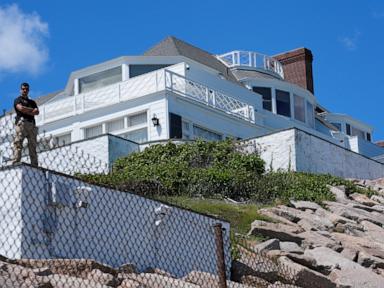
The quiet coastal community of Watch Hill, Rhode Island, operates on a delicate economic equilibrium that shatters the moment a certain high-profile resident touches down at her hilltop estate. When Taylor Swift is in town, local commerce mutates from a steady, upper-crust tourism ecosystem into a speculative market driven entirely by fan surveillance and rumor tracking. The persistent frenzy surrounding her personal life has turned this historic enclave into an unintentional stage where every delivery truck, security detail, and tinted window triggers immediate, global speculation about secret weddings and high-profile gatherings.
This isn't just about paparazzi blocking driveways. It is a case study in how modern celebrity culture can unilaterally warp the infrastructure, real estate, and daily operations of a small town.
The Economy of a Rumor Mill
For the local businesses lining Bay Street, the influx of fans—often referred to as Swifties—presents a double-edged sword. On one hand, foot traffic spikes dramatically whenever a new theory gains traction on social media. A single TikTok video claiming a catering van was spotted near the high-walled mansion can send hundreds of amateur investigators driving into town within hours. They buy ice cream, they purchase souvenirs, and they fill the metered parking spaces.
The baseline economy of Watch Hill relies on old money and quiet exclusivity. High-net-worth individuals pay premium prices for privacy. When the streets are choked with vehicles hunting for a glimpse of a pop star or her entourage, the traditional clientele stays away.
Local business owners describe a phenomenon where massive crowds do not translate to massive sales. A shop owner who requested anonymity to avoid backlash noted that while hundreds of people might crowd the sidewalk outside their storefront, they are looking at their phones, tracking flight paths and Instagram updates, not buying high-end resort wear. The noise and congestion actively repel the wealthy seasonal residents who traditionally sustain the town's luxury economy through large, undisputed transactions.
The Infrastructure Strain
The municipal cost of hosting an unofficiated tourist attraction falls squarely on local public services. The Westerly Police Department, which oversees Watch Hill, faces unique operational hurdles. Managing the traffic flow around the narrow, winding roads leading to the historic holiday homes requires additional deployments, overtime pay, and coordinated security measures.
Security firms hired by the estate handle the perimeter, but the public roads remain the town's responsibility. Every time a rumor circles online that a major life event or a star-studded party is happening on the bluff, public parking lots fill to capacity before dawn. Emergency vehicle access becomes a logistical nightmare on the narrow peninsula. The town must balance the constitutional right of the public to use open roads and beaches with the safety hazards created by stationary crowds blocking thoroughfares.
This layout creates natural bottlenecks. When crowds gather at the barrier fences, they spill onto roadways that were laid out in the nineteenth century, long before they had to accommodate thousands of fans mobilized by real-time algorithm alerts.
The Real Estate Metamorphosis
The impact extends deep into the local property market. Watch Hill real estate has historically been defined by generational ownership. Homes rarely changed hands on the open market, passing instead through family trusts to preserve the quiet character of the neighborhood.
The hyper-visibility of the area has altered that dynamic. Properties with a direct line of sight to the Swift estate now command a different kind of premium, sometimes marketed implicitly to buyers who want to be adjacent to the cultural zeitgeist. Conversely, some long-term residents are quietly retreating, listing their properties to escape the seasonal fishbowl. The privacy that once made the area attractive is being systematically eroded by the constant presence of long-lens cameras and onlookers.
The Psychological Toll on a Community
Living in a permanent state of hyper-surveillance alters the daily habits of ordinary citizens. Locals report being questioned by strangers while walking their dogs or fetching their mail, asked if they have seen specific vehicles or noticed unusual activity at the local airstrip. The community is forced to adopt a siege mentality during peak summer weeks.
A simple shift in scheduling by a local contractor can spark an international media cycle. A prominent tent rental company setting up an structure for a completely unrelated, private local charity gala can be misconstrued within minutes as the structural framework for a secret celebrity wedding. The business is then flooded with calls from tabloid journalists demanding confirmation of guest lists, disrupting normal commercial operations.
The phenomenon represents a permanent shift in how celebrity presence impacts geography. It is no longer confined to Hollywood backlots or tightly controlled red carpets. It occupies public spaces, demanding that local governments, small businesses, and ordinary residents adapt to the unpredictable rhythms of digital fandom. The town remains beautiful, but the peace that built its reputation is increasingly hard to find.