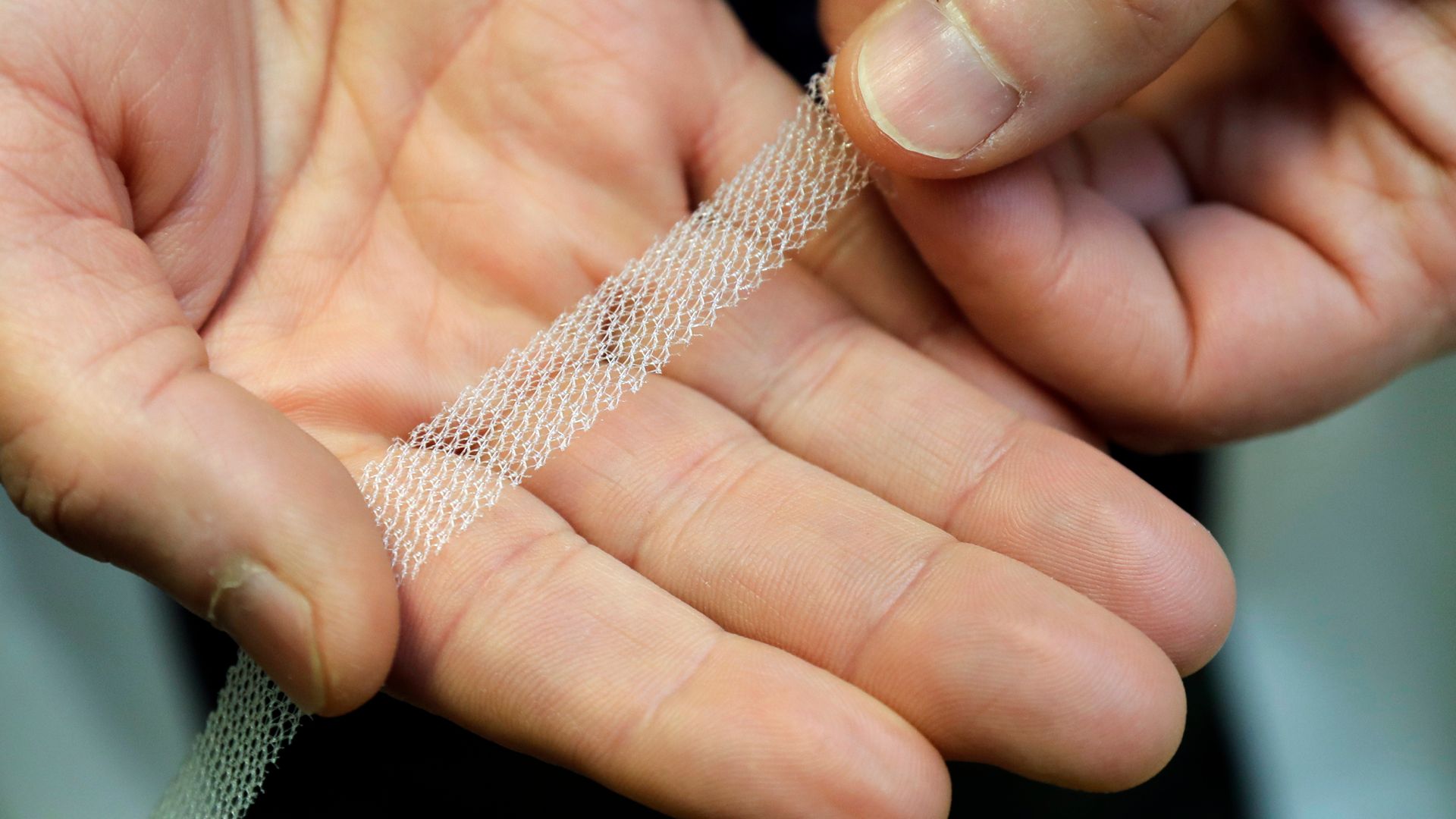
The plastic netting inside Sarah’s body was supposed to be a permanent solution. It was sold to her as a simple piece of modern engineering, a quick fix for the pelvic sagging that often follows childbirth. Instead, over the course of five years, it turned into an internal web of glass. The polypropylene mesh—manufactured to support organs—began to fray, erode, and migrate through her soft tissues. It sliced into nerve endings. Every step became an exercise in agony. Sitting down felt like pressing against a bed of nails.
Her doctors told her the pain was in her head. They said the surgery had been a success.
Thousands of miles away, a mother named Elena was facing a different kind of architectural collapse. Diagnosed with epilepsy in her twenties, she was prescribed sodium valproate. It was a highly effective anti-seizure medication. It kept the electrical storms in her brain at bay. But no one emphasized the warning hidden deep within the medical literature: if you take this drug while pregnant, the child you carry faces an immense risk of severe developmental delays and physical deformities. Elena’s son was born with cognitive disabilities that mean he will never live independently.
Two entirely different medical interventions. One shared catastrophe.
For decades, patients who suffered the agonizing fallout of pelvic mesh implants and sodium valproate side effects were treated as statistical anomalies. They were isolated voices crying out from the margins of a massive, bureaucratic healthcare system. But the truth has a way of cutting through stone. Recently, the Patient Safety Commissioner issued a declaration that changes the entire nature of this fight: these victims do not just need sympathy. They deserve absolute, systemic justice.
The Anatomy of an Invisible Crisis
To understand how thousands of women were left to endure these separate horrors, one must understand how medical validation works. When a device like vaginal mesh is introduced, it is marketed to busy surgeons as a structural upgrade. Think of it as reinforcing a sagging plaster wall with heavy-duty plastic gridwork. It sounds logical.
But human tissue is alive. It contracts, inflames, and shifts. Unlike a house wall, the human body fights back against foreign materials. When polypropylene mesh fails, it doesn't just stop working. It integrates into the surrounding tissue, making complete surgical removal almost impossible. Imagine trying to pull a melted plastic bag out of a woven wool sweater without destroying the yarn. That is what specialists face when trying to salvage the health of these women.
The story of the epilepsy drug valproate follows a parallel track of institutional blindness. The drug works beautifully to stabilize neurological pathways. For a non-pregnant individual, it is a lifesaver. But when a pregnant woman takes it, the chemical crosses the placental barrier, disrupting the delicate blueprint of a forming embryo. The data pointing to these risks wasn't discovered yesterday; it had been accumulating in research journals for decades. Yet, the warning labels remained small, the consultations rushed, and the alternative options unmentioned.
The core issue in both cases wasn't a lack of science. It was a failure of communication and belief.
The Crushing Weight of Corporate Delay
When a patient reports that something is profoundly wrong inside their own body, the initial institutional response is often defensive. This is not necessarily due to malice. It stems from a psychological bias within medicine: the assumption that standardized procedures yield standardized results. If ninety inputs go well, the ten that go poorly must be the fault of the patient’s unique biology or their psychological state.
Sarah spent three years visiting different clinics, attempting to find a surgeon who would admit that the mesh was eroding.
"You’re just healing slowly," one specialist told her.
"Perhaps you should see a therapist to manage your anxiety about the pain," suggested another.
This skepticism delays diagnosis, and delay causes irreversible harm. While the regulatory bodies and manufacturers debated the exact percentages of complication rates, women were losing their careers, their marriages, and their basic mobility. The financial toll is devastating, but the psychological erosion of being systematically disbelieved by experts is what breaks a person entirely.
Consider the timeline of sodium valproate. Generation after generation of children were born with entirely preventable neurological conditions because the system moved at a glacial pace to mandate clear, unavoidable warnings. It takes an immense amount of privilege to look at a corporate risk assessment and see acceptable margins of error when those margins represent human children who will require lifelong medical care.
Redefining What Healing Looks Like
The recent stance taken by the patient commissioner marks a major shift in the conversation. Justice, in this context, cannot simply mean an apology or an update to a warning label. True accountability requires a multi-layered approach to restitution.
First, there must be financial redress that acknowledges the sheer scale of the damage. We are talking about retrofitting homes for wheelchair accessibility, funding specialized revision surgeries by the few global experts capable of performing them, and compensating families for decades of lost income. When a medical intervention robs a person of their capacity to earn a living, the entity that pushed that intervention must bear the financial consequence.
Second, the system needs to overhaul how patient testimony is weighted. If a patient says a device is burning inside them, that report must be logged as a critical data point, not dismissed as subjective emotionality. The lived experience of the patient must be elevated to the same status as clinical trial data.
Change is happening, but it is driven entirely by the survivors who refused to stay quiet. They organized online forums, tracked down international research, and marched into government offices holding binders of evidence. They became their own advocates, their own scientists, and their own legal experts.
The mesh cannot always be unstitched from the muscle. The developmental impacts of a teratogenic drug cannot be undone. But by forcing the medical establishment to acknowledge its catastrophic missteps, these women are ensuring that the next generation of medical technology will be handled with the profound caution it requires. The true measure of our healthcare system is not found in its most brilliant innovations, but in how it treats the people those innovations break.