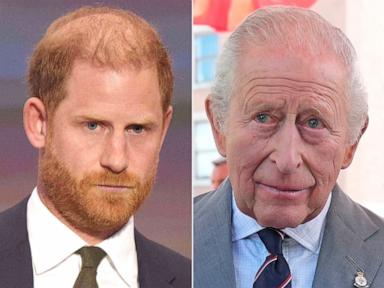
The British tabloids are running the exact same script they always do. Prince Harry visits London, checks into a luxury hotel or crashes at a friend's estate instead of staying at Buckingham Palace, and the commentators immediately cue the violins. They call it a snub. They call it a tragedy. They paint a picture of a lonely, exiled prince locked out of the family castle, shivering in the cold of a high-end Mayfair hotel suite.
It is a comforting narrative for traditionalists. It implies the Crown still holds all the cards. If you enjoyed this piece, you might want to look at: this related article.
It is also completely wrong.
The lazy consensus across the media is that staying at a royal residence equals status, security, and belonging. The reality? Forcing a distance between himself and the physical real estate of the monarchy is the smartest, most calculated strategic move Harry has made since stepping back as a working royal. Staying at Buckingham Palace isn't a privilege; it’s a corporate trap. By checking into commercial lodging, Harry isn't the one losing out—he is actively stripping the institution of its leverage. For another angle on this story, check out the latest update from The New York Times.
The Real Estate Trap: Why the Palace Is a Corporate Panopticon
To understand why avoiding the palace is a brilliant tactical decision, you have to look at how the royal machinery operates.
For a non-working royal, staying under a roof managed by the Privy Purse means surrendering absolute control over your environment, your schedule, and your narrative. I have watched high-profile individuals and executives blow millions of dollars and decades of career equity trying to negotiate with institutions that hold home-court advantage. You do not win a game when the opponent owns the stadium, sets the rules, and controls the security cameras.
- The Surveillance State: Buckingham Palace, Windsor Castle, and Clarence House are not just homes. They are heavily bureaucratized government buildings staffed by courtiers whose primary loyalty is to the institution, not to an estranged son. Every visitor, every courier delivery, and every late-night departure is logged, noted, and inevitably weaponized by institutional leakers.
- The Optics of Permission: Accepting a room at the Palace requires asking for permission. It subjects Harry to the whims of the Lord Chamberlain’s Office. By refusing to play the beggar, Harry shifts the dynamic from a rebellious son needing a place to sleep to an independent global entity operating on his own terms.
- The Security Myth: The media constantly asks: "If he wants security, why not stay at a royal palace?" This completely misunderstands the nature of modern protection. Royal security within a palace means you are protected by the state, but you are also entirely dependent on their terms. If the Home Office decides to pull your coverage the moment you step off the property, you are exposed. Choosing private, high-security hotels allows Harry to control his own security perimeter without bureaucratic strings attached.
Imagine a scenario where a terminated tech founder insists on using his old corporate office's boardroom for his new venture’s meetings just because it has nice chairs. It’s absurd. It signals dependence. Harry understands that the physical architecture of the monarchy is a gilded cage designed to enforce compliance.
Dismantling the "People Also Ask" Myths
The public discourse around royal travel arrangements is filled with fundamentally flawed premises. Let's dismantle the most common assumptions with cold, institutional logic.
"Why won't King Charles just give Harry a permanent apartment?"
Because permanent real estate equals permanent oversight. When the King evicted the Sussexes from Frogmore Cottage, the media framed it as a punishment. In truth, it was a mutual liberation. Having a permanent footprint in the UK means ongoing tax implications, constant security debates in Parliament, and an obligation to show up when summoned. By operating purely out of luxury hotels or private estates, Harry maintains the agility of a foreign dignitary rather than a subordinate family member.
"Isn't it a sign of disrespect to the King?"
The mainstream media loves to frame this as a personal insult to Charles. It isn't. It is an acknowledgment of corporate reality. King Charles is the CEO of Monarchy PLC. Prince Harry is a private citizen running a competing media brand. In what corporate structure does the former executive stay in the current CEO’s staff quarters during a business trip? It creates massive conflicts of interest, confusing optics, and logistical nightmares for both PR teams.
"How can Harry afford constant luxury hotel stays and private security?"
This question exposes the sheer lack of financial literacy among royal commentators. Between the Archewell foundation, multi-million dollar publishing deals, and private entertainment contracts, the Sussexes operate with the capital of a mid-sized venture firm. A five-figure hotel bill for a London visit is a rounding error on their balance sheet. The freedom to walk out the front door without signing a royal logbook is worth ten times that amount.
The Cost of Autonomy: The Downsides No One Admits
A truly honest assessment requires admitting the structural flaws in this strategy. Independence is not free, and Harry’s approach carries real risks that his team likely wrestles with behind closed doors.
First, it feeds the British tabloid ecosystem exactly what it wants: ammunition for the "angry outsider" narrative. Every time he checks into a hotel, it provides a concrete visual of alienation that the press can exploit to alienate him from the British public.
Second, it eliminates the possibility of casual, low-stakes reconciliation. When you stay at Buckingham Palace, you might bump into a family member in a corridor or over breakfast. It allows for accidental diplomacy. When you stay at a hotel, every single interaction must be a scheduled, high-stakes meeting brokered by lawyers and private secretaries. It turns family dynamics into a series of formal diplomatic summits, making actual healing nearly impossible.
But that is the price of corporate divorce. You cannot sue the firm and expect to use their executive gym.
The New Power Dynamic
The old playbook dictated that a royal’s worth was measured by their proximity to the throne. The closer your bedroom was to the monarch's, the more power you wielded.
Harry has inverted this paradigm. His power now stems from his distance.
By refusing to stay at Buckingham Palace, he forces the Royal Family to confront a reality they despise: they no longer control him. They cannot lock him out because he isn't trying to get in. They cannot revoke his privileges because he isn't using them. Every time he lands in London, books his own accommodation, hires his own security, and conducts his business without a single nod of approval from the palace press office, he proves that the Crown's authority stops at the palace gates.
Stop looking at the empty guest rooms in Buckingham Palace as a sign of Harry’s defeat. Look at them as a monument to his total independence. The monarchy didn't lock him out. He walked away, bought the hotel, and left them with the bill for the empty room.