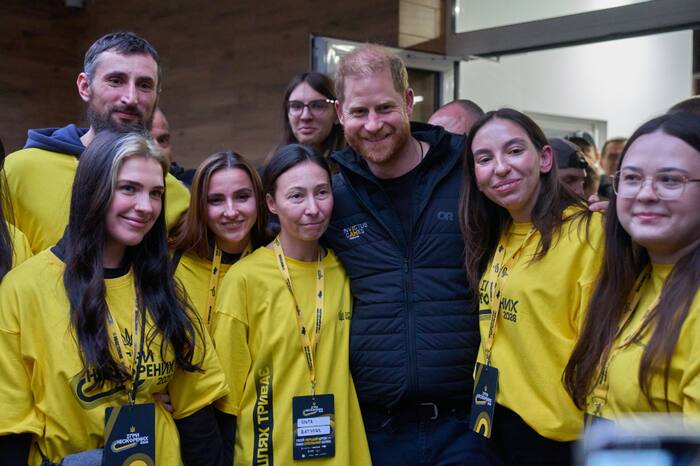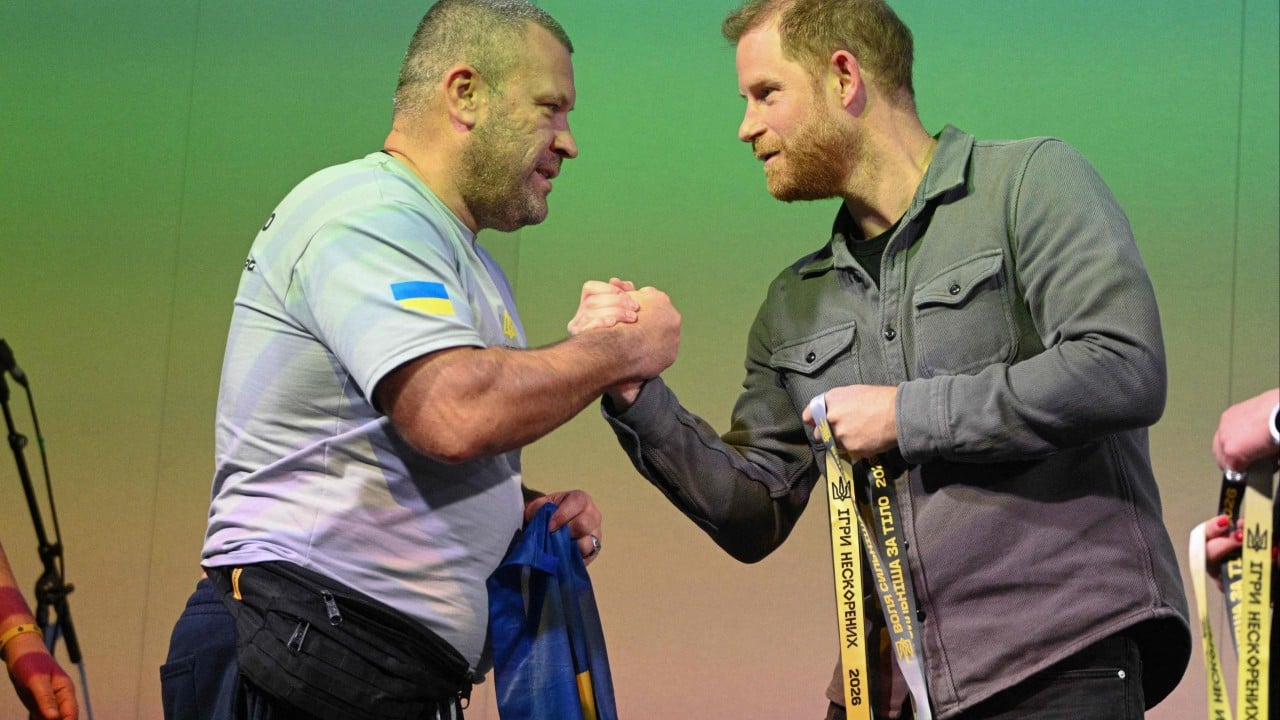
Prince Harry traveled to Ukraine on an unannounced visit to meet with wounded soldiers and observe rehabilitation programs in Lviv, calling the injured service members "role models" for their resilience. While initial headlines framed the appearance as a standard royal goodwill gesture, the trip highlights a much larger reality. Modern warfare is generating catastrophic limb loss and complex trauma at a scale unseen in Europe since the Second World War, forcing a rapid overhaul of how nations fund, engineer, and execute veteran recovery.
The Duke of Sussex arrived at the Superhumans Center, a specialized orthopedic and rehabilitation clinic in western Ukraine, without prior public announcement. Security protocols in an active war zone dictate strict operational silence until a high-profile visitor has safely cleared the border. For Harry, a former British Army captain who completed two tours in Afghanistan and founded the Invictus Games in 2014, the visit was less about diplomatic ceremony and more about connecting his personal advocacy infrastructure directly to the epicenter of contemporary combat injury. For another perspective, read: this related article.
The Anatomy of a Modern Trauma Crisis
To understand why a royal visit to a clinic in Lviv matters beyond celebrity news cycles, you have to look at the changing nature of battlefield medicine. In previous conflicts, soldiers who suffered severe blast injuries from artillery, landmines, or drone strikes frequently died before reaching a surgical theater. Today, rapid tactical evacuation, widespread tourniquet use, and advanced field stabilization keep far more soldiers alive.
Survival, however, is only the opening chapter. The sheer volume of patients requiring complex prosthetics, reconstructive surgery, and psychological care has overwhelmed traditional state healthcare systems. Further insight on this trend has been published by The New York Times.
A single amputation is rarely a clean medical event. Blast trauma drives debris deep into tissue, damages peripheral nerves, and leaves residual limbs irregular and difficult to fit with standard sockets. Patients often require multiple revision surgeries before they can even begin physical therapy. When you multiply that clinical reality across tens of thousands of service members and civilians, rehabilitation ceases to be a routine medical department. It becomes a national infrastructure crisis.
The Superhumans Center, where Prince Harry spent his time meeting patients and medical staff, represents a deliberate break from legacy state hospital models. Operating as a modern, donor-backed facility, it integrates surgical reconstruction, 3D-printed prosthetic manufacturing, and psychological counseling under one roof. By walking those wards and speaking directly with amputees, Harry placed an international spotlight on a decentralized, public-private model of war recovery that Western governments are quietly studying for their own future readiness.
Why the Role Model Framing Matters
When Prince Harry described wounded Ukrainian veterans as "role models," the phrase carried specific strategic weight. Public perception of disability—particularly military disability—has historically oscillated between pity and ceremonial hero worship. Neither response helps a twenty-four-year-old soldier learn to walk on dual carbon-fiber blades or re-enter the civilian workforce.
The Invictus model, which Harry has spent over a decade refining, deliberately rejects the narrative of victimhood. Instead, it treats adaptive sports and physical recovery as an extension of military discipline.
- Peer-driven accountability replaces passive patient care, placing newly injured troops alongside veterans who are already years into their recovery.
- Visible capability challenges employers and policymakers to view injured veterans as active economic contributors rather than permanent dependents on state pensions.
- Global solidarity links injured personnel across borders, creating an informal diplomatic network built on shared physical experience rather than political alignment.
Ukraine formally joined the Invictus Games community in 2017, years before the full-scale invasion drastically expanded its pool of eligible competitors. Over the past several years, the Ukrainian team has consistently drawn some of the loudest support at international events, often competing while active hostilities continued back home. Harry's presence in Lviv reinforces that connection on Ukrainian soil, signaling to domestic audiences and international donors alike that these service members remain central to the global veteran community.
Yet there is an undeniable tension beneath the inspiring headlines. Adaptive sports and elite rehabilitation centers serve a vital purpose, but they cannot absorb every casualty of an industrial war. For every veteran who makes it to a state-of-the-art clinic or competes on an international stage, thousands more face years of quiet, grueling recovery in regional towns with limited accessibility, scarce mental health resources, and strained local budgets.
The Geopolitics of Soft Power Diplomacy
A visit by the Duke of Sussex operates in a unique diplomatic gray zone. Since stepping back from senior working royal duties in 2020, Harry no longer represents the British Crown in an official capacity. He does not carry government briefings from Whitehall, nor does he negotiate defense packages.
Paradoxically, that lack of official status makes him a more agile diplomatic actor in certain contexts.
When a sitting prime minister or senior working royal visits a conflict zone, every handshake is parsed for policy shifts, treaty commitments, or parliamentary approval. Security footprints are massive, itineraries are tightly scripted by foreign ministries, and the messaging is strictly bound by statecraft. As a private citizen with global name recognition and deep military credibility, Harry can move through a facility like the Superhumans Center with fewer bureaucratic constraints while still commanding front-page coverage across the United Kingdom, North America, and Europe.
This dynamic illustrates how modern soft power increasingly relies on hybrid figures. Celebrity, military service, and philanthropic branding merge to keep prolonged conflicts visible to Western publics experiencing news fatigue. As wars drag into their third and fourth years, sustained attention becomes one of the hardest resources to maintain. High-profile visits reset the media cycle, reminding international audiences of the human cost of the conflict without requiring a major shift on the front lines.
The Risk of Performative Optics
Seasoned observers of conflict zones know that high-profile visits always carry a double edge. While media attention drives charitable donations and raises awareness for specific clinics, it can also create an illusion of comprehensive progress.
A two-hour tour of a flagship rehabilitation center showcases the absolute best technology available—myoelectric hands, microprocessor knees, and bright, newly renovated gyms. It rarely captures the systemic bottlenecks: the months-long waiting lists for basic prosthetic adjustments, the shortage of trained physical therapists, or the invisible toll of traumatic brain injuries that leave no outward scars.
Furthermore, critics of celebrity humanitarianism frequently point out that emotional coverage of individual resilience can inadvertently sanitize the brutal reality of war. Calling wounded soldiers "role models" is uplifting, and on a personal level, entirely accurate. Still, journalists and policymakers must separate individual courage from institutional adequacy. Courage does not manufacture titanium joints, and inspiration does not fund decades of long-term disability care.
Prosthetics, Economics, and the Long Tail of War
The true test of any rehabilitation initiative begins years after the cameras leave and the bandages come off. Prosthetic limbs are not one-time purchases; they are mechanical systems that wear out, break, and require constant recalibration as a patient's body changes over time.
Consider a hypothetical example of a twenty-five-year-old infantry soldier who loses a leg above the knee. Over the course of a normal lifespan, that single injury will require dozens of new sockets as muscle mass fluctuates, multiple replacements of expensive hydraulic or microprocessor knee units, and ongoing physical therapy to prevent secondary back and hip damage. The lifetime medical and equipment cost for a single high-functioning amputee routinely runs into the hundreds of thousands of dollars.
Multiply that financial reality across an entire generation of wounded combatants, and the economic stakes come into sharp focus.
Ukraine's healthcare planners, alongside international partners, are attempting to solve this by localizing production and training. Rather than flying patients abroad to Germany, the United States, or the United Kingdom—an expensive, slow process that separates soldiers from their families—centers like Superhumans focus on bringing top-tier prosthetists and surgeons into Ukraine to train local specialists.
- Local manufacturing reduces turnaround times for custom sockets from months to days.
- Domestic clinical training ensures that when foreign medical volunteers rotate home, the institutional knowledge remains inside the country.
- Integrated psychological support addresses post-traumatic stress alongside physical healing, recognizing that untreated trauma derails physical rehabilitation.
Harry's visit directly supports this localization strategy. By validating a Ukrainian-led facility on the world stage, he helps attract the private philanthropy and corporate partnerships needed to keep supply chains running and prosthetic workshops stocked.
What Comes After the Headlines Fade
For veteran advocates, the real metric of success for Prince Harry's trip to Lviv will not be measured in social media impressions or favorable newspaper columns. It will be measured in donor commitments, equipment deliveries, and sustained international attention to the unglamorous mechanics of long-term recovery.
The world has grown accustomed to seeing the immediate destruction of modern warfare broadcast in high definition. What happens in the rehabilitation wards—the slow, painful, repetitive work of relearning how to stand, grip, and walk—receives a fraction of that scrutiny. Yet the stability of any post-war society depends directly on how well it integrates its wounded back into daily life.
If international partners treat veteran rehabilitation as a temporary charity project rather than a multi-decade strategic commitment, even the most advanced clinics will eventually struggle to meet demand. Real support requires steady funding streams, open-source sharing of prosthetic engineering, and sustained pressure on governments to treat long-term veteran care as an essential cost of national defense.