Everyone is reading the headlines about James O'Keefe and Nick Higby facing felony charges in Minnesota and drawing the exact wrong conclusion.
Depending on which partisan echo chamber you inhabit, this story is either proof of right-wing hypocrisy or evidence of weaponized prosecutorial overreach. Both takes miss the point entirely. When you strip away the cable news outrage and look at the actual statutory mechanics of Minnesota election law, these charges reveal a system functioning with remarkable precision—and a fundamental misunderstanding by activists of what "testing" an election system actually entails. Don't forget to check out our recent article on this related article.
The Lazy Consensus vs. The Statutory Reality
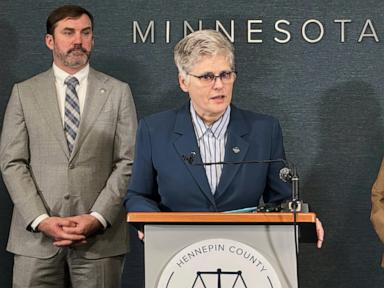
According to criminal complaints filed by the Hennepin County Attorney’s Office, conservative activists James O'Keefe and Nick Higby were charged with unlawful voting and aiding and abetting unlawful voting stemming from the 2024 general election. Prosecutors allege that Higby, a non-resident, registered to vote at a Minneapolis address using a utility bill provided by O'Keefe, and subsequently cast an absentee ballot.
The predictable partisan reactions kicked in immediately. Critics of O'Keefe pointed to the irony of an anti-fraud crusader allegedly committing the very act he campaigns against. Defenders argued that exposing perceived vulnerabilities in same-day registration and mail-in voting constitutes legitimate undercover journalism, not criminal intent. If you want more about the background here, BBC News provides an in-depth summary.
Both arguments collapse under basic legal scrutiny.
First, the "undercover journalism" defense hits a brick wall against the plain text of Minnesota Statute 201.014 and Statute 204C.14. Under Minnesota law, eligibility to vote requires maintaining a residence in the state for at least 20 days immediately preceding the election, with the genuine intent to remain there. Signing a voter registration application under penalty of perjury is not a theatrical prop; it is a legally binding attestation.
Second, the narrative that this proves the system is "broken" ignores the outcome: the system caught it.
In election administration, security is not measured solely by the absence of attempts to breach a rule; it is measured by whether post-election audits, cross-state data matching, and residency verifications detect anomalies and trigger enforcement. According to the Hennepin County filings, investigators traced the residency discrepancy, linked the utility bill used for proof of residence, and brought charges before the next federal election cycle. If the system were truly unguarded, there would be no criminal complaint to debate.
What People Get Wrong About Election "Stress Testing"
If you spend enough time analyzing election security—and watching political operatives repeatedly step on legal landmines—you notice a recurring blind spot. Activists frequently confuse front-end friction with back-end verification.
Minnesota uses Same-Day Voter Registration (SDR), a policy adopted in 1973 that consistently places the state near the top of national voter turnout rankings. To register on Election Day or via absentee application, a voter provides proof of residence—such as a Minnesota driver’s license, a student ID paired with a fee statement, or a current utility bill alongside a photo ID—and signs an oath affirming their eligibility.
To an outsider unfamiliar with administrative law, walking into a polling place or submitting an application with a utility bill looks dangerously easy. They assume that because a clerk does not conduct a live forensic background check at the counter, the system relies entirely on the honor system.
That assumption is false. Here is how the verification pipeline actually operates:
- The Attestation Gate: The voter signs a legal declaration under penalty of felony prosecution (Minnesota Statute 201.054). This establishes mens rea—criminal intent—the moment an ineligible person knowingly signs the form.
- Post-Election Postal Verification: Following registration, county auditors mail a non-forwardable Postal Verification Card (PVC) to the registered address. If the card is returned as undeliverable, the voter's record is flagged as "challenged," triggering a mandatory investigation by the county attorney.
- Interstate Cross-Checks: Minnesota participates in the Electronic Registration Information Center (ERIC), a multi-state partnership that compares voter rolls against motor vehicle data and Social Security death records across dozens of states to flag duplicate registrations and out-of-state moves.
- Audit Trails: Every absentee ballot envelope and SDR application creates a permanent paper trail tied to a specific individual, address, and witness or document type.
When operatives submit false residency documents to "prove" a ballot can be cast, they aren't uncovering a secret flaw. They are simply demonstrating that human beings can lie on a sworn affidavit—a vulnerability inherent to every legal system from tax filings to mortgage applications—and then leaving a paper trail directly to their own front door.
The Legal Trap of "Journalistic Intent"
The most common question surrounding cases like this is whether investigative reporters should receive a First Amendment exemption when testing government safeguards.
The courts settled this decades ago, and the answer is an unambiguous no.
In Cohen v. Cowles Media Co. (1991)—a landmark U.S. Supreme Court case that, ironically, originated in Minnesota—the Court ruled that generally applicable laws do not offend the First Amendment simply because their enforcement against the press has an incidental effect on its ability to gather and report the news. Journalists cannot break into a locked office to prove the lock is weak, cannot pass counterfeit currency to test a bank teller's training, and cannot cast an illegal ballot to test an election judge.
Even if an activist intends to neutralize their ballot or expose a loophole rather than swing an election, Minnesota's unlawful voting statute does not require proof that the defendant intended to alter the outcome of a race. It requires only that the person knowingly voted or aided another in voting while knowing they were ineligible.
Look at the two distinct roles outlined in the Hennepin County complaint:
- The Registrant (Higby): Allegedly signed the oath and cast the ballot while residing outside Minnesota.
- The Facilitator (O'Keefe): Charged with aiding and abetting under Minnesota Statute 609.05, which holds anyone who intentionally aids, advises, or conspires with another to commit a crime equally liable for the offense.
In the eyes of the statute, providing a utility bill to establish false residency is functionally identical to driving the getaway car. The motive—whether partisan advantage or content creation—is legally irrelevant to guilt, though it may be argued during sentencing.
The Blind Spot in Both Partisan Narratives
To be fair to critics of Minnesota's current framework, acknowledging that the system caught the alleged violation does not mean the system is immune to friction or criticism. Every election model involves a trade-off between access and front-end prevention.
States that require documentary proof of citizenship and weeks-long pre-registration windows maximize front-end prevention. They stop an ineligible ballot before it enters the ballot box, sparing prosecutors the expense of post-election investigations. However, those same barriers inevitably disenfranchise eligible citizens—particularly students, renters, and low-income workers who move frequently and lack updated government IDs.
Minnesota deliberately chose the opposite trade-off: maximize eligible access at the front end, and rely on strict criminal penalties and post-election audits at the back end.
When critics argue that an illegal ballot, once separated from its envelope and counted, cannot be mathematically subtracted from a close race, they raise a valid structural point. In an election decided by a handful of votes, post-election prosecution punishes the offender, but it cannot un-ring the bell of a certified tally.
Conversely, when defenders of the status quo dismiss all residency-verification concerns as baseless conspiracy theories, they ignore why cases like this generate public anxiety in the first place. Using a utility bill as standalone proof of residency—without requiring a corresponding state-issued ID tied to that address—creates an optics problem that undermines public confidence, even when the back-end audit catches the infraction.
Stop Confusing Theatrics With Security
If you want to understand whether an election system is secure, stop watching viral sting videos and start reading county audit reports.
Real election integrity is tedious, bureaucratic, and entirely unsuited for social media clips. It lives in batch-reconciliation logs, chain-of-custody seals, bipartisan ballot boards, and Postal Verification Card return rates. When an operative bypasses a front-end check by falsifying a sworn legal document, they haven't hacked the system; they have merely volunteered to become a case study in how statutory enforcement works.
The charges against O'Keefe and Higby do not vindicate claims of widespread, undetected voter fraud, nor do they justify dismissing legitimate debates over how states verify residency. They prove something far simpler: in Minnesota, the price of turning a felony statute into a content strategy is a court date.