Kansas prosecutors declined to file criminal charges against the driver who veered onto a crowded youth soccer field, killing two people, because investigators determined the crash stemmed from a sudden, unforeseen medical emergency rather than reckless, impaired, or intentional conduct. Under state criminal law, prosecutors cannot secure a vehicular homicide or involuntary manslaughter conviction without proving criminal negligence or a conscious disregard for human safety. When a driver loses consciousness behind the wheel without prior warning, the legal threshold for criminal culpability simply vanishes, leaving grieving families and stunned communities confronting a stark gap between catastrophic loss and criminal accountability.
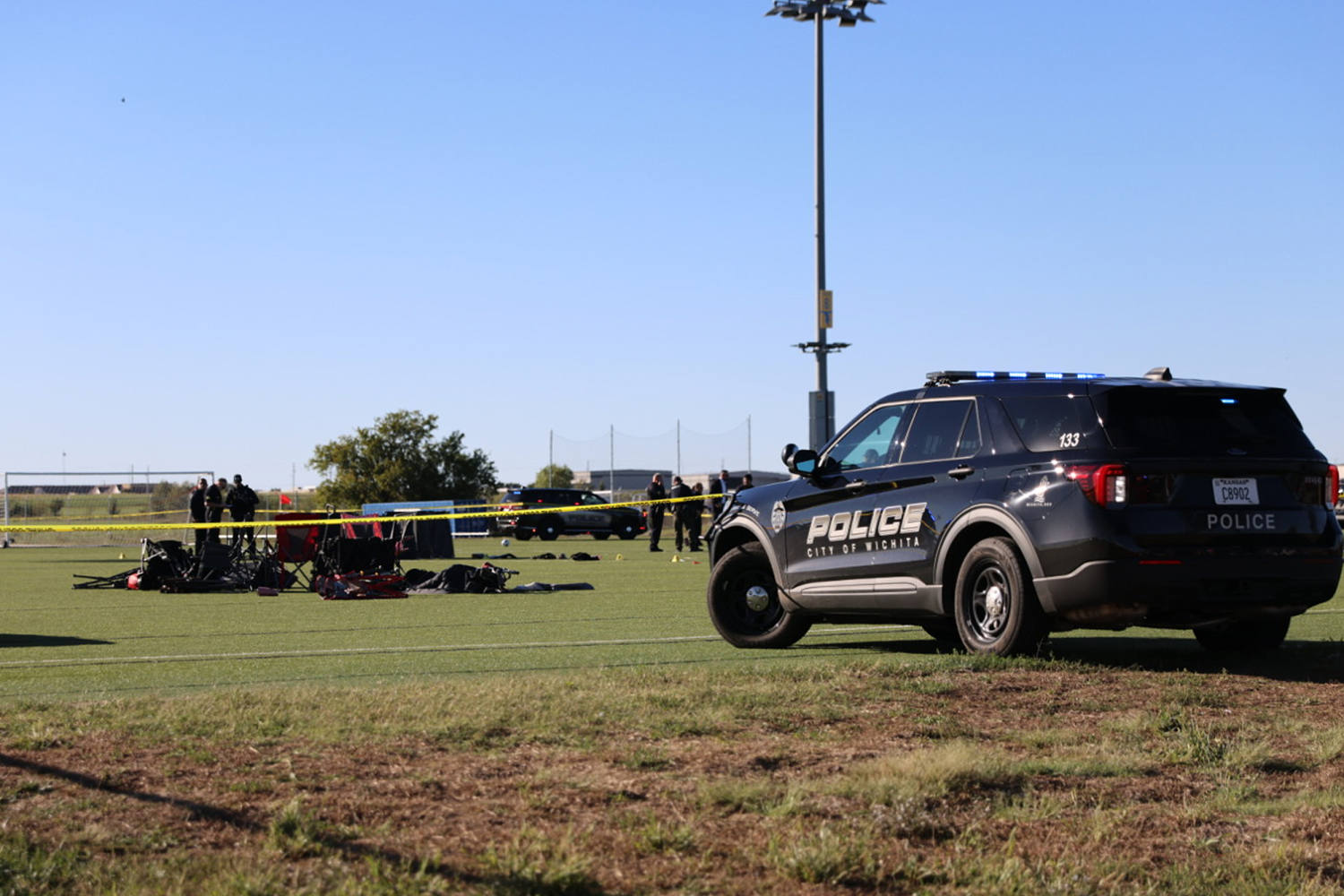
The tragedy unfolded on a routine weekend afternoon when a passenger vehicle left the roadway, crossed a perimeter barrier, and struck spectators and participants near a youth soccer complex in Kansas. Two victims died from their injuries, and emergency responders treated others at the scene. For months, the local community waited for an indictment, assuming that the sheer scale of the devastation would inevitably lead to prison time. Instead, the county attorney’s office announced that after reviewing toxicology reports, medical records, accident reconstruction data, and witness statements, no criminal charges would be filed. Also making headlines in related news: Stop Obsessing Over Victim Lists After a Brooklyn Building Collapse.
That decision often triggers immediate public outrage. To the average observer, a car leaving the street and killing innocent bystanders looks like an open-and-shut case of vehicular crime. Yet the American criminal justice system operates on strict statutory definitions of intent and negligence, not on the severity of the outcome alone. Understanding why a prosecutor walks away from a double-fatality case requires looking closely at the mechanics of criminal liability, the sudden medical emergency defense, and the structural vulnerabilities of public parks located beside active roadways.
The Legal Wall Between Tragedy and Crime
Criminal law draws a rigid line between an accident and a crime. To charge a driver with involuntary manslaughter or vehicular homicide in Kansas, prosecutors must prove beyond a reasonable doubt that the motorist acted with a specific culpable mental state. Depending on the exact statute invoked, the state must demonstrate recklessness, criminal negligence, or a material deviation from the standard of care that a reasonable person would observe under similar circumstances. Additional insights into this topic are explored by The Washington Post.
Speeding through a school zone, texting while driving, street racing, or operating a vehicle under the influence of alcohol or narcotics all satisfy that standard. Each involves a voluntary choice that creates an unjustifiable risk to others. A driver who gets behind the wheel after drinking makes a conscious decision that impairs their ability to control a two-ton machine.
A sudden, incapacitating medical event operates differently under the law. If a driver suffers an acute stroke, a severe hypoglycemic episode, a cardiac arrhythmia, or a first-time seizure without warning, the physical act of steering or braking ceases to be voluntary. In legal terms, the driver lacks mens rea—the guilty mind required to sustain a criminal conviction. You cannot criminally punish someone for failing to control a vehicle while unconscious, provided they had no reason to anticipate the episode before turning the key in the ignition.
Prosecutors do not take a driver’s word for it when a medical emergency is claimed. Investigators subpoena years of hospital records, pharmacy histories, and primary care notes. They look for red flags: a history of fainting spells, a doctor’s written warning not to drive, an untreated seizure disorder, or an expired prescription for a condition known to cause blackouts. Had the driver in the Kansas soccer field crash ignored prior medical warnings or skipped required medication, prosecutors would have had a clear path to argue criminal recklessness. When the medical paper trail shows an unheralded medical crisis, a criminal trial becomes legally unwinnable.
How Investigators Reconstruct a Medical Crash
Before closing a fatal crash investigation without charges, law enforcement agencies and forensic specialists conduct an exhaustive technical review. Modern vehicles carry an Event Data Recorder (EDR), often referred to as a black box, which captures critical telemetry in the seconds leading up to an impact.
Accident reconstructionists extract data showing vehicle speed, throttle position, brake application, and steering wheel angle. In cases involving impairment or distracted driving, the EDR frequently reveals erratic steering corrections, late hard braking, or fluctuating speeds as the driver struggles to regain control. In a true medical incapacitation event, the data looks starkly different. The throttle often remains steady or depresses continuously as the driver’s foot goes limp on the accelerator, while steering inputs cease entirely, sending the vehicle on a straight, unguided trajectory off the roadway.
Toxicology testing runs parallel to the mechanical analysis. State laboratories screen blood samples not only for alcohol and illicit drugs, but also for therapeutic medications that could induce drowsiness or interact dangerously with other prescriptions. Investigators cross-reference those results with emergency room admissions data collected immediately after the crash, where doctors document blood pressure spikes, cardiac enzymes, neurological deficits, or blood sugar levels that corroborate an acute medical event.
Once those pieces align, the county attorney faces a mandatory ethical rule. Prosecutors are barred from bringing charges they know are not supported by probable cause or cannot be proven beyond a reasonable doubt at trial. Filing charges merely to appease public anger or offer symbolic validation to grieving families would violate prosecutorial ethics and result in a directed verdict of acquittal before the case ever reached a jury.
The Civil Liability Gap and Insurance Realities
The absence of criminal charges does not mean the matter ends in total legal silence, though the civil justice system offers its own frustrating limitations. While criminal courts punish offenses against the state, civil courts adjudicate financial responsibility for harm caused to individuals. Yet even in a wrongful death lawsuit, the sudden medical emergency doctrine serves as a powerful affirmative defense across most jurisdictions, including Kansas.
Under civil tort law, a driver who is unexpectedly stricken by an unforeseen physical incapacity is generally not held negligent for the resulting collision. To overcome that defense in civil court, a plaintiff’s attorney must prove foreseeability—showing that the driver experienced warning signs, such as dizziness, blurred vision, or chest pain, minutes before the crash and failed to pull over while still capable of doing so.
Even when civil liability can be established, financial recovery rarely matches the magnitude of the loss. Most private motorists carry standard auto liability policies that cap payouts far below the economic and emotional value of two human lives. Unless the driver holds substantial personal assets or an umbrella insurance policy, wrongful death settlements often amount to a fraction of the lifetime earnings and support lost by the surviving families.
Why Youth Sports Complexes Remain Exposed
Focusing solely on the driver obscures a second, equally critical failure that turns medical emergencies into mass-casualty events: how municipalities design and protect public athletic fields. Across the United States, thousands of youth soccer fields, baseball diamonds, and community parks sit directly adjacent to multi-lane roads with speed limits between 35 and 55 miles per hour.
In many suburban and rural developments, the only separation between moving traffic and folding lawn chairs full of parents and toddlers is a stretch of turf, a shallow drainage swale, or a decorative split-rail fence. Those features are designed to mark property boundaries and keep soccer balls from rolling into the street, not to stop a 4,000-pound SUV traveling at highway speeds.
Civil engineers classify roadway departure crashes as one of the most predictable hazards in traffic safety. Drivers leave the road every day due to tire blowouts, slick pavement, wildlife, distraction, and medical episodes. When a roadway runs parallel to high-density pedestrian zones like youth sports complexes, relying on driver perfection as the primary safety barrier is an engineering gamble.
Installing crash-rated bollards, reinforced concrete retaining walls, or earthen berms along the perimeter of athletic fields significantly reduces the kinetic energy of an errant vehicle. A properly anchored steel bollard can stop a full-size pickup truck dead in its tracks before it reaches the touchline. Yet municipal parks departments routinely bypass these installations during construction and renovation phases.
The obstacle is almost always budget allocation. Crash-tested perimeter barriers cost tens of thousands of dollars per linear block, requiring deep concrete footings and utility relocations. Parks boards operating on tight taxpayer budgets prioritize turf maintenance, lighting, bleachers, and concession stands over structural vehicle mitigation. Until a fatal crash occurs in their jurisdiction, perimeter reinforcement remains an invisible line item that is easy to defer.
Medical Fitness to Drive and Regulatory Blind Spots
The Kansas crash also exposes a persistent blind spot in how state motor vehicle departments monitor medical fitness to drive. Once a driver passes a basic vision screening and road test in their youth, license renewal in most states requires little more than an online payment and a self-certified checkbox confirming the absence of impairing medical conditions.
Physicians face an awkward conflict when treating patients with emerging cardiovascular, neurological, or metabolic conditions. Only a handful of states enforce mandatory physician reporting laws that require doctors to notify the department of motor vehicles when a patient experiences a seizure or blackout. Kansas operates under a voluntary reporting framework, meaning clinicians may report an impaired driver in good faith, but are not legally compelled to do so in every instance.
Doctors worry that aggressively reporting patients to licensing authorities will destroy clinical trust, prompting patients to withhold symptoms or avoid follow-up care altogether. Meanwhile, patients who rely on personal vehicles to commute to work, buy groceries, and reach medical appointments face devastating economic consequences if their license is suspended. That mutual reluctance leaves high-risk drivers on the road until an acute event finally occurs behind the wheel.
Even in states with stricter reporting protocols, a first-time medical event bypasses every regulatory safeguard on the books. No screening questionnaire can predict an unheralded brain aneurysm, a sudden cardiac arrest, or an undiagnosed seizure disorder striking a previously healthy adult on a Saturday afternoon.
What Communities Can Demand After a Non-Charged Fatality
When prosecutors announce that no criminal charges will follow a fatal crash, public frustration often stalls because citizens do not know where to direct their pressure. Calling for the prosecutor’s resignation or demanding criminal charges that violate state statutes changes nothing. Effective accountability requires shifting focus toward administrative and infrastructure reforms that prevent the next errant vehicle from reaching a crowded sideline.
Local parents, league organizers, and residents hold tangible leverage over municipal governments and school districts that manage athletic complexes. County commissioners and city councils respond to documented liability exposure. Once a municipality is formally put on notice that an unshielded athletic field borders an active roadway, ignoring that hazard creates future legal vulnerability if another vehicle leaves the road.
Community advocates can push for three concrete interventions at local parks and sports facilities:
- Perimeter Engineering Audits: Demand that municipal traffic engineers evaluate every public athletic field located within 100 feet of a roadway with a speed limit exceeding 25 miles per hour.
- Physical Barrier Installation: Require the installation of crash-rated bollards, landscaped earthen berms, or heavy timber-and-steel guardrails between parking lots, access roads, and spectator sidelines.
- Spectator Zone Relocation: Reorient field layouts so team benches and parent seating areas sit on the interior side of the complex, placing buffer zones and service corridors closest to perimeter streets.
None of these measures can rewrite the outcome of the Kansas crash or fill the void left by two sudden deaths. Criminal courts are built to punish moral blameworthiness, and when a human body fails without warning, the law refuses to manufacture a villain where none exists. Real protection for families on the sidelines comes not from waiting for a courtroom verdict after a tragedy, but from putting steel, earth, and concrete between moving traffic and the places where children play.