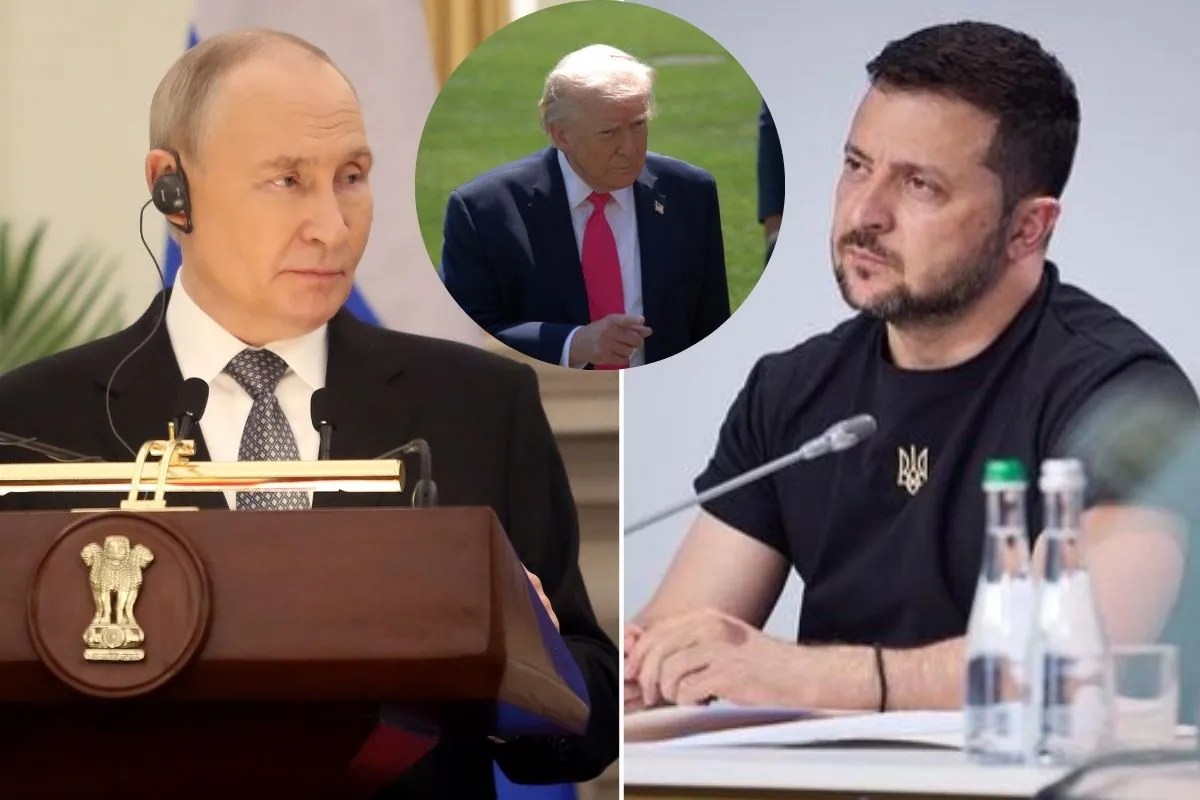
Headlines love a good game of diplomatic telephone. The mainstream press spent the week hyperventilating over the Kremlin announcing that Vladimir Putin personally relayed Iran position on regional conflict resolution straight to Donald Trump. Analysts on cable news treat this like a sudden pivot, a high-stakes chess move, or a shocking backchannel breakthrough.
They are wrong. Dead wrong. You might also find this related story useful: Inside the Riyadh Airport Attack Crisis and the Vulnerability of Overseas Workers.
This is not a peace initiative. This is not diplomacy. This is a debt collection agency operating with state-sponsored letterhead.
Look past the sterile wire service phrasing. When Moscow acts as the switchboard between Tehran and Mar-a-Lago, nobody is brokering a sudden handshake across the aisle. What we are witnessing is the mechanical output of a wartime transactional ledger. Tehran needs a line to Washington that does not reek of desperation, and Moscow owns the exclusive franchise on acting as the sanctioned world middleman. As extensively documented in detailed coverage by NBC News, the results are worth noting.
Let us clear away the diplomatic fog. The lazy consensus says Putin is positioning himself as the indispensable global peacemaker, sliding between Middle Eastern friction and Washington power politics to cement his own legitimacy. That narrative treats the Kremlin as a mastermind orchestrating grand strategy.
The reality is far colder. Moscow is over-extended. The Russian war machine runs on Iranian drones, artillery shells, and industrial supply lines funded by oil swaps that bypass Western ledgers. When Tehran hands Moscow a message for the incoming White House, it is not a request for a favor. It is a tariff. Moscow has to deliver it because Tehran holds the receipts for the weapons currently landing on European battlefields. Putin is not a statesman crafting a grand bargain; he is an errand boy clearing his tab.
Consider the mechanics of backchannel diplomacy during high-stakes geopolitical standoffs. When two hostile actors refuse to speak directly, they require a proxy with enough skin in the game to guarantee the transmission won't be leaked for domestic political points. But why Russia? Because Washington knows Moscow has zero interest in a stable Middle East right now. Chaos in the Gulf keeps oil prices buoyant, drains Western ammunition reserves toward multiple theaters, and ensures the US security apparatus stays perpetually distracted from the eastern European front.
When the Kremlin briefs the media about carrying Tehran talking points to Trump, they are performing a double play. Domestically, it projects an image of Russia as the center of global gravity, the mandatory clearinghouse for international crisis management. Internationally, it signals to Washington that any durable settlement regarding energy corridors or regional containment requires cutting Moscow a piece of the action.
It is an extortion racket dressed up in a tailored suit.
The conventional analysis treats Trump return to the political stage as a blank slate for wild card negotiations. Pundits scribble diagrams about transactional foreign policy, assuming a real estate mogul mentality will treat the Middle East like a strip mall acquisition. They miss the structural reality entirely. Trump does not need Putin to translate Iranian posture; he needs to know how much leverage Tehran has left after a year of degraded proxy networks and shattered command structures.
By having Moscow deliver the message, Iran signals that its survival strategy relies on multilateral hedging. They are tying their diplomatic safety line directly to the Russia-China axis. They are telling Washington: you cannot isolate us without going through our primary logistical lifeline.
So what does this mean for the actual ground game? Ignore the rhetoric about peace summits and de-escalation frameworks. Every time a capital announces it is carrying water for another sanctioned regime, check the balance sheet. Moscow gets to look relevant while hocking its services as a geopolitical courier. Tehran gets to probe Washington posture without committing to unconditional talks. And Washington gets an unfiltered look at how desperate the axis of isolated economies actually is.
The mistake analysts make is looking at these announcements through the lens of intent rather than leverage. Nobody is changing their mind. Nobody is suddenly discovering the value of dialogue. They are exchanging bargaining chips while the house burns.
Stop reading diplomacy into desperation. Putin is not a peacemaker. He is a proxy operating on commission, collecting fees from an ally he can no longer afford to ignore and selling them to an administration that knows the price of every ticket in the room.
The next time you read about a secret message relayed through an intermediary, ask yourself who is holding the mortgage. It is never the messenger.