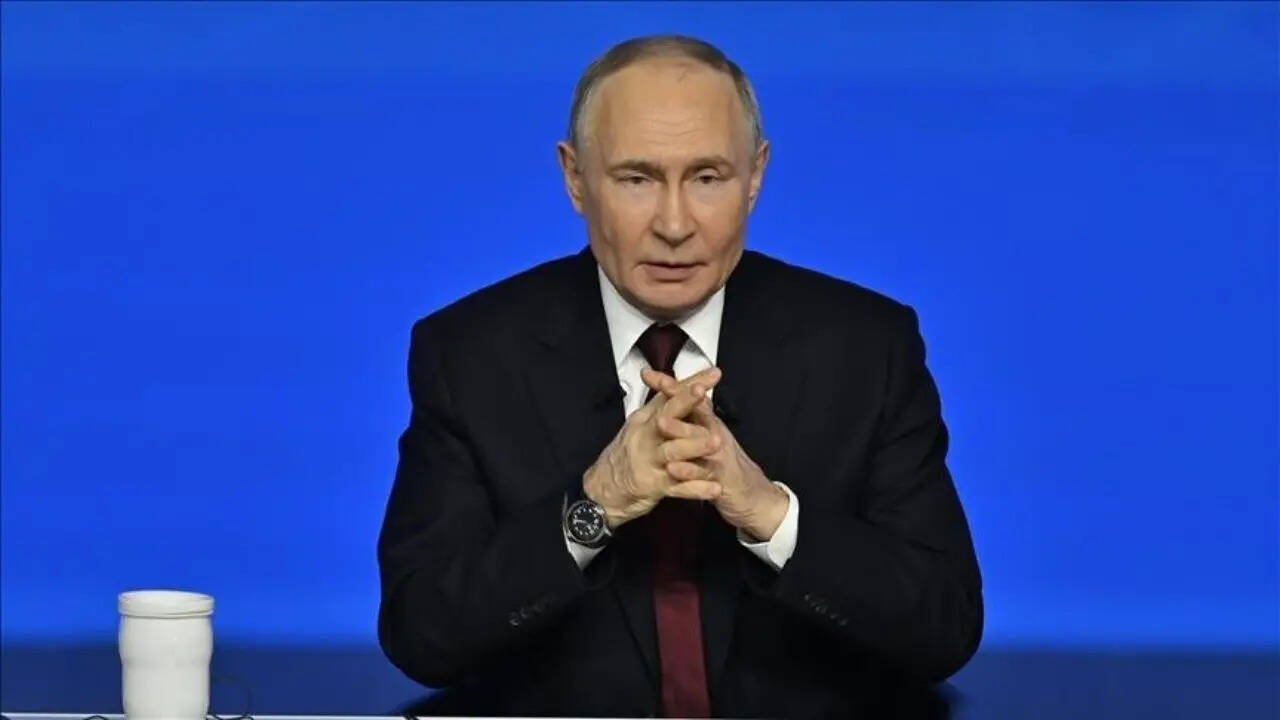
Vladimir Putin recently sent a shockwave through diplomatic circles by suggesting the Ukraine conflict is finally nearing its conclusion. He didn't just stop at a vague timeline. He went out of his way to thank the United States for engaging in high-level talks. If you’ve been following the grinding war of attrition over the last few years, this feels like a massive shift in tone. But don’t mistake this for a white flag. It’s a calculated move.
The Russian President is playing a complex game of optics and endurance. By signaling that he’s ready for the "endgame," he's putting the ball back in Washington’s court. He wants the world to see Moscow as the reasonable party while the front lines remain locked in a brutal stalemate. This isn't just about battlefield fatigue. It's about the shifting political winds in the West and the realization that neither side can achieve a total knockout blow.
The Reality Behind the Grateful Tone
It sounds strange to hear the Kremlin thank the U.S. government. Usually, the rhetoric coming out of Moscow is filled with accusations of "Western hegemony" and "proxy wars." So, why the change? Putin’s sudden gratitude for the talks suggests that a back-channel communication line is actually yielding results he likes.
Russia has long maintained that it won't negotiate with Kyiv directly, viewing the Ukrainian government as a subordinate of NATO. By thanking the U.S., Putin is reinforcing his preferred narrative. He wants to be seen as an equal power negotiating the fate of Europe with the only other superpower he respects. It’s a way to bypass President Zelenskyy and frame the war as a global security issue rather than a localized invasion.
The "gratitude" also serves a domestic purpose. Putin needs to show the Russian public that the heavy sanctions and the loss of life are leading toward a diplomatic victory. If he can frame the eventual cessation of hostilities as a result of the U.S. finally "listening" to Russia’s security concerns, he wins at home. He's framing the exit ramp before the car even slows down.
Why the Conflict is Reaching a Breaking Point
Wars don't just end because people get tired. They end because the cost of continuing exceeds the potential gain. We’re seeing that math play out right now. On the ground, the map hasn't moved significantly in months. Both sides are burning through artillery shells and personnel at an unsustainable rate.
- Economic Strain: While Russia has pivoted to a war economy, it's not a permanent solution. Inflation is high. Labor shortages are hitting the civilian sector hard.
- Political Fatigue: In the U.S. and Europe, the appetite for sending multi-billion dollar aid packages is wavering. Putin knows this. He's waiting for the political will in the West to snap.
- Strategic Realism: Russia has secured a land bridge to Crimea. Ukraine has defended its sovereignty. Both have "wins" they can sell to their people if a ceasefire happens tomorrow.
Ukraine naturally views these "end of war" statements with extreme skepticism. From their perspective, any pause in fighting is just an opportunity for Russia to re-arm and strike again in two years. However, the pressure from Western allies to find a diplomatic solution is growing louder behind closed doors. They can't fund a "forever war" without a clear path to victory, and a total Russian collapse looks increasingly unlikely.
What the United States Gets Out of It
The U.S. isn't talking to Russia out of the goodness of its heart. There are massive geopolitical stakes at play. Washington wants to prevent the conflict from escalating into a direct NATO-Russia clash. They also want to decouple Russia from its growing dependence on China.
If the U.S. can facilitate a deal that preserves a sovereign Ukraine—even if it means territorial concessions—they can claim they stopped a continental war. It’s about risk management. The White House knows that a desperate Russia is a dangerous Russia. If Putin feels he has a dignified way out, the risk of tactical nuclear use or a wider European collapse drops significantly.
The Problem With "Ending" the War
Ending the fighting is easy. Ending the conflict is almost impossible. Even if a ceasefire is signed tomorrow, the deep-seated issues remain. You have thousands of miles of minefields. You have millions of displaced people. You have a generation of bitterness that won't fade.
Putin’s version of "coming to an end" likely involves Russia keeping the territory it currently occupies. For Ukraine, that’s a non-starter. This is where the talks become incredibly difficult. How do you split the difference between "liberate every inch" and "keep what we took"?
The most likely scenario isn't a grand peace treaty like we saw after World War II. It’s more likely to look like the Korean Peninsula. A "frozen" conflict where the shooting stops, but the state of war never truly ends. Putin is basically signaling that he's okay with that. He's comfortable with a long-term frozen border if it means the immediate threat to his regime's stability is lifted.
What You Should Watch For Next
The rhetoric is changing, but the actions on the ground are the only thing that matters. Watch the upcoming NATO summits and the specific language used by U.S. State Department officials. If they stop talking about "total victory" and start talking about "security guarantees," you’ll know the deal is being baked.
Keep an eye on the weapons shipments too. If the West starts pivoting from offensive weapons to purely defensive systems, it's a sign they’re preparing for a static border. Putin is betting that the West will blink first. He's using these talks to encourage that blink.
If you're trying to make sense of this, don't look at the smiles in the diplomatic photos. Look at the logistics. Look at the energy prices. Look at the election cycles in the West. That's where the real war is being fought. Putin says the conflict is ending because he thinks he has survived the worst the West could throw at him. Now, he's just waiting to collect his prize at the negotiating table.
Stay skeptical of the "gratitude." In the world of high-stakes geopolitics, a thank you is often just a different way of saying "I've got what I wanted." The coming months will determine if this is a genuine pivot toward peace or just a breather before the next storm. For now, pay attention to the shift in the U.S. response. If they aren't denying the progress of these talks, the end might actually be closer than we think.