Diplomats love the word "time." When negotiations stall, when treaties fracture, when statecraft hits a brick wall, the immediate reflex of the international relations apparatus is to claim the parties just need "more time."
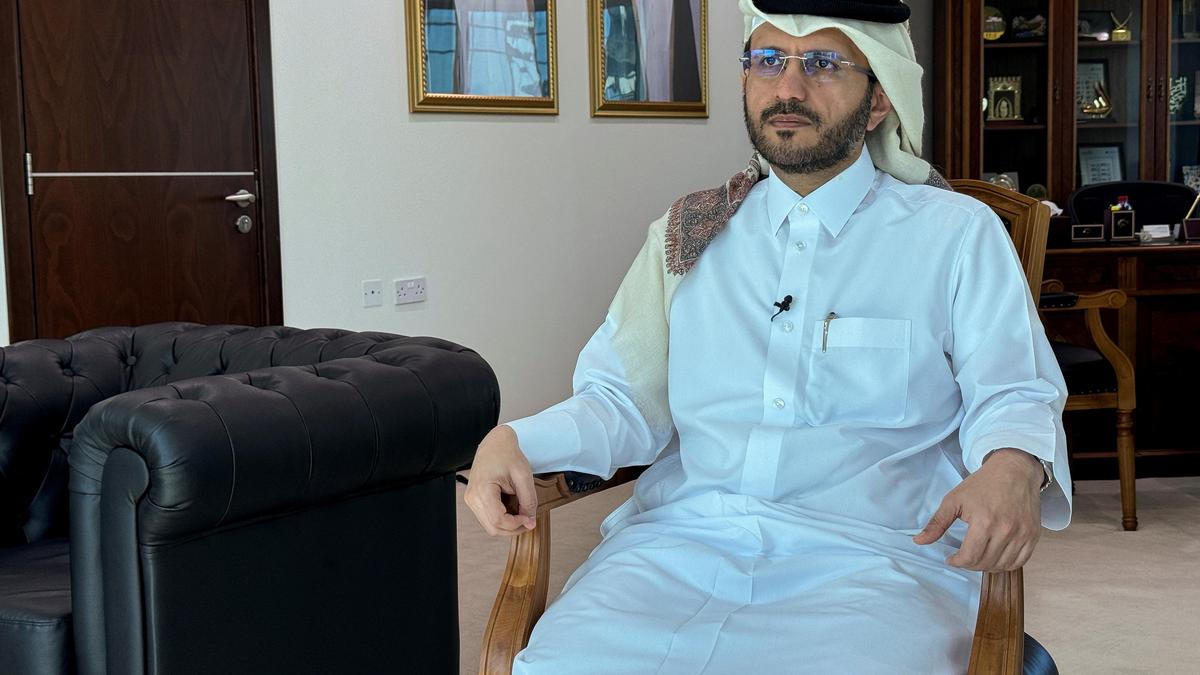
We saw this exact script play out when Qatar’s foreign policy establishment signaled that U.S.-Iran negotiations required a longer runway. The mainstream press ran with it, painting a picture of patient, well-meaning Gulf mediators managing a delicate diplomatic dance where a breakthrough is always just one more summit away.
It is a comforting narrative. It is also entirely wrong.
The lazy consensus in geopolitical reporting treats mediation as a technical problem—a gears-and-levers process where Doha plugs a communications gap between Washington and Tehran. The reality? The "negotiations" are a performative stalemate. Qatar isn't buying time to secure a breakthrough; it is managing a permanent status quo that serves the political survival of everyone involved.
To understand Middle Eastern geopolitics, you have to stop listening to what diplomats say to reporters and start looking at what the stagnation actually accomplishes.
The Myth of the "Stalled" Breakthrough
The conventional view assumes that the ultimate goal of U.S.-Iran backchannels is a grand bargain—a comprehensive treaty that settles nuclear enrichment, sanctions relief, and regional proxy dynamics in one fell swoop. Because this bargain never materializes, commentators perpetually judge the talks as "struggling" or "needing time."
This misinterprets the fundamental mechanics of modern statecraft.
In backchannel diplomacy, the process is the product. The goal is not to reach a finish line; the goal is to maintain a controlled temperature.
- For Washington: Active mediation allows the administration to signal to domestic audiences and regional allies that it is containing the Iranian threat without committing to a costly, politically disastrous military escalation.
- For Tehran: Perpetual negotiations provide a shield. As long as Iran is "engaged in talks" via Doha, it complicates the efforts of hardliners in the West to build a global consensus for total economic isolation or kinetic strikes.
- For Doha: The role of indispensable intermediary is the ultimate security guarantee. It transforms a small peninsula into an untouchable geopolitical hub, balancing a massive U.S. military presence at Al Udeid Air Base with a shared natural gas field alongside Iran.
When a mediator says talks need more time, they are telling you the system is working exactly as intended. The friction is the stability.
Dismantling the "People Also Ask" Flawed Premises
If you look at what the public asks about these negotiations, you find a series of flawed assumptions driven by surface-level news analysis. Let us dismantle them one by one.
"Why can't the U.S. and Iran just negotiate directly?"
This question assumes that direct communication reduces friction. In reality, direct talks between Washington and Tehran are political suicide for both administrations.
Imagine a scenario where the U.S. Secretary of State sits across a table from the Iranian Foreign Minister in Geneva without a buffer. The domestic blowback in Washington from congressional hawks would freeze the administration’s legislative agenda within an hour. In Tehran, the Islamic Revolutionary Guard Corps (IRGC) would use the optics of direct compliance with the "Great Satan" to undermine the presidency.
Qatar exists to provide plausible deniability. Messages are passed, modified, and contextualized so that both sides can claim to their domestic hardliners that they haven't conceded an inch of dignity.
"Do economic sanctions force Iran to the negotiating table?"
This is the most persistent myth in Western foreign policy. Decades of data show that broad economic sanctions do not force ideological regimes to capitulate; they merely restructure the target country's economy.
Sanctions have forced Iran to master the "resistance economy." They have built sophisticated, illicit supply chains, deeply integrated with Chinese buyers and global shadow fleets. The elite who control these smuggling routes—primarily the IRGC—have grown immensely wealthy and politically entrenched because of the sanctions, not despite them.
When the U.S. offers sanctions relief in exchange for nuclear concessions, it is offering to dismantle a black-market ecosystem that the ruling class in Tehran now relies on for survival. The carrot is actually a threat to their business model.
[Mainstream Illusion] -> Expects a permanent treaty -> Views delays as failure
[Geopolitical Reality] -> Uses process for political cover -> Views delays as the goal
The High Cost of the Middleman Strategy
I have watched diplomatic initiatives devour years of bureaucratic energy only to end up exactly where they started. The danger of relying on Qatar's permanent mediation loop is that it breeds strategic laziness.
By pretending that a diplomatic solution is just around the corner, Western policymakers avoid making hard, structural choices. They do not fully commit to containing Iran, nor do they fully commit to a real, painful deterrence strategy. Instead, they outsource their foreign policy to Doha, treating the Qatari diplomatic apparatus as an outsourced HR department for regional crises.
There is a distinct downside to exposing this fiction. If Washington admits that the talks are an empty theater, it forces a binary choice: accept Iran as a threshold nuclear state, or prepare for open conflict. The theater, for all its hypocrisy, prevents the worst-case scenario. But we must stop confusing theater with progress.
The Actionable Pivot for Global Markets
For corporate strategists, energy traders, and multinationals, navigating this space requires discarding the headlines entirely. Stop trading on the news of "positive developments" in Gulf-mediated talks.
- Price in Permanent Friction: Do not build supply chain models or energy projections based on the assumption of Iranian oil legally returning to Western markets via a signed treaty. It is not happening.
- Map the Indirect Channels: Track the capital flows through regional financial hubs that bypass Western banking systems. That is where the real economic concessions are monitored and executed, not in the luxury hotels of Doha.
- Ignore the Rhetoric, Watch the Kinetic Actions: When Iran shifts its positioning, it does not do so via a press release from a mediator. It does so by adjusting the frequency of its regional proxies or calibrating its uranium enrichment levels. Watch the centrifuges, ignore the statements.
The diplomatic industrial complex will continue to insist that a breakthrough is possible if we just give the process more time. Let them whisper to the press. The real players know that the clock isn't ticking toward a solution—it is just running in place to keep the machinery of status quo from collapsing.
Stop waiting for the treaty. The stalemate is the strategy.