The smell of stale Turkish coffee and wet wool hangs heavy in a cramped Tel Aviv living room at two in the morning. Outside, rain streaks down the glass, blurring the orange sodium lights of Ibn Gabirol Street. Inside, four people sit around a low wooden table covered in maps, poll cross-tabs, and half-eaten sesame pretzels. None of them are politicians by birth. They are reservists, a tech founder who hasn't slept a full night since October, a high school principal from the north whose classrooms have been empty for months, and a retired civil servant whose hands shake slightly when he reaches for his glasses.
They are trying to do the math. Not the cold, sanitized arithmetic of political pundits on evening television, where seats in the Knesset are traded like baseball cards, but the brutal, unforgiving math of survival. How do you replace a leader who has defined an era—Benjamin Netanyahu—without building a coalition so fragile that it collapses the moment the first storm hits?
We have seen this movie before. In 2021, an ideological patchwork quilt stitched together eight wildly incompatible parties—from right-wing nationalists to left-wing socialists and an Arab Islamist party—united by a single, negative premise: Anyone But Bibi. It lasted barely a year. The center could not hold because there was no center, only a shared exhaustion.
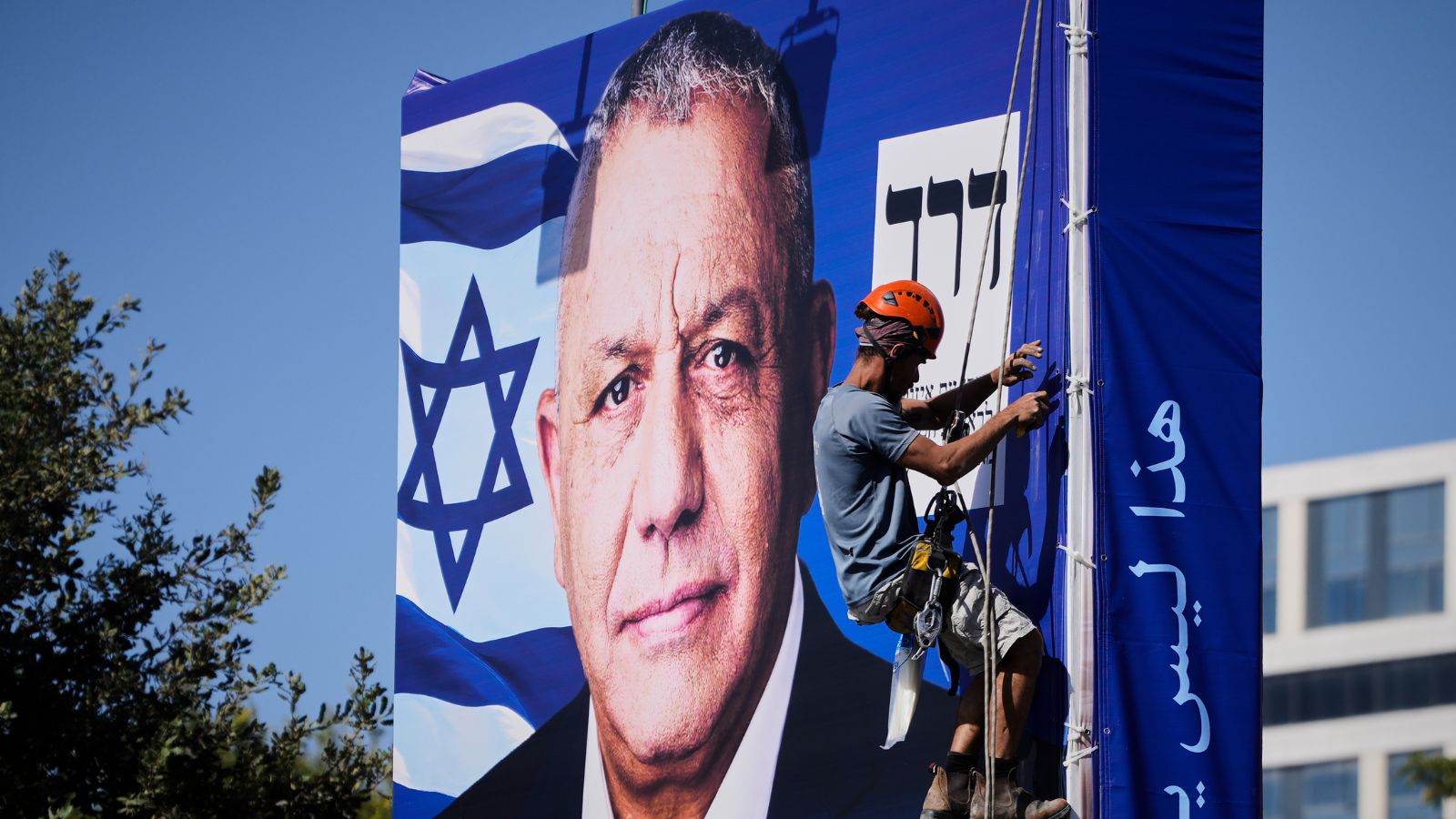
Enter Gadi Eisenkot.
To understand why Eisenkot’s recent intervention has sent tremors through Israel’s political establishment, you have to understand the man himself. He does not speak in the soaring, operatic cadences of career campaigners. When the former IDF Chief of Staff talks, he sounds like an engineer inspecting a bridge that has taken too much structural damage. He looks at the cracks, measures the load-bearing capacity, and refuses to sign off on the blueprint until the foundation is poured properly.
According to political reporting covering his recent statements, Eisenkot—a prominent figure in the opposition and a former member of the war cabinet—has laid down four non-negotiable conditions for joining or forming any alternative government to replace Prime Minister Benjamin Netanyahu. While standard news dispatches treat these four points as a dry checklist of coalition demands, looking closer reveals something far more profound. They are not merely political hurdles; they are an attempt to rewrite the rules of Israeli governance so the next government doesn't repeat the fatal mistakes of the last one.
The Architecture of Exhaustion
Let us step back for a moment and consider a hypothetical voter—call her Maya, a thirty-four-year-old physical therapist living in Haifa. Maya is not an ideologue. In the past five years, she has voted for three different parties, each time hoping for stability, each time watching her ballot dissolve into another round of snap elections, constitutional crises, and street protests. When Maya hears that an opposition leader is setting "conditions" for replacing Netanyahu, her first instinct isn't hope. It is suspicion. Here we go again, she thinks. More ego. More lines in the sand while the house is on fire.
That cynicism is the invisible enemy in Israeli politics right now. It is thicker than tear gas and harder to clear.
When you live through years of institutional whiplash—where budgets aren't passed, ministries are invented out of thin air to satisfy a minor party boss, and basic questions of citizenship and military service are left to fester like untreated wounds—you begin to lose faith in the very idea of a functioning state. You start to believe that chaos is simply the weather.
Eisenkot knows Maya. He has commanded her brothers, her cousins, and, tragically, he has stood beside the fresh graves of her generation—including his own son, Gal, who fell in Gaza in December 2023. When a man who has paid that price steps up to a microphone, the room goes quiet. His conditions are not bargaining chips for a bigger ministry or a larger budget slice. They are structural steel.
Condition One: A Government That Can Actually Govern
The first demand Eisenkot has articulated centers on the architecture of the coalition itself—specifically, insisting on a broad, stable Zionist government rather than a razor-thin 61-seat majority held hostage by extremist fringes.
Think about what a 61-seat coalition looks like in practice. Imagine driving a bus down a winding mountain road in the dark, and every single passenger has their hand on the steering wheel. If one person threatens to jump out unless you turn left, you turn left, even if it means heading straight toward a cliff. For years, Israeli politics has been dictated by the smallest, loudest factions holding a knife to the throat of the majority. Whether it is ultranationalist firebrands demanding policies that isolate the country diplomatically, or sectoral parties demanding exemptions from shared civic duties, the tail has wagged the dog until the dog collapsed.
By insisting on a broad, mainstream foundation, Eisenkot is arguing that replacing Netanyahu is meaningless if the replacement is just as paralyzed. He is telling potential partners—from Benny Gantz to Yair Lapid, Avigdor Liberman, and Naftali Bennett—that arithmetic is not enough. A government needs a shared ideological core, a basic agreement on what the state is and where it is going, before a single ministerial portfolio is handed out.
Condition Two: The End of the Great Evasion
If the first condition is about structure, the second is about fairness—a word that has become radioactive in Jerusalem. Eisenkot has made clear that any future government must commit to universal national service and a fair sharing of the burden, directly confronting the decades-old exemption system for ultra-Orthodox (Haredi) men.
You do not need a degree in political science to feel the raw nerve this touches. Go to any reserve base in the Negev or along the northern border. Talk to the forty-two-year-old accountant who has spent two hundred days away from his kids and his crumbling business over the past year. Talk to the twenty-one-year-old tank commander who hasn't taken off his boots for more than six hours at a stretch. Then read the headlines about coalition lawmakers fighting tooth and nail to pass legislation that enshrines permanent military exemptions for tens of thousands of able-bodied young men, backed by state subsidies.
It is an unsustainable moral fracture.
For decades, Israeli prime ministers—Netanyahu most skillfully of all—treated the Haredi parties as natural, indispensable coalition partners. The unspoken bargain was simple: you give us your votes on foreign policy and political survival, and we will give you autonomy, funding, and exemptions from the draft. It worked until reality broke the deal. War has a way of stripping away polite fictions. When the army is stretched to its absolute limit, an exemption ceases to be a cultural accommodation; it becomes an existential liability.
Eisenkot’s condition here is a line drawn in concrete. He is effectively saying that the old political shortcut—buying coalition peace by selling out the principle of equal civic duty—is permanently closed. Any party that wants to sit around the cabinet table must sign onto a real, enforceable framework that brings ultra-Orthodox citizens into military or national service. Not a committee. Not a five-year study. A binding commitment.
Condition Three: Defining the Borders of Reality
The third pillar of Eisenkot’s framework addresses the question that haunts every late-night conversation in Tel Aviv, Jerusalem, and Washington: What is the endgame?
According to accounts of his platform, Eisenkot demands a clear, realistic diplomatic and security strategy—one that rejects both messianic fantasies of permanent military occupation and annexation, and naive illusions of instant peace. Instead, he advocates for a pragmatic policy aimed at regional integration, maintaining strict Israeli security control while creating a political horizon that prevents endless, multi-front attrition.
Let’s pause and look at why this matters so deeply.
Under Netanyahu’s recent coalitions, strategy was often replaced by stalling. Decisions about the "day after" in Gaza, about the restoration of security in the north so sixty thousand displaced residents could go home, and about alliances with moderate Sunni states were repeatedly deferred because making a choice meant alienating a coalition partner. If you say yes to a regional diplomatic framework, the far-right ministers threaten to bolt. If you say yes to permanent annexation, you shatter relations with the United States and regional allies. So you say nothing. You manage the conflict until the conflict manages you.
Eisenkot, shaped by four decades in uniform, views strategic ambiguity not as clever statecraft, but as negligence. An army cannot win a war if the political echelon refuses to define what victory looks like. By making a coherent diplomatic and security doctrine a prerequisite for coalition building, he is forcing the opposition to answer the hardest questions before taking office. Do they have the courage to tell the public what territorial and political compromises are necessary to secure long-term alliances? Are they willing to stand up to both domestic extremists and international pressure with a unified voice?
Condition Four: Repairing the Guardrails
The fourth condition goes straight to the constitutional soul of the country: halting judicial overhauls that weaken democratic checks and balances, and establishing a state commission of inquiry into the failures of October 7.
Remember the summer of 2023? Hundreds of thousands of citizens stood in the streets week after week, waving flags, watching their country tear itself apart over the Supreme Court, the power of legal advisors, and the boundaries of executive authority. That wasn't an abstract legal seminar. It was a fight over whether the rules of the game could be changed in the middle of the match by whoever happened to hold a temporary majority.
Eisenkot’s insistence on democratic guardrails and an independent state commission of inquiry is about restoring institutional memory and accountability. In a healthy democracy, when a catastrophic failure occurs, you do not appoint a partisan panel to whitewash the record. You hand the keys to an independent state commission with subpoena power, let the chips fall where they may, and learn the lessons so your grandchildren don't pay the same price.
By tying this directly to the formation of a new government, Eisenkot is warning his peers: Do not fall in love with power once you have it. The temptation for any incoming coalition is to keep the expanded executive powers their predecessors carved out, telling themselves that they will use those tools responsibly. Eisenkot is saying no. The guardrails go back up on day one.
The Gamble of Principle
Of course, there is a glaring, uncomfortable vulnerability in Eisenkot’s approach, and anyone who tells you otherwise isn't being honest.
Politics is the art of the possible, and rigid conditions have a way of colliding with messy reality. What happens after the next election if the numbers simply don't add up? What if a broad Zionist coalition falls two or three seats short of 61, and the only mathematical path to unseating Netanyahu requires compromising on one of these four pillars?
Ask a veteran political strategist in Jerusalem, and they will scoff at Eisenkot’s blueprint. They will tell you that campaigns are won on emotion and coalitions are built in smoke-filled rooms, not through four-point manifestos. They will remind you that Netanyahu is a master tactician who thrives when his opponents argue among themselves over purity tests while he consolidates his base.
That fear is real. I have felt it myself watching opposition leaders fracture over minor phrasing while a well-oiled political machine marches forward in lockstep. There is a terrifying possibility that by setting the bar so high, Eisenkot makes it harder to assemble the very coalition he wants to build.
Yet, consider the alternative.
Suppose the opposition wins 62 seats tomorrow without agreeing on these four principles. Suppose they rush into the Prime Minister’s Office fueled solely by relief that the Netanyahu era is over. Within six months, the first crisis hits. One party demands a freeze on settlement construction; another threatens to quit over it. One faction pushes for immediate draft enforcement; another quietly cuts a side deal to delay it. The cabinet leaks like a sieve, public trust craters, and within eighteen months, the country is back at the ballot box—only this time, the public is so disillusioned that they hand power right back to the strongest, most populist voice in the room.
We don't have to guess how that story ends. We already lived through it between 2021 and 2022.
What Happens in the Quiet
True leadership rarely looks like a triumphant balcony speech. More often, it looks like a quiet, stubborn refusal to sign a bad contract.
Gadi Eisenkot is betting that the Israeli public has finally grown up—that voters like Maya in Haifa are tired of shiny promises and temporary fixes, and are hungry for someone who will tell them what the house actually needs to stay standing. He is betting that a clear, honest blueprint will attract more voters than a vague, everything-to-everyone slogan.
Whether his fellow opposition leaders have the discipline to meet his standard remains an open question. Egos in Israeli politics are forged in titanium, and asking seasoned politicians to subordinate their personal ambitions to a four-point structural code is like asking a river to flow uphill.
Back in that cramped Tel Aviv living room, as the rain finally begins to let up and gray light seeps through the blinds, the four people around the table fold up their maps. The coffee is cold. Nobody has solved the puzzle yet. The polls still shift with every news cycle, the region remains on a razor’s edge, and the path to 61 seats looks less like a highway and more like a minefield.
Before he steps out into the damp morning air, the retired civil servant picks up a red pen and circles the four conditions scribbled on the top of a yellow legal pad. He doesn't look triumphant. He looks tired, determined, and entirely clear-eyed about what comes next. Because you can argue all night about who gets to sit in the captain’s chair, he says quietly, tapping the paper once with his knuckle, but none of it matters if the hull is still taking on water.


