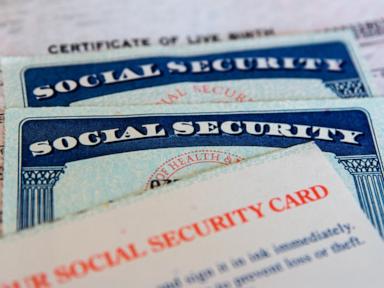
Paper. That is how it usually starts.
A crisp, government-printed envelope arrives in a mailbox somewhere in Ohio or Florida or Pennsylvania, smelling faintly of toner and cold ink, and inside it sits a number that looks—on paper—like mercy. A 3.6% cost-of-living adjustment for 2027. Three point six percent. Said out loud at a dinner party or scrolled past on a phone screen between errands, it sounds polite. Measured. Almost generous, like a waiter rounding down a bill or a neighbor leaving extra tomatoes on the porch.
Except numbers do not live in dinner parties. They live in grocery aisles at 7:15 a.m. under fluorescent bulbs that hum like trapped wasps. They live in pharmacy waiting rooms where a plastic chair feels colder after your second hip replacement. They live in the quiet, unglamorous math of a fixed income trying to outrun a world that never stops changing its price tags.
I know what that math feels like from the inside, though not at first from the receiving end. Years ago, sitting across a kitchen table from my grandfather while he lined up amber prescription bottles beside a spiral notebook, I watched a man who had spent forty-two years pouring concrete and fixing transmissions try to figure out why his electric bill had eaten his dental co-pay. His hands were thick, calloused, scarred from decades of work that leaves ridges in your knuckles. Yet when he looked at a column of figures, his shoulders slumped the way they never did under a sack of Portland cement. Money, when you are older and the safety net has fewer threads left, isn't abstract. It is air.
Let's be honest right here, before we go any further: I am not an actuary sitting in a glass tower in Baltimore, and I won't pretend the formulas governing Social Security are simple or cozy. They are dense, bureaucratic, and occasionally maddening. When an announcement comes down that the Social Security Administration has set a 3.6% cost-of-living adjustment for 2027, the headlines read like weather reports. Cold front moving in. High pressure holding steady. People read the percentage, nod, and move on to whatever else is breaking their concentration that morning.
Why does a headline like that so often leave the people most affected feeling strangely invisible?
Because a percentage is a shadow. It tells you the shape of something without letting you feel its weight.
When a Percentage Becomes a Grocery Cart
To see what 3.6% actually does when it hits real life, let's build a hypothetical scenario—explicitly a composite picture, not a single real person, though drawn from patterns repeated millions of times across the country.
Picture Clara, seventy-one, a retired school librarian living in a small brick bungalow outside Columbus. Clara worked for thirty-eight years. She didn't get rich—nobody gets rich shelving biographies and teaching fourth graders how to find an atlas—but she was careful. She paid off her house before her husband passed, kept her car maintained, and lived modestly. Her monthly Social Security check isn't a fortune; it is the floor beneath her feet. If her benefit is, say, $1,950 a month, a 3.6% cost-of-living adjustment adds roughly $70 a month before any deductions.
Seventy dollars.
Stop and hold seventy dollars in your mind. Don't spend it yet. Just look at it.
In a month, seventy dollars is about two dollars and thirty-three cents a day. Two dollars and thirty-three cents will not buy a carton of eggs and a loaf of whole-grain bread in most neighborhoods. It will not cover the rising cost of homeowner's insurance, which has been climbing relentlessly in zip codes that never used to consider themselves high-risk. And if Medicare Part B premiums adjust upward—as they so frequently do, nibbling away at the gross increase before a single dollar ever reaches a checking account—that seventy-dollar bump can shrink until it feels less like a raise and more like a polite wave from across a crowded street.
That is the trap hidden inside standard coverage of a cost-of-living adjustment. Press releases announce the headline figure with crisp authority. Journalists report the percentage. Commentators debate whether inflation is cooling or sticky. Meanwhile, Clara stands in front of the canned soup shelf holding two cans of low-sodium chicken noodle, doing mental division she never asked to learn.
Metaphorically speaking, a COLA is meant to be a treadmill that speeds up just enough to keep a walker in the same spot while the belt moves underneath them. The problem is that the belt beneath retirees doesn't move at one uniform speed. The cost of a haircut, a winter heating bill, a physical therapy session, and a bag of dog food all pull in slightly different directions. When the treadmill only adjusts by a single average number, someone always ends up closer to the back edge.
The Formula Behind the Curtain
If you want to understand why that happens, you have to peek behind the curtain at how the cost-of-living adjustment is calculated—without letting the jargon put you to sleep.
For decades, Social Security COLAs have been tied to the Consumer Price Index for Urban Wage Earners and Clerical Workers, known as CPI-W. Think of CPI-W as a giant shopping basket filled with thousands of goods and services: gasoline, rent, groceries, apparel, medical care, electronics. Statisticians track what that basket costs over time, compare a specific third-quarter window against the prior year's third quarter, and derive the percentage adjustment that takes effect at the start of the new year—in this case, 2027.
Simple in theory. Complicated in practice.
Here is where doubts creep in—and where I think it is only fair to admit that reasonable experts disagree fiercely. Critics of using CPI-W point out that urban wage earners and clerical workers are, by definition, working people. They buy different things in different proportions than retirees. A twenty-eight-year-old office worker might spend more on commuting, tech gear, or certain kinds of clothing, whereas an eighty-year-old might spend a far larger slice of every dollar on healthcare, prescription drugs, and staying warm or cool at home. Proposals like switching to an index geared toward older Americans—often called CPI-E—have been debated for years, with supporters arguing it reflects seniors' true expenses and critics warning of its own methodological quirks and fiscal ripple effects.
I don't bring that up to drown you in acronym soup. I bring it up because if you feel a twinge of confusion or skepticism when you hear "3.6% cost-of-living adjustment," your instinct isn't wrong. The system is built out of compromises, historical formulas, and statistical averages. Averages are useful for policy models. They are much worse at describing a Tuesday morning when your furnace clicks off and won't kick back on.
History reminds us how volatile this arithmetic can be. Look back over the past several years: there were stretches where inflation surged and COLAs jumped dramatically—8.7% for 2023 after 2022's inflation wave—followed by smaller adjustments like 3.2% for 2024 and 2025's 2.5% mark, before shifting again toward 3.6% for 2027. Watching those numbers bounce up and down over a single decade feels a bit like riding a boat on choppy water. You aren't capsizing, necessarily, yet you never quite get used to the pitch of the deck.
What Happens When the Check Arrives
Let's bring Clara back into the room, still our hypothetical anchor, and trace what happens once January 2027 arrives and the adjusted benefit begins to roll out.
First, timing matters. Cost-of-living adjustments for Social Security retirement benefits typically show up in January payments (with Supplemental Security Income recipients seeing their adjusted rate at the very end of December). For anyone budgeting month to month, knowing the exact calendar arrival of that change isn't trivia; it's the difference between paying a utility bill on time and juggling due dates.
Second, look at the taxes and withholdings that sit quietly between the gross benefit and the net deposit. Many retirees assume a 3.6% increase means 3.6% more cash to spend freely. Reality is fussier. Depending on your total combined income—which factors in adjusted gross income, nontaxable interest, and half of your Social Security benefits—a portion of your benefits can be subject to federal income tax. Those income thresholds haven't been indexed to inflation the way benefits have, meaning as nominal dollar amounts drift upward over time, more households bump into taxable territory than they might expect. Add in health insurance premiums deducted directly from monthly checks, and the net gain can look noticeably leaner than the headline.
Third—and this is the part nobody puts in a neat chart—is the emotional toll of constant vigilance.
Living on a fixed income with periodic cost-of-living adjustments trains you to become an amateur economist whether you want the job or not. You start noticing the shrinkflation on cereal boxes. A box that used to hold eighteen ounces now holds fifteen and a half, yet the price on the shelf tag stayed the same or crept up twenty cents. A 3.6% COLA measures price changes on standardized goods, not the quiet disappearance of an ounce here and an ounce there. When you live close to the margin, you feel every millimeter of that shift.
Why? Because margin is freedom.
When you have a wide financial cushion, a utility bill rising by twelve dollars is an annoyance. When your cushion is thin, a twelve-dollar increase means deciding whether to delay a car repair or trim back on fresh produce for two weeks. A 3.6% adjustment helps, yes—without a COLA, inflation would steadily hollow out the purchasing power of Social Security checks year after year, turning a foundational program into a shrinking remnant. We should be clear-eyed about that: automatic cost-of-living adjustments exist precisely to protect benefits from eroding completely in the face of rising prices.
Still, protection against total erosion is not the same thing as feeling ahead.
The Invisible Stakes for Families
It isn't only retirees who feel the ripple of a 3.6% cost-of-living adjustment. Adult children feel it, too, often in ways that sneak up on them during ordinary phone calls.
Consider another hypothetical figure—let's call him Marcus, forty-six, living two hundred miles away from his widowed mother. Marcus has two kids in middle school, a mortgage, and a job that demands more of his evenings every year. His mother gets by on Social Security plus a tiny pension. Whenever a new COLA is announced, Marcus feels a brief wave of relief. Good, he thinks. Mom's getting a bump.
Then February rolls around, and his mother mentions casually that her property tax escrow went up, or that the plumber charged a hundred and eighty dollars just to look at a leaky pipe under the sink. Suddenly Marcus is sending a little extra here, covering a grocery run there, or quietly picking up the tab when they go out to eat.
Families are intertwined ecosystems. When the math gets tight at one end of the generational line, pressure travels along the invisible wires connecting parents, children, and grandchildren. A 3.6% adjustment doesn't happen in a vacuum; it lands inside real households with real histories, pride, and unspoken worries. Pride, especially. Plenty of older adults hate asking their kids for help. They would rather eat toast for dinner three nights in a row than admit the numbers aren't stretching far enough.
I think about my grandfather again when I write that. He never asked me for a dime. Not once. He just got quieter around bills, folding statements into neat squares and tucking them into a drawer like secrets. Looking back, I wish I hadn't felt so intimidated by adult money back then. I wish I had sat beside him without treating his worry like a puzzle to be solved in five minutes, just letting him say out loud how hard it was to watch everything cost more while his strength was fading.
Reading Between the Lines of 2027
So if you are reading about the 2027 cost-of-living adjustment—whether for yourself, a parent, a partner, or simply because you care how the country treats people after their working years—what should you actually do with the news?
Start by treating the 3.6% headline as a starting point, not a finished budget. Look at your own personal inflation rate. Yours might be higher than the national average if your biggest expenses are healthcare, housing maintenance, or local services; it might be slightly lower if your costs are unusually steady. Compare what your real monthly bills did over the past year against what an extra 3.6% on your gross benefit will realistically put in your pocket come January.
Check the moving parts around your check. Look at any expected changes to Medicare premiums, tax withholding, or supplemental coverage before assuming your take-home deposit will rise by the full percentage. If you are still working or deciding when to claim benefits, remember that timing decisions around Social Security carry lifelong consequences—claiming earlier permanently reduces your monthly base amount, whereas waiting increases it up to age seventy, and every future COLA builds on whatever base you have established. A percentage on a larger base is simply more dollars every single month for the rest of your life.
Most of all, talk plainly with the people in your circle. Financial silence breeds unnecessary fear. Whether you are planning twenty years ahead or adjusting your grocery list for next winter, naming the real numbers takes away a little of their power to ambush you.
Money will always have its cold side. Ledgers don't care how tired your knees are after a long shift, and percentages don't know the name of your dog or the sound of your laugh. Yet behind every policy announcement and every decimal point sits a human life trying to hold onto dignity, comfort, and a little bit of peace.
Three point six percent is just a fraction of a hundred.
In the quiet of a winter morning, though, with coffee cooling on the table and a stack of envelopes waiting to be opened, it can feel like the whole world tipping one way or the other.