Coffee. Steam rising from a chipped ceramic mug, the radiator clicking softly against the chill of a British autumn morning, and the low, familiar murmur of a television screen in the corner of the room.
For decades, that sound was a specific kind of ritual. You did not just watch the Sunday morning political shows; you endured them, or you treated them like a weekly sporting event where the arena was a sterile Westminster studio and the combatants wore identical navy suits. Then, somewhere between the rise of algorithmic news feeds and the slow exhaustion of perpetual political crisis, the ritual broke. People stopped tuning in. They reached for their phones instead, scrolling past rage-bait headlines in bed while the television sat dark, gathering dust in the living room.
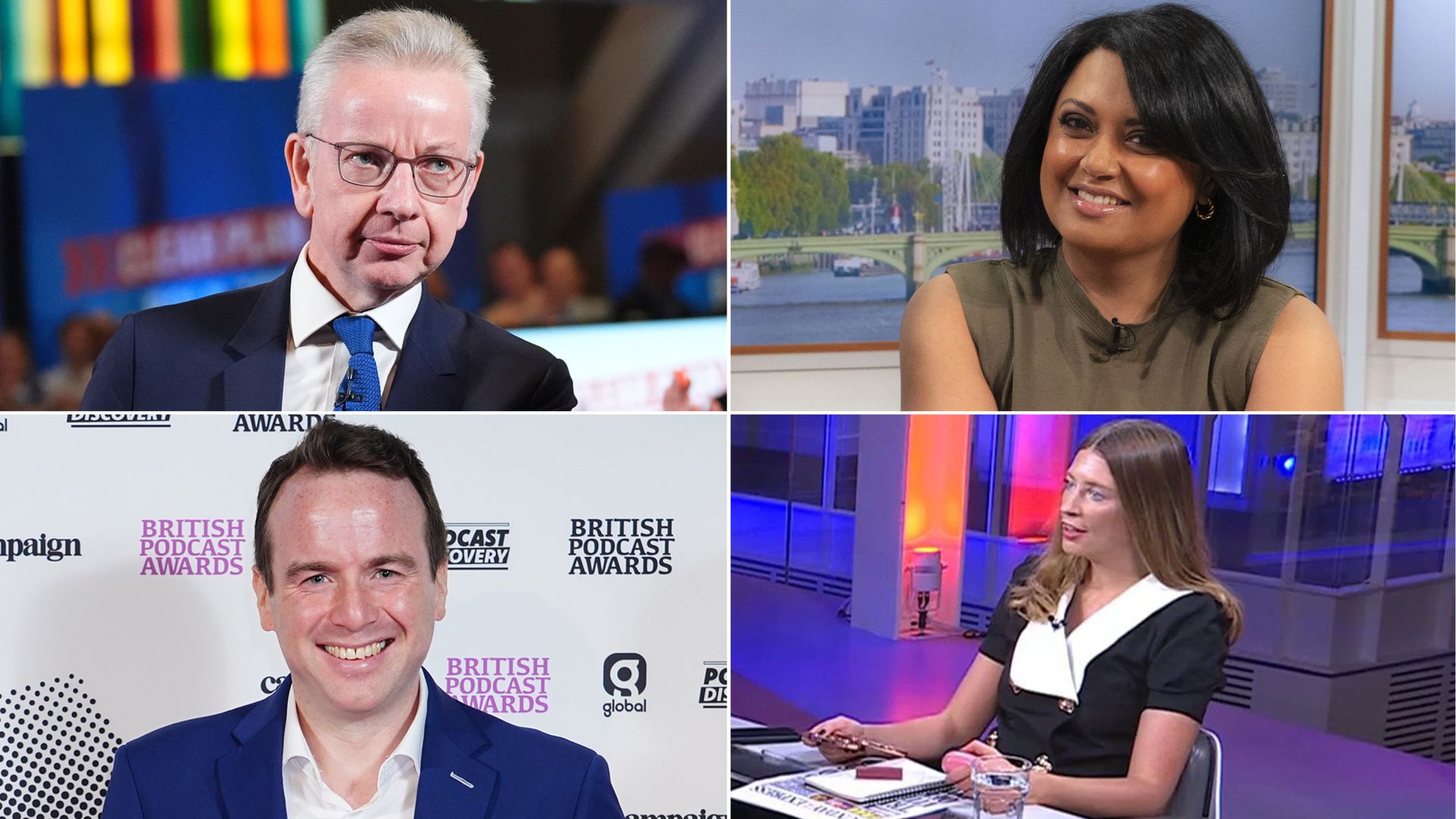
When Sky News quietly dropped the press release announcing the new presenting lineup for Sunday Morning With…, most casual observers skimmed the names, nodded, and moved on. A few political junkies tweeted their predictions about who would ask the sharpest questions. Media executives looked at the ratings spreadsheets. Almost nobody stopped to ask what this reshuffle actually means for the rest of us—for the person sitting at the kitchen table with toast going cold, trying to figure out what is actually true in a world that feels louder and less coherent every single week.
The Architecture of a Sunday Morning Trap
To understand why changing the faces behind a Sunday morning desk matters so much, you have to step inside the machinery of broadcast television at 8:30 AM on a weekend.
I spent years working in and around newsrooms where the Sunday flagship program was treated like a sacred temple. By Friday afternoon, the air in the production office would grow thick with a very specific kind of panic. Producers were not just booking guests; they were negotiating hostage treaties with government press officers. A cabinet minister would agree to appear, provided they went on first, faced no follow-up questions about a specific scandal, and were permitted to pivot smoothly to a pre-approved talking point about infrastructure spending.
The result, played out across millions of living rooms, was a theater of the absurd.
Picture a hypothetical viewer—let us call him Arthur, a retired civil engineer living outside Manchester. Arthur wakes up at seven, makes a pot of tea, and turns on the news because he genuinely wants to understand why his energy bills have doubled or whether the local hospital will survive the winter. Instead of clarity, Arthur gets a twenty-minute masterclass in evasion. He watches a seasoned politician recite memorized statistics with a practiced, empathetic tilt of the head, while an exhausted presenter tries to interrupt without sounding rude. By nine o'clock, Arthur is not informed. He is furious, or worse, he is numb. He turns off the television and decides that everyone in Westminster is lying to him.
That is the invisible crisis that Sky News is trying to solve with its new hosts.
When Trevor Phillips stepped into the Sunday morning slot previously, he brought a formidable, intellectual weight—the veteran broadcaster who had seen every political trick in the book since the 1980s. Yet television is an unforgiving medium, and audiences change faster than broadcast schedules. Viewers today carry an almost allergic reaction to anything that feels like an insider club. When a host and a politician speak the same rarified Westminster dialect, sharing inside jokes about select committees and backbench rebellions, the person watching from a sofa in Leeds or Cardiff feels locked outside the glass.
The Anatomy of Trust
Why do we trust one voice over another before we have even had breakfast?
It is not because of a journalism degree or a list of prestigious awards framed on an office wall. Trust, especially on a Sunday morning when our psychological defenses are down, is visceral. It comes down to micro-expressions, cadence, and the subtle signal that the person asking the questions is standing on your side of the table, not the politician's.
Think of a great Sunday morning interviewer like a skilled carpenter examining a house that has just been freshly painted. A bad interviewer admires the glossy coat of whitewash and asks the homeowner what brand of brush they used. A great interviewer taps the plaster with a knuckle, listens for the hollow thud underneath, and asks why the foundation is sinking.
Sky News recognized that the old model—one lone inquisitor sitting across from a succession of ministers—had begun to feel static. By introducing a fresh dynamic with its new presenting team, pairing seasoned political sharp-shooters with voices capable of shifting gears from hard-nosed accountability to broader cultural and human stories, the network is making a calculated gamble. They are betting that you do not want a monologue anymore. You want a conversation that actually breathes.
Let us look at the facts of how viewing habits have fractured. Over the past decade, traditional live broadcast news audiences in the UK have steadily migrated toward on-demand clips, podcasts, and rolling digital updates. According to annual Ofcom media consumption reports, fewer adults under forty-five turn on linear television for morning news than at any point in modern broadcasting history. Yet, paradoxically, during moments of genuine national shock—an election night, a sudden economic downturn, an international conflict—those same viewers still surge back to live television anchors they recognize.
They come back because algorithms cannot look a powerful person in the eye and ask, "Why didn't you answer the question?"
Inside the Studio When the Red Light Blinks
There is a sensory reality to live morning television that viewers never see, and it explains why so many hosts burn out or stiffen into caricatures of themselves.
At 6:00 AM, a television studio is freezing. The air conditioning is cranked high to offset the banks of LED lights hanging from the ceiling grid, which will soon bake the set like a greenhouse. Floor managers wear headsets and communicate in silent hand gestures. In the host's earpiece—a tiny molded piece of plastic wedged deep into the ear canal—a producer is speaking continuously, counting down seconds, flagging breaking news wires from Reuters, and whispering that the next guest's car is stuck in traffic on the M4.
Now imagine trying to maintain genuine human warmth while a voice in your skull shouts "Thirty seconds, wrap him up, we have breaking inflation numbers from the Treasury" and a cabinet minister across from you is intentionally running down the clock with a rambling anecdote about their childhood.
It is a high-wire act performed without a net.
When a host gets it wrong, you feel the friction immediately. The interview turns into a shouting match, raising everyone's blood pressure without illuminating a single fact. Or, conversely, the host folds under the pressure of the clock, letting a falsehood hang in the air unchallenged because they have to throw to a commercial break.
The new lineup for Sunday Morning With… represents an attempt to break that rigid rhythm. By bringing in presenters who have cut their teeth on rolling news—where scripts disappear the moment a story breaks and improvisation is survival—Sky is signaling a shift away from the overly rehearsed Westminster set-piece. You can see the difference in how modern anchors handle a pivot: less reliance on printed index cards, more willingness to pause, tilt their head, and let an uncomfortable silence do the heavy lifting.
Silence, after all, is the most terrifying weapon in television. A politician can talk over a shouting journalist. Nobody can talk over five seconds of dead air while a camera holds a tight close-up on their face.
What You Actually Need From the News
I used to think that the purpose of political journalism was to expose corruption—to find the smoking gun, the leaked memo, the secret recording that brings down a government. That is the romantic version of the job, the one they put in movies.
Years of watching ordinary people struggle to navigate an increasingly complex world taught me something humbler, and arguably harder. Most days, there is no smoking gun. Most days, the real story is hidden inside a dense policy paper about council tax bands, or a subtle shift in interest rates, or a quiet change to NHS waiting-list definitions.
Consider Sarah, a hypothetical small-business owner running a bakery in Bristol. Sarah does not care about which backbencher is plotting against the Prime Minister. She does not care about the choreography of party conferences. She cares about whether the cost of flour and electricity will force her to lay off two teenagers she hired last summer. When Sarah sits down with a cup of tea on Sunday morning and turns on Sky News, she is quietly asking one question: Does anyone in that studio understand what my week actually looked like?
If the new hosts of Sunday Morning With… succeed, it will not be because they trend on social media for delivering a viral "gotcha" clip. Viral clips are cheap. They are fast food for the outrage economy—satisfying for ten seconds, leaving you empty an hour later.
Real success looks entirely different. It looks like a presenter interrupting a minister not to score a point, but to translate bureaucratic jargon into plain English. It looks like bringing on guests who are not professional politicians—economists, nurses, headteachers, economists who actually disagree with the consensus—and giving them enough room to finish a complex thought without being cut off for a soundbite.
The Stakes Behind the Screen
We live in a strange, fragmented information ecosystem where it has never been easier to find an opinion, and never harder to find a shared reality.
If you want to believe that everything is collapsing, there is a feed waiting to confirm it. If you want to believe that everything is fine and your anxieties are imaginary, there is another feed for that, too. Traditional broadcasters like Sky News occupy a precarious middle ground—attacked from the left for being too deferential to power, attacked from the right for being too skeptical of it.
It is tempting to look at a press release about TV hosts and dismiss it as corporate musical chairs. Media companies love to rebrand. They change the theme music, tweak the studio graphics from dark blue to crimson, unveil a sleek new desk, and announce a "bold new era" every eighteen months. Often, nothing underneath changes at all.
Yet there is a reason these transitions still carry weight. A Sunday morning flagship program sets the agenda for the entire week ahead. The questions asked at 9:00 AM on Sunday dictate what gets debated in Parliament on Monday, what headlines run on Tuesday morning's front pages, and what arguments break out in workplace kitchens across the country by Wednesday afternoon.
Who sits in that chair matters. Their curiosity—or their lack of it—becomes the country's curiosity. If they are obsessed with palace intrigue and Westminster gossip, the national conversation shrinks to the size of a parliamentary tearoom. If they insist on dragging the conversation back to lived reality—to hospital corridors, classroom budgets, and household bills—politicians are forced, however reluctantly, to follow them there.
I admit, I watch these announcements with a mixture of hope and seasoned skepticism. Broadcasting is an industry notorious for promising revolution and delivering comfort food. The pressures of ratings, access journalism, and twenty-four-hour news cycles have a gravitational pull that flattens even the sharpest interviewers over time. Keeping an edge when you are invited to the same Downing Street receptions and Westminster lunches as the people you are supposed to hold to account requires a rare kind of discipline.
The Next Sunday
Imagine next Sunday morning.
The rain is tapping against the windowpane. The house is quiet save for the hum of the refrigerator and the low murmur of the television in the next room. Across the country, millions of people are waking up, stretching, and reaching for the remote control or their phone, deciding where to place their attention for the next hour.
The studio lights come up. The red tally light on Camera One flickers on. A new voice leans forward across the desk, looks directly into the lens, and prepares to ask the first question of the week.
Whether that voice becomes background noise to be tuned out over burned toast, or the rare, steady anchor that cuts through the static, depends entirely on what happens in the thirty seconds after the politician finishes their rehearsed answer—and the host decides whether to let them off the hook, or ask it again.


