The smell hits you first. It is a thick, metallic perfume of cutting oil, scorched rubber, and hydraulic fluid that clings to the back of your throat long after you step back onto the humid asphalt of Samut Prakan.
For thirty years, this industrial sprawl just south of Bangkok has been the beating heart of the "Detroit of the East." Inside hundreds of corrugated-iron workshops, master machinists have spent their lives coaxing miracles out of raw steel. They mill piston rings to tolerances thinner than a human hair. They cast aluminum engine blocks. They stamp exhaust manifolds, weld catalytic converters, and assemble intricate multi-speed transmissions that contain upwards of two thousand interlocking moving parts. Building on this idea, you can find more in: What Most People Get Wrong About Hong Kong as an Art Trading Hub.
Ask Somchai—a composite character representing the thousands of second-generation Thai tier-two factory owners keeping this ecosystem alive—what his life’s work means, and he will point to the calluses on his palms. His father started with two lathes in 1988, riding the wave when Japanese automotive giants turned Thailand into an export powerhouse. Today, Somchai employs eighty people. He pays for their children’s school uniforms. He knows the rhythm of every stamping press on his floor by ear.
Yesterday, that rhythm stopped sounding like security. It started sounding like a countdown. Observers at CNBC have provided expertise on this matter.
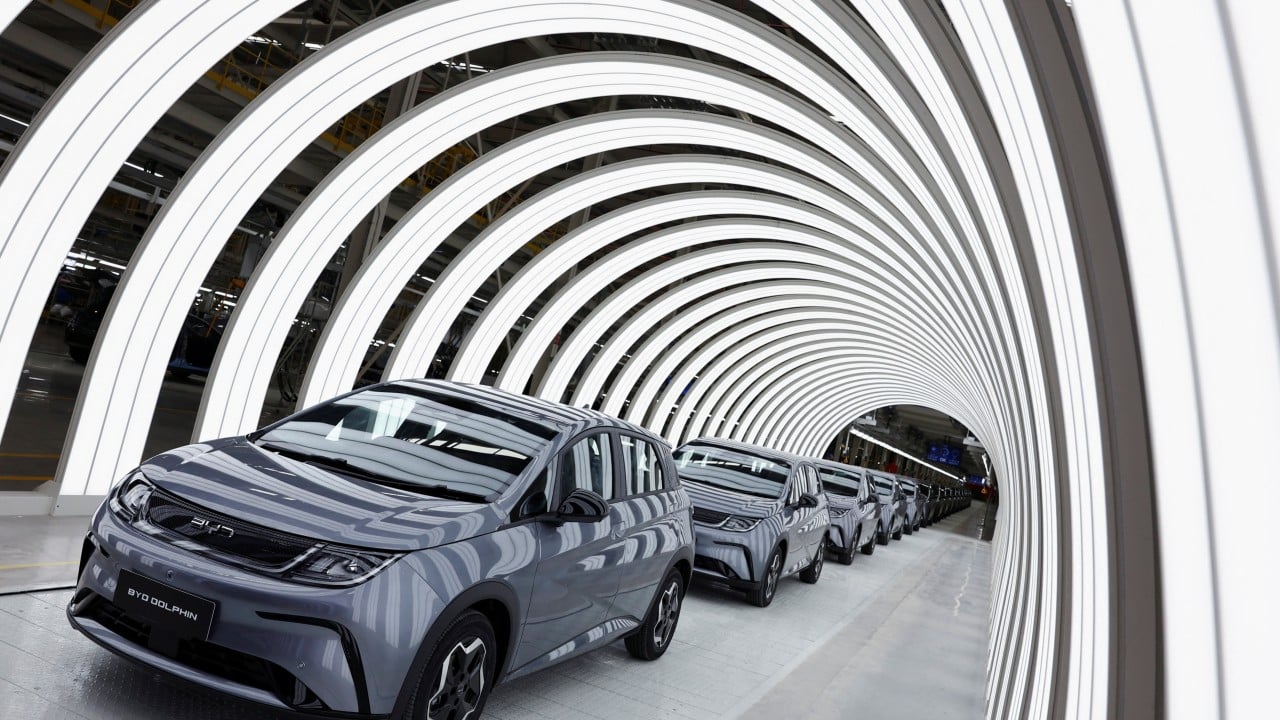
Across Southeast Asia, gleaming new electric vehicle assembly plants are rising out of former rice paddies and industrial estates from Rayong in Thailand to Karawang in Indonesia. Headlines celebrate billions of dollars in foreign direct investment, zero-emission targets, and sleek, whisper-quiet crossovers rolling off automated lines. Governments hand out generous tax holidays and import duty exemptions to lure global EV titans, primarily from China, promising a green industrial renaissance.
Yet walk through the gates of Somchai’s workshop, and you discover a brutal paradox. The very boom meant to secure Southeast Asia’s manufacturing future is quietly starving the local companies that built its past.
The Architecture of Erasure
To understand why an electric car feels like an existential threat to a traditional parts maker, you have to look under the hood—or rather, at the vast empty space where the hood’s contents used to live.
A conventional internal combustion vehicle is a mechanical symphony. It requires roughly 30,000 individual components to convert controlled explosions of gasoline into forward motion. Fuel injectors, spark plugs, timing belts, radiators, mufflers, fuel tanks, gearboxes—each represents a specialized supply chain, a cluster of local factories, and thousands of skilled jobs. Over four decades, Japanese automakers like Toyota, Honda, and Isuzu painstakingly nurtured local suppliers across Thailand, Indonesia, and Malaysia, transferring blueprints and quality-control standards until domestic firms supplied up to eighty percent of a vehicle's parts.
An electric vehicle is closer to a rolling smartphone.
Strip away the sleek bodywork, and you find an architecture of radical simplification. The powertrain drops from two thousand moving parts to roughly twenty. There are no pistons to bore. No exhaust pipes to bend. No transmissions to assemble. Overall part counts plummet by thirty to forty percent, and the most expensive single component—the lithium-ion battery pack, accounting for up to forty percent of the vehicle’s total value—arrives largely as a self-contained technological fortress.
When a legacy machinist looks at an EV teardown, he isn't looking at a new customer. He is looking at an erasure.
Consider what happens when a traditional stamping shop tries to pivot. A factory calibrated for decades to produce exhaust systems and fuel-tank straps cannot simply retool overnight to manufacture high-voltage power electronics or battery thermal management systems. The metallurgy is different. The clean-room tolerances are alien. Even the plastic injection molders face a reckoning: EVs demand ultra-lightweight composite materials to offset heavy battery packs, requiring entirely new polymers and multi-million-dollar presses that small family-owned firms cannot finance.
"We spent thirty years learning how to manage heat and friction," a veteran automotive engineer in Rayong told me recently, staring across a courtyard stacked with unsold muffler assemblies. "Now, the industry wants silence and software. Nobody needs a master of friction anymore."
The Walled Garden
If technological obsolescence were the only hurdle, Southeast Asia’s resilient manufacturers might still fight their way across the chasm. They have survived the 1997 Asian Financial Crisis, catastrophic floods in 2011, and global semiconductor shortages.
What makes this transition uniquely perilous is how the new supply chains are constructed.
When Japanese automakers entered Southeast Asia in the late twentieth century, they arrived without an established domestic supplier base and spent decades building one from the ground up, forming joint ventures with local families. Today’s wave of EV pioneers—led by aggressive Chinese manufacturers like BYD, Great Wall Motor, and SAIC—operates under a completely different playbook.
They do not arrive alone. They bring their entire village with them.
Driven by intense price wars at home and razor-thin margins, Chinese EV makers rely on hyper-integrated, closed-loop supply chains. When an automaker breaks ground on an assembly plant in Thailand’s Eastern Economic Corridor or Indonesia’s West Java, its tier-one suppliers from Shenzhen, Ningbo, and Hefei buy land right next door. They bring their own molds, their own automated robotics, their own established relationships with battery cell giants like CATL, and their own pre-approved sub-suppliers.
This creates a walled garden inside Southeast Asia’s borders.
On paper, these new factories meet government "local content" rules—often set at forty percent to qualify for tax incentives and tariff-free regional exports. In reality, much of that "local" value is generated by foreign-owned subsidiaries operating on Southeast Asian soil, importing raw sub-components from abroad and performing final assembly locally. Meanwhile, the indigenous Thai, Indonesian, or Malaysian parts maker—sitting five miles down the highway—never even gets invited to bid on a contract.
The numbers tell a stark story of this quiet displacement. In Thailand, where the automotive sector accounts for roughly ten percent of GDP and employs over 700,000 workers, the Thai Auto-Parts Manufacturers Association has warned that up to half of the country’s 1,700 local suppliers face severe contraction or closure within the next decade if they fail to transition. Vehicle production in Thailand slumped sharply through 2024 and 2025 as domestic banks tightened auto loans amid soaring household debt, squeezing legacy internal-combustion assembly lines precisely as imported and locally assembled EVs grabbed market share.
Every percentage point gained by a vertically integrated EV newcomer represents a quiet hemorrhaging of purchase orders for local machine shops.
The Illusion of the Easy Pivot
Policy planners in Bangkok, Jakarta, and Kuala Lumpur often speak of the EV transition as an effortless upgrade—a matter of offering a few retraining grants and matching local businesses with foreign investors.
Anyone who has ever tried to secure a commercial loan to overhaul a mid-sized factory knows how hollow that optimism sounds on the ground.
Let us return to our hypothetical factory owner, Somchai, and trace the financial trap closing around him. To supply structural aluminum battery trays for an electric SUV, Somchai needs giant high-pressure die-casting machines and robotic laser welders. The price tag runs into several million dollars. When he walks into a local commercial bank with his proposal, the loan officer looks at two things: Somchai’s declining orders from his legacy Japanese clients, and the lack of a guaranteed purchase order from the new EV makers.
Without the contract, the bank will not lend him the money to buy the machines. Without the machines, no EV maker will ever give him a contract.
It is a classic industrial catch-22, sharpened by the brutal speed of the EV cycle. Legacy automakers used to refresh vehicle models every five to seven years, giving suppliers predictable amortization schedules to pay off expensive tooling. Chinese EV brands iterate like consumer tech companies, overhauling platforms and component specs every eighteen to twenty-four months. A small supplier taking on heavy debt to tool up for a single EV model risks financial ruin if the automaker tweaks its design—or slashes supplier prices by fifteen percent the following quarter to survive a price war.
Even Indonesia, which leveraged its massive nickel reserves to force global miners and battery makers to build domestic refining capacity, faces a sharp divide between upstream extraction and downstream manufacturing. While multi-billion-dollar nickel smelters and battery cell plants hum in Sulawesi and Karawang, the country’s sprawling network of traditional motorcycle and car component workshops in Bekasi and Tangerang remains largely tethered to aging combustion platforms.
The transition is not a rising tide lifting all boats. It is a selective flood that drowns anyone anchored to the old pier.
How Survivors Rewrite the Blueprint
Yet despair is a poor business strategy, and Southeast Asia’s industrial heartland is not going down without a fight. Across the region, a small vanguard of local suppliers is proving that survival is possible—provided they abandon the idea of competing head-on in the parts they used to make.
Look closely at the firms currently thriving, and you notice three distinct survival strategies emerging from the wreckage.
First, abandoning the engine for the cabin and chassis. Even the most futuristic electric vehicle still needs seats, tires, suspension arms, braking systems, glass, wiring harnesses, and interior trim. In fact, because electric motors are eerily quiet, drivers suddenly hear every rattle in the dashboard and every hum of wind noise against the windshield. Local suppliers that pivoted early toward acoustic insulation, precision suspension components, and lightweight interior composites found themselves suddenly indispensable. Comfort and ride quality remain stubbornly physical problems that software cannot solve.
Second, becoming the indispensable bridge for foreign entrants. While foreign tier-one suppliers bring advanced EV technology, they often stumble over Southeast Asia’s complex regulatory labyrinths, labor laws, and logistics bottlenecks. Forward-thinking local firms are forming joint ventures—not as passive landlords, but as operational co-pilots. By pairing a foreign partner’s EV intellectual property with their own factory floor space, local management teams, and established distribution networks, domestic firms secure a seat at the table and force real technology transfer back into local hands.
Third, looking beyond four wheels entirely. Some of the sharpest machinists in Samut Prakan and Penang have stopped viewing themselves as "auto parts makers" altogether. They realized their core asset is not an exhaust pipe; it is precision metallurgy and quality control. Several have successfully redeployed their CNC machines toward medical devices, aerospace components, agricultural robotics, and industrial automation hardware—sectors where high-precision, low-volume manufacturing commands healthier margins than the cutthroat automotive price wars.
The Invisible Stakes of a Hollow Boom
Why should anyone outside the industrial estates of Thailand or Indonesia care whether Somchai’s stamping presses keep running?
Because an economy cannot survive on assembly lines alone.
When a country hosts only the final assembly of imported modules, it captures the thinnest slice of economic value—the low-margin labor of bolting pre-made pieces together. The real wealth of an industrial nation lives in the deep, messy ecosystem of tier-two and tier-three suppliers: the tool-and-die makers, the metallurgists, the heat-treatment specialists, and the family workshops that keep engineering knowledge circulating through local communities.
If Southeast Asia’s EV revolution succeeds at the cost of hollowing out its domestic supplier base, the region risks trading a deeply rooted industrial ecosystem for a fragile assembly-only economy—one that can be packed up and moved the moment another country offers cheaper electricity or bigger tax breaks.
Late in the afternoon, the shift whistle blows across the industrial estates outside Bangkok. Hundreds of workers in oil-stained blue shirts stream out through iron gates, climbing onto motorbikes to head home through the thick tropical dusk. Just down the highway, floodlights click on over a brand-new, windowless EV gigafactory, its pristine white facade glowing like a spaceship landed in the middle of a swamp.
Inside the older workshop, the heavy stamping presses fall silent for the night, still warm from a day spent shaping steel for engines the world is rapidly leaving behind.