Silence.
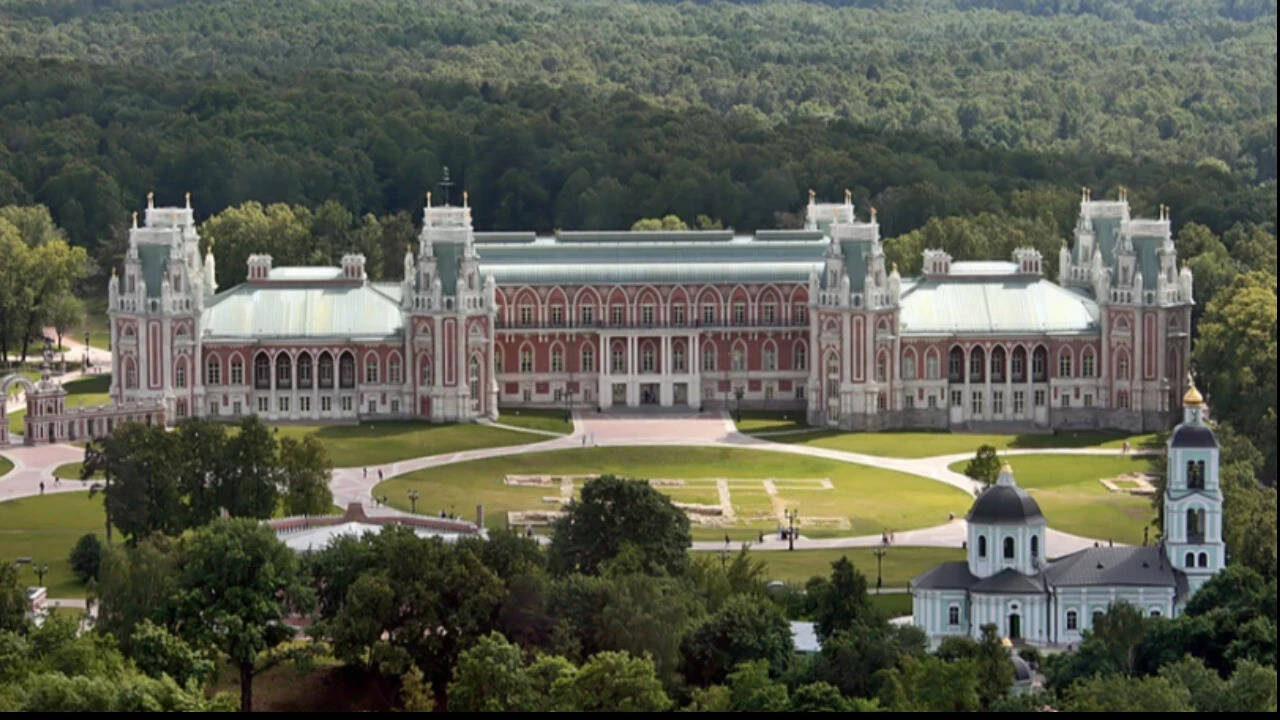
In the southern reaches of Moscow, where the city’s relentless concrete grid finally surrenders to birch groves and rolling hills, silence is usually the main attraction at the Tsaritsyno Museum-Reserve. On an ordinary morning, the loudest sounds across its sprawling, eighteenth-century grounds are the crunch of gravel beneath a stroller’s wheels, the distant slap of oars against the glassy surface of the Upper Pond, and the low, reverent murmur of tourists admiring the red-brick Gothic Revival arches commissioned by Catherine the Great.
Until a single diplomatic cable strips the peace away.
When the United States intelligence apparatus flags a potential security threat—specifically, when whispers of an imminent extremist attack begin circulating in diplomatic backchannels and public advisories—the geography of a city changes overnight. A palace built for royal leisure suddenly transforms into a pin on a tactical map. A Sunday stroll becomes a calculated risk.
To understand what happens when a cultural sanctuary like Tsaritsyno lands on a terror radar, we have to look past the sterile language of embassy alerts and geopolitical posturing. We have to look at the mechanics of modern intelligence warnings, the agonizing vulnerability of open public spaces, and the ordinary people caught in the crossfire between warning and action.
The Anatomy of a Whisper
Intelligence is rarely a photograph. More often, it is a puzzle missing half its pieces, dumped onto a desk in the middle of the night.
Consider a hypothetical scenario that mirrors the real-world grind of counterterrorism desks in Washington and Moscow. Imagine an analyst in a windowless room three thousand miles away, staring at fragments of intercepted chatter. There is no neat manifesto detailing the exact hour, the exact gate, or the exact number of attackers. Instead, there is a spike in encrypted traffic, a familiar financial transfer routed through a shell account in Central Asia, and a recurring geographic coordinate or landmark name—perhaps Tsaritsyno, perhaps another sprawling Moscow gathering point—mentioned in passing by a known facilitator.
What do you do with that?
If you wait for absolute certainty, you risk counting bodies on the evening news. If you speak too soon, you trigger panic, burn sensitive intelligence sources, and invite accusations of psychological warfare from a rival government.
Under U.S. law, however, the calculus is governed by a strict, non-negotiable mandate known as the "Duty to Warn." Established under Intelligence Community Directive 191, this rule compels American intelligence agencies to notify intended victims—whether they are U.S. citizens abroad or even adversarial foreign governments—whenever they acquire credible, specific information about an impending threat of intentional killing, serious bodily injury, or kidnapping.
The law does not care about diplomatic frost. It does not care about sanctions, proxy wars, or broken embassies.
We saw this exact mechanism play out in March 2024, just days before gunmen stormed the Crocus City Hall concert venue on the northwestern edge of Moscow. The U.S. Embassy issued a stark public warning advising Americans to avoid large gatherings in the Russian capital, explicitly citing reports that extremists had imminent plans to target concerts and public venues. Behind closed doors, Washington passed more granular intelligence directly to Russian security services. Publicly, the Kremlin initially dismissed the alerts as "provocative" attempts to destabilize Russian society. Days later, more than one hundred and forty people were dead.
That history hangs like smoke over every subsequent alert. When Tsaritsyno enters the conversation, nobody in Moscow—no matter how fiercely they project defiance on state television—can afford the luxury of total skepticism anymore.
Why Cultural Landmarks Are Chosen
To the casual observer, targeting a historic museum park seems baffling. Why a place of fountains, greenhouses, and classical music concerts? Why not a military barracks or a ministry building?
The answer lies in the brutal, cold-blooded math of asymmetric warfare.
Hard targets—government compounds, intelligence headquarters, military bases—are built to absorb violence. They are ringed with concrete bollards, blast-resistant glass, armed checkpoints, and overlapping fields of fire. Attacking them requires heavy weaponry, military training, and a high probability of failure before a single shot reaches its intended mark.
Soft targets are the exact opposite. They are designed to welcome humanity in.
Tsaritsyno is one of the largest museum-reserves in Europe, covering more than four hundred hectares of parkland, interconnected ponds, bridges, and exhibition halls. Every weekend, tens of thousands of families, joggers, wedding parties, and pensioners flow freely through its gates. You cannot turn a four-hundred-hectare botanical paradise into an airport security terminal without destroying the very thing that makes it worth visiting. You cannot pat down every grandmother carrying a thermos of tea, nor scan every backpack slung over a teenager’s shoulder at twenty different pedestrian entrances.
Think of a modern metropolis like a human body. Government buildings are the skull and ribcage—thick bone built to protect vital organs. Public parks, transit hubs, and theaters are the exposed skin. Terrorist networks, particularly decentralized franchises like ISIS-Khorasan that have repeatedly sought to strike inside Russia, deliberately aim for the skin.
Their goal is rarely tactical victory. Their goal is psychological contagion. By turning a place of innocence and beauty—a place where people go specifically to forget the anxieties of the modern world—into a scene of chaos, attackers force an entire population to ask a terrifying question: If I am not safe walking through a park on a sunny afternoon, where am I safe?
The Invisible Shift on the Ground
Let us step onto the grounds of Tsaritsyno in the wake of a credible threat warning, using a composite portrait of how municipal security and everyday visitors react when tension thickens the air.
Meet Elena, a hypothetical museum docent who has spent twelve years memorizing the eccentricities of Vasily Bazhenov and Matvey Kazakov, the eighteenth-century architects behind the palace’s distinctive white-stone trim and lancet windows. On a normal Tuesday, Elena’s biggest worry is keeping school groups from touching the fragile gilded moldings inside the Grand Palace.
When a security advisory hits the news wires, Elena’s morning routine changes before she even reaches the Tsaritsyno metro station.
First come the uniforms. Not the familiar, relaxed private guards who spend their shifts directing lost tourists toward the restrooms, but heavier deployments—units from the National Guard, plainclothes operatives lingering near the turnstiles, and patrol vehicles parked conspicuously near the main iron gates. Handheld metal detectors appear at bottlenecks where none existed yesterday. Dogs trained to sniff out nitroglycerin and TATP are led slowly along the perimeter hedges.
Inside the ticket hall, the atmosphere turns brittle.
Elena notices it in the eyes of the few visitors who still show up. People walk faster. They glance over their shoulders when a heavy door slams shut. A dropped glass bottle near the musical fountain makes three separate families flinch simultaneously. The magic of the museum—that delicate spell that transports a visitor back to the court of 1776—shatters completely. You cannot appreciate the symmetry of a Gothic archway when your subconscious is busy mapping out the nearest exit route.
This is the hidden cost of a terror warning, even when no bomb ever detonates.
Security theater and genuine counterterrorism measures collide in real time. While plainclothes officers scan crowds for behavioral anomalies—someone wearing a heavy coat in warm weather, someone nervously clutching a bag without looking at the exhibits, someone pacing near a choke point—ordinary citizens bear the quiet tax of hyper-vigilance. Attendance plummets. Local vendors selling pastries and souvenirs near the park entrance watch their daily income evaporate. The city keeps moving, outwardly stoic, while inwardly holding its breath.
The Geopolitical Tightrope
Beneath the human anxiety lies a deeply uncomfortable truth about international security: enemies often need each other to stay alive.
When Washington warns Moscow about a threat to a site like Tsaritsyno, the exchange sits at the intersection of profound hostility and shared survival. Relations between the United States and Russia have plunged to depths unseen since the darkest chapters of the Cold War. Diplomatic channels have been hollowed out; embassies operate with skeleton crews; trust is virtually nonexistent.
Yet intelligence sharing on counterterrorism remains one of the last fragile bridges still standing across that chasm.
Why does Washington bother? Cynics often assume every intelligence release is a calculated move on a geopolitical chessboard—an attempt to embarrass Russian security forces by publicly highlighting their vulnerabilities, or a preemptive move to say "we told you so" if tragedy strikes.
There is certainly political self-protection baked into public embassy alerts. When the U.S. State Department issues a warning to American citizens in Moscow, it is legally and morally obligated to share that same baseline warning with the broader public under its "no double standard" policy. Washington cannot quietly tell its diplomats to avoid Tsaritsyno while leaving American tourists, students, and journalists walking blindly into danger.
But beneath the bureaucracy lies a simpler, starker reality. Transnational extremist networks do not respect borders. A cell capable of striking a museum in southern Moscow is often plugged into the exact same financing pipelines, propaganda channels, and bomb-making networks that threaten concert halls in Paris, transit stations in London, or shopping centers in New York. Letting an attack succeed anywhere strengthens the brand everywhere.
I remember the strange, hollow feeling of checking my phone in a crowded European train station minutes after a vague security alert hit the local news. Suddenly, every suitcase left unattended for five seconds stopped being luggage and became a threat. Every stranger standing too close felt like a variable you couldn't calculate. You realize in that moment how thin the veneer of normal life really is—held together not by concrete walls, but by invisible work done in the dark by people whose names you will never know.
Living With the Uncertainty
So where does that leave someone standing at the edge of the story, trying to separate genuine danger from geopolitical noise?
First, it requires accepting an uncomfortable ambiguity. A warning is not a prophecy. Intelligence agencies operate in probabilities, not certainties. When a landmark like Tsaritsyno lands on a radar, it means analysts have seen enough smoke to believe there might be fire—not that the blaze is guaranteed to break out at noon. Sometimes, the mere act of issuing a public warning forces attackers to abort their plans, scatter, and abandon compromised safe houses. In counterterrorism, success looks like nothing happening at all.
Second, it demands awareness without paralysis. Security experts who study soft-target attacks consistently point out that ordinary people are rarely helpless, even when caught off guard. Situational awareness is not paranoia; it is simply paying attention to your environment without drowning in fear.
When stepping into any crowded public space—whether a historic park in Moscow, a festival in Chicago, or a rail terminal in Tokyo—veteran security professionals follow a few quiet habits:
- Identify two exits immediately. Most people instinctively try to leave a building or park through the exact same gate they entered, creating fatal bottlenecks during an emergency. Knowing a secondary path out takes three seconds upon arrival.
- Watch for sudden crowd shifts. Humans have an ancient, collective instinct for danger. If dozens of people fifty yards ahead suddenly stop, turn, or begin moving rapidly in one direction, do not wait to pull out your phone and film it. Move laterally away from the flow.
- Recognize the difference between cover and concealment. Hiding behind a wooden kiosk or a decorative shrub hides you from view (concealment), but it will not stop bullets or shrapnel. Thick stone walls, concrete pillars, and solid earth embankments provide actual physical protection (cover).
None of these habits require living in a bunker. They are simply the modern equivalent of looking both ways before crossing a busy street.
Late in the afternoon, the light at Tsaritsyno turns the color of amber, catching the red brick of the Grand Palace until the entire facade seems to glow against the darkening trees.
At the edge of the Upper Pond, an old man sits alone on a wooden bench, tossing crumbs of dark bread to a cluster of mallards. A hundred yards behind him, two armed guards in dark tactical gear walk a slow, deliberate circuit past the Figured Bridge, their eyes sweeping the pathways, their radios crackling softly against their shoulders.
The ducks scramble noisily over the water, completely indifferent to diplomatic cables, encrypted intercepts, and the invisible architecture of fear holding the afternoon together.
The old man breaks off another piece of bread, watches the ripples spread outward across the quiet water, and stays right where he is.