Listen.
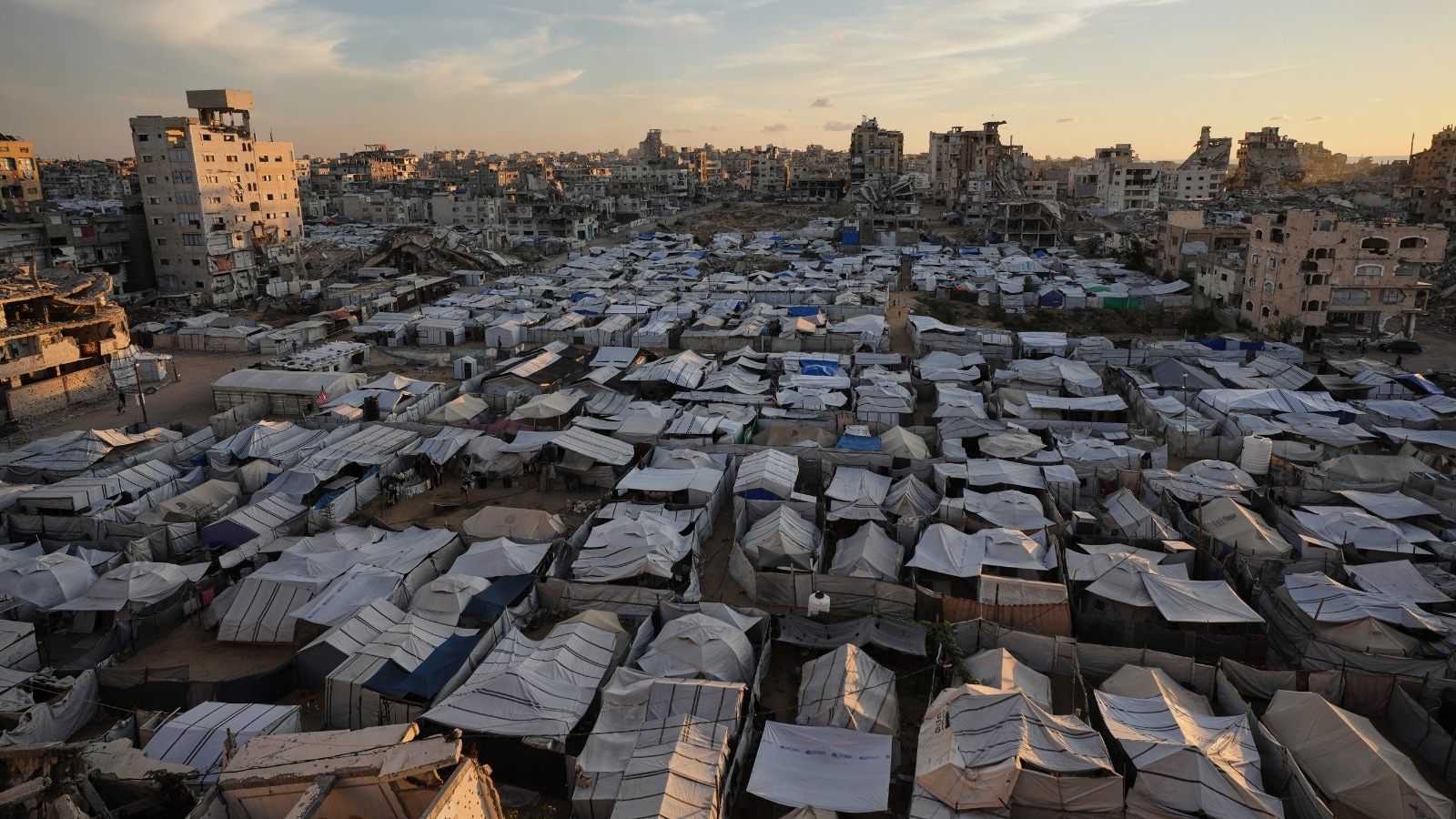
If you stand in a quiet street in Gaza at three in the afternoon, when the generators sputter out and the neighborhood pauses for a breath, you can hear a sound that never quite leaves the upper atmosphere. It is a low, persistent mechanical buzz, like a mosquito trapped behind a windowpane three miles high. Locals call it the zanana—the buzzer. It is the acoustic signature of an unmanned aerial vehicle circling out of sight, watching, calculating, waiting.
In the standard language of international wire reports, that sound resolves into a single, sanitized sentence: An Israeli drone strike killed two Palestinians in Gaza today, alongside other regional developments.
Sixteen words. A passing glance over morning coffee. The world scrolls down to the weather, the markets, or the sports scores, comforted by the illusion that the conflict has entered a manageable, low-grade hum. We have become dangerously fluent in the grammar of "other Mideast news," a phrase that acts like a heavy velvet curtain, muffling the sharp edges of reality until an entire region's daily agony blurs into background noise.
The Architecture of a Headline
To understand what gets lost in those sixteen words, consider a hypothetical afternoon in central Gaza—let us call him Tariq, a composite drawn from the documented realities of municipal workers and paramedics who still navigate the rubble.
Tariq is thirty-four. Before the war reshaped the skyline into jagged concrete teeth, he repaired water pumps. Now, his job is simpler and infinitely harder: walking three kilometers with two empty plastic jerrycans to find a functioning desalination tap, then walking back without spilling a drop. His neighbor, a twenty-two-year-old university student named Sami, walks beside him because carrying forty pounds of water alone over broken asphalt tears the muscles in your shoulders.
They are not commanders. They are not launching rockets. They are two men trying to keep four families hydrated before sundown.
Above them, at an altitude where the air is thin and freezing, an operator sits in a climate-controlled room dozens of miles away, staring at a high-definition thermal feed. On that screen, Tariq and Sami are not men with blistered heels and dusty lungs. They are two white heat signatures moving along a grid coordinate near a restricted buffer zone—an invisible boundary whose rules shift without public notice.
A decision is made in seconds. A kinetic payload detaches.
There is no thunderclap before impact when a drone strikes. The missile travels faster than the sound of its own approach. One moment, Sami is complaining about the price of yeast; the next, the air itself turns solid, hot, and violent. Silence follows—a heavy, ringing vacuum broken only by the slow crumble of masonry and the distant, indifferent whine of the zanana continuing its orbit.
By evening, a press release notes that two "suspects" or "militants" were targeted in a localized operation. A wire editor pairs it with a diplomatic statement from Washington, a border skirmish in southern Lebanon, and a cabinet meeting in Jerusalem. The story is filed under "other Mideast news."
Why Our Minds Turn Away
I have spent years reading, translating, and dissecting dispatches from conflict zones, and I will admit something uncomfortable: the numbness is not entirely our fault. Human psychology was never built to process industrial-scale grief delivered in push notifications.
Psychologists call it psychic numbing—a cognitive defense mechanism first documented in studies of how people respond to mass atrocities. When one person is trapped in a well, we mobilize millions of dollars and watch live broadcasts for days. When two people die in a drone strike on a Tuesday, followed by three on Wednesday and four on Friday, our empathy receptors overload and shut down. The statistics become abstract geometry.
Think of a modern conflict report like a medical chart left on a hospital clipboard. It tells you the patient's temperature, blood pressure, and white blood cell count. Every number is accurate. Yet nothing on that page captures the shivering, the fear in the hallway at midnight, or the mother sitting in a plastic chair praying the fever breaks.
When journalists compress complex regional flashpoints into roundups—tacking a fatal strike in Gaza onto a paragraph about Red Sea shipping lanes or diplomatic talks in Cairo—they inadvertently reinforce the idea that these events are static, inevitable, and disconnected from human consequence.
The Dominoes Behind "Other News"
But look closer at what happens in the margins of those brief updates. In the Middle East, nothing is ever "other." Every localized strike, every diplomatic stall, and every border flare-up acts like a hairline fracture in a pressurized glass tank.
Consider the mechanics of how a single incident ripples outward:
- The Illusion of Containment: Tactical drone operations are often presented as surgical alternatives to large-scale ground invasions—a way to manage security threats with minimal footprint. Yet on the ground, constant aerial surveillance and sudden lethal strikes produce a state of perpetual psychological siege. When no street corner feels predictable, civil society cannot rebuild, aid convoys hesitate to move, and the very institutions needed for eventual stability wither away.
- The Regional Echo Chamber: A strike in Gaza rarely stays in Gaza. Within hours, footage circulates on regional channels, fueling political pressure in Beirut, Amman, and Sanaa. Militias along Israel's northern border calibrate their own rocket fire in response; diplomatic mediators in Doha and Cairo watch weeks of painstaking ceasefire language unravel over a single afternoon's casualty report.
- The Erosion of Accountability: When lethal force becomes routine, the threshold for scrutiny drops. In the early days of a war, every airstrike is mapped, investigated, and debated on front pages. Months or years into a protracted conflict, a two-fatality strike barely triggers an inquiry. The extraordinary becomes administrative.
This is the hidden trap of the news cycle. We wait for the dramatic headline—the peace treaty signed on a manicured lawn, or the massive offensive that fills every screen—while missing the thousands of quiet, daily turning points that actually decide whether peace is ever possible.
The Weight of Uncounted Hours
Anyone who has lived under the shadow of prolonged instability knows that war is not measured in treaties or territorial maps. It is measured in the micro-calculations of survival.
It is the mother deciding whether to send her son to the bakery now or wait twenty minutes, gambling on which window of time is safer. It is the surgeon operating under the glare of a battery-powered lantern because fuel for the hospital generator ran out at noon. It is the farmer staring at an olive grove he cannot reach without crossing a line visible only on a military tablet.
When we reduce those realities to a bullet point under "other Mideast news," we strip away the friction that makes us care. We accept a version of history written exclusively in press releases and casualty tallies, forgetting that every digit in those tallies had a distinct laugh, a half-finished text message in their pocket, and someone waiting for them to come home with water before dark.
Looking Up Again
So how do we read the news without losing our humanity to the scroll?
We start by refusing the sedative of brevity. When a headline tells us that two people died in a strike while diplomats traded statements elsewhere, we pause long enough to ask the questions the dispatch left out. Who were they? What did the sky sound like three seconds before the flash? What fragile thread of diplomacy snapped—or tightened—because of that moment?
Truth in journalism is not merely the absence of falsehood; it is the presence of proportion. A wire brief gives us the skeleton of an event, stripped of flesh and breath. It takes deliberate effort to remember that the skeleton once walked, spoke, and carried weight.
Somewhere over the eastern Mediterranean tonight, the sun is dropping below the horizon, turning the dust over Gaza the color of bruised copper. The diplomatic cables are still humming between capitals. The news tickers are already preparing tomorrow's roundup of regional updates.
And three miles above the dark streets, invisible against the first stars, the zanana is still circling.