Dawn breaks over Fanling before the rest of Hong Kong has even reached for its first cup of milk tea.
If you have never stood on the edge of the Old Course at 6:15 in the morning, the first thing that strikes you is not the manicured grass or the sweeping canopy of ancient banyan trees. It is the silence. In a vertical city defined by the relentless hum of air conditioners, the screech of trams, and the suffocating density of seven and a half million people stacked into concrete towers, silence is the rarest currency on earth. Discover more on a related topic: this related article.
Mist clings to the fairways like a held breath. Dew soaks through the leather of your shoes before you even reach the first tee box. For decades, outsiders looked at gates like these and saw only walls. They saw an exclusive sanctuary reserved for the privileged few, a relic of colonial history cut off from the pulsing, gritty reality of modern Hong Kong.
They were half right. And they were completely wrong. More journalism by CBS Sports explores comparable views on this issue.
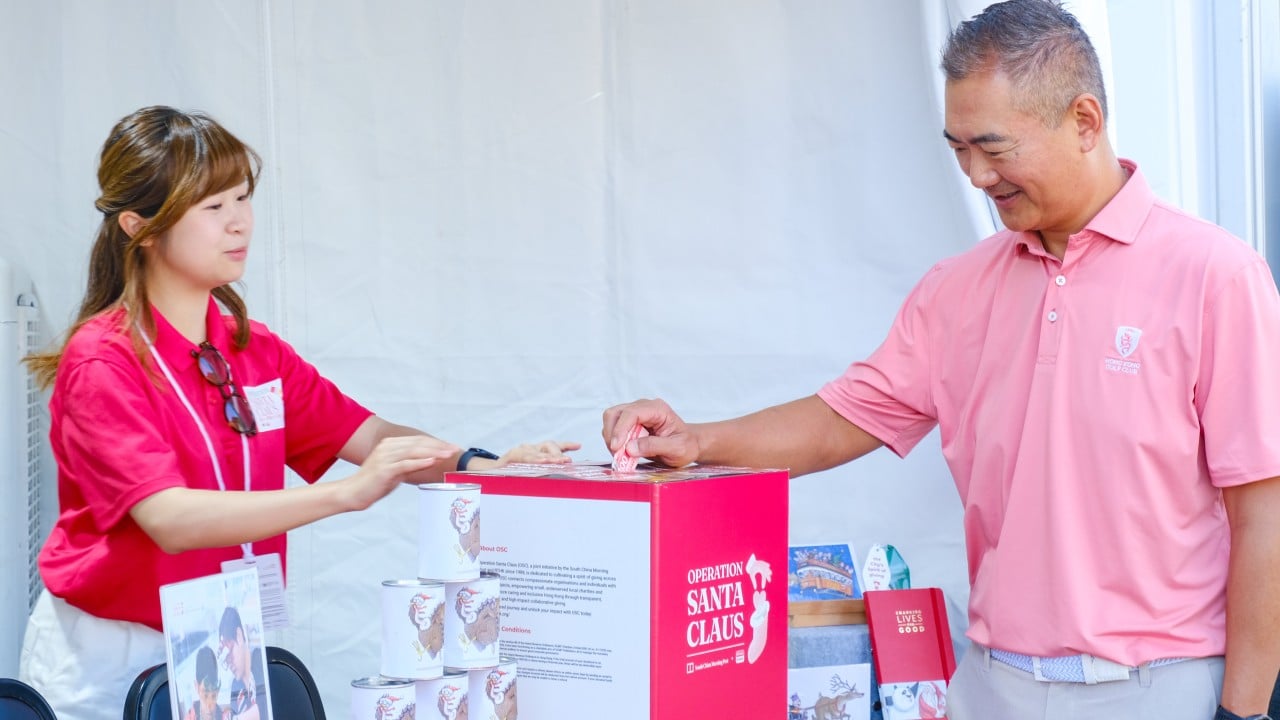
Walk a little further down the path as the sun burns off the haze, and the caricature dissolves. You do not see captains of industry hoarding wealth behind high hedges. You see a twelve-year-old boy from a public housing estate in Kwun Tong gripping a borrowed seven-iron, his knuckles white with concentration as a volunteer coach adjusts his stance. You see a retired nurse handing out bottles of water near the ninth green, raising money for a local hospice that ran out of government funding six months ago. You see a community charity tournament warming up, where every sliced drive into the rough costs a corporate sponsor five hundred Hong Kong dollars—money that goes straight toward buying warm meals for elderly residents living alone in subdivided flats.
Golf, it turns out, is merely the excuse. The real game happens in the spaces between the shots.
The Invisible Divide of a Vertical City
To understand why a golf club in the New Territories has become an unlikely engine for grassroots charity and community building, you first have to understand the quiet loneliness of Hong Kong.
We live closer together than almost any population on the planet, yet we rarely touch. Space here is measured in square feet and priced in millions. When your apartment is the size of a parking space, you do not host dinner parties. You do not invite the neighbors over for a barbecue. You retreat inward. You put on noise-canceling headphones on the MTR, stare at a glowing screen, and build invisible walls to survive the crowd.
Consider a hypothetical scenario that plays out across the city every single week. Picture David, a forty-eight-year-old logistics manager living in Sha Tin. He works sixty hours a week. His knees ache from sitting at a desk, his blood pressure is creeping upward, and outside of his immediate family and his colleagues, he has not had an unhurried, three-hour conversation with another human being in five years. Now picture Mei, a sixteen-year-old student living twenty minutes north in Sheung Shui. She has never held a golf club in her life. To her, the expansive green lawns behind the Fanling fences might as well be on the surface of the moon—a place built for people who speak a different language and inhabit a different tax bracket.
In a city fractured by wealth gaps, generational divides, and sheer physical exhaustion, where do David and Mei ever cross paths? Where does civic empathy actually get built?
Not in a boardroom. Not through a viral social media campaign.
It happens when you give people four miles of open grass, four hours of uninterrupted time, and a shared reason to care about someone else.
Four Hours Without a Screen
Golf is a maddening, humbling, gloriously inefficient sport. In an era obsessed with speed, instant gratification, and algorithmic efficiency, it stubbornly refuses to be rushed. You cannot hurry a round of eighteen holes. You walk. You wait. You watch a tiny white ball disappear into a bunker, and you spend the next ten minutes walking alongside a stranger to find it.
That forced slowness is a psychological magic trick.
When you strip away the phones, the desks, and the status symbols of city life, the golf course acts as a great social leveler. The ball does not care how many zeroes sit in your bank account. A billionaire can top a tee shot three yards into the mud, while a teenager playing on a community scholarship stripes a drive two hundred and fifty yards straight down the middle of the fairway. Humility arrives fast, and with it comes an unexpected openness.
At the Hong Kong Golf Club, this dynamic has been deliberately harnessed over the past several decades to turn a private sporting institution into a massive fundraising and outreach machine. Founded in 1889, the club carries over a century of institutional weight. For much of its early life, it operated much like traditional clubs around the world—insular, formal, and inward-looking.
Then the city around it changed, and the club had to decide what it was actually for.
Over the last twenty years, the institution has quietly transformed its fairways into one of Hong Kong’s most reliable engines for philanthropy and youth sports development. Through annual charity cups, open community days, and partnerships with local non-governmental organizations, millions of Hong Kong dollars are raised every year—not through sterile gala dinners where donors write checks to see their names on a wall, but through sweat, bad golf swings, and genuine human connection.
How a Charity Round Actually Changes a Life
People often ask how a sport historically associated with elitism can genuinely serve a working-class community. It is a fair question, and for a long time, I shared that skepticism. Watching wealthy golfers clink glasses after a charity scramble can feel performative if you only look at the surface.
Then I spent an afternoon watching a charity pro-am event in Fanling, and the mechanics of the whole enterprise snapped into sharp focus.
Think of a major charity golf day as a giant civic flywheel. On one side, you have corporate teams and individual members paying substantial entry fees to play on championship-caliber turf—the same historic fairways that have hosted the Hong Kong Open since 1959. On the other side, you have local charities that desperately need unrestricted funding—money they can use to pay utility bills, buy medical equipment, or hire social workers, rather than grants tied up in bureaucratic red tape.
The magic lies in the structure of the day itself. Sponsors do not just sign a check and walk away; they show up. They walk the course alongside beneficiaries, volunteers, and young athletes. A banker who spends his weekdays staring at spreadsheets suddenly finds himself paired with a youth representative from a local sports foundation. By the fourth hole, they are talking about school exams. By the ninth, they are discussing career paths. By the eighteenth, a mentorship has been born that no corporate diversity program could ever manufacture.
The financial impact is concrete and measurable. Over recent years, charity tournaments and community initiatives hosted at the club have channeled tens of millions of Hong Kong dollars directly into local causes, supporting everything from elderly care and pediatric medical research to environmental conservation and disability sports programs.
Yet the money is only half the story. The real return on investment is what happens when the gates open to people who never thought they belonged inside.
Opening the Gates to the Next Generation
If you want to know whether a sporting institution truly cares about its community, look at how it treats beginners who cannot afford the gear.
Golf has a notorious barrier to entry. Clubs are expensive. Green fees in land-starved Asian cities can be astronomical. Without deliberate intervention, the sport risks shrinking into an echo chamber of aging elites.
Recognizing this, the club and its community partners flipped the traditional model on its head. Instead of waiting for young people to find their way to the game, they brought the game to the neighborhoods—and brought the neighborhoods onto the course. Through school outreach programs, free junior clinics, and partnerships with the Golf Association of Hong Kong, China, thousands of local students from public schools across the New Territories and Kowloon have picked up a club for the very first time.
Watch a group of ten-year-olds step onto a practice green for the first time, and you witness something profound.
At first, they are timid. They whisper, afraid of breaking some unspoken rule, intimidated by the vast expanse of manicured grass that feels so alien compared to the concrete basketball courts of their housing estates. Then a coach hands them a putter, drops a bright yellow ball three feet from the cup, and tells them to hit it.
The ball drops in with a crisp, hollow clack.
The kid’s eyes go wide. The shoulders drop. Suddenly, the intimidation vanishes, replaced by that universal, intoxicating spark of athletic discovery.
This is not just about finding the next professional tour champion—though Hong Kong has begun producing remarkable young talent on the international stage, including players competing in the Asian Games and on global tours. It is about giving kids access to green space, fresh air, and a sport that teaches emotional regulation. You cannot throw a tantrum and hit a good golf shot. You have to breathe. You have to accept a bad bounce, walk forward, and figure out how to recover. For teenagers navigating the brutal academic pressure cooker of Hong Kong’s school system, those four hours on the grass act as an essential pressure valve.
The Ecology Nobody Sees
There is another layer to this story that rarely makes the headlines, largely because it moves too slowly for modern news cycles.
Beneath the tournament leaderboards and charity check presentations lies an extraordinary ecological sanctuary. Because the Fanling grounds have been protected from urban sprawl and concrete development for more than a century, they have become an accidental ark for Hong Kong’s native biodiversity.
Walk quietly near the edges of the Old and New Courses, and you are stepping through one of the richest lowland habitats left in southern China. Ancient Chinese banyans, some over a hundred years old, anchor the soil. Over a hundred species of birds—from crested serpent eagles to white-breasted kingfishers—nest in the canopy. Rare butterflies, barking deer, and critically endangered species like the Chinese pangolin have been documented moving through the wooded corridors at night.
When community groups and school classes visit the grounds for environmental education walks—another pillar of the club’s community outreach—children who have spent their entire lives surrounded by glass skyscrapers get to see what Hong Kong looked like before the concrete arrived. They learn that a golf course, when managed responsibly with native tree conservation and careful water stewardship, is not an environmental desert. It is a living lung breathing oxygen back into a dense metropolitan region.
I remember standing near the edge of a tree line during one of these community conservation walks, watching a young girl press her palm against the gnarled, moss-covered bark of a century-old camphor tree. She looked up into the branches, squinting against the sunlight filtering through the leaves, and asked the guide if the tree was older than her grandmother. When the guide told her it was older than her great-grandmother, she went completely silent, holding onto the trunk as if anchoring herself to history.
You cannot teach that kind of reverence in a classroom. You have to let people stand in the shade of something that outlasts them.
The Friction Between Tradition and Tomorrow
It would be dishonest to pretend this transformation has been effortless or free of tension.
In a city as hyper-dense as Hong Kong, land is the ultimate political and emotional battleground. Every square meter of green space invites fierce debate over who gets to use it, how it should be governed, and what constitutes the greatest public good. Balancing the needs of long-standing members, international tournament organizers, environmental conservationists, and the broader public requires constant negotiation and humility.
There are days when the sheer scale of the city’s needs makes a charity golf tournament feel like a drop in the ocean. Raising a few million dollars will not solve Hong Kong’s housing crisis. Teaching five hundred kids to chip and putt will not erase educational inequality overnight.
And yet, waiting for a perfect, sweeping systemic solution is often just a sophisticated excuse for doing nothing at all.
Communities are not built by policy papers. They are built by stubborn, repeatable rituals of generosity. They are built when an institution with resources decides to lower its drawbridge, when businesses decide to tie their recreation to local philanthropy, and when strangers agree to walk four miles together for a cause larger than their own scorecards.
Think back to David, our exhausted logistics manager from Sha Tin, and Mei, the sixteen-year-old student from Sheung Shui.
In the real-world version of their story—played out across dozens of charity days, open weekends, and junior tournaments every year—they end up standing near the clubhouse patio as the late afternoon sun turns the fairways gold. David’s team played terribly, losing six balls in the water hazards and finishing near the bottom of the leaderboard, yet he has laughed more in the last four hours than he has all year. His company’s sponsorship just funded a full year of mobile physiotherapy visits for forty homebound seniors in the northern district.
Thirty yards away, Mei is packing up her borrowed clubs after finishing her first nine-hole community challenge. She shot fifty-two—not bad for someone who only started practicing six months ago—and she has already signed up to volunteer at next month’s junior clinic for younger kids from her neighborhood.
Neither of them changed the world today. They simply showed up, shared the grass, and left the place a little warmer than they found it.
The Last Light on the Eighteenth Green
By 5:30 in the evening, the long shadows of the banyan trees stretch all the way across the eighteenth green.
The charity banners are coming down. Volunteers are loading leftover water crates into the back of a van, trading jokes in Cantonese as the evening chill settles over the valley. A handful of late players finish putting out under the fading amber sky, their footsteps soft on the damp turf.
Tomorrow morning, the city will wake up and rush back into its familiar, frantic rhythm. The MTR trains will pack to capacity. The markets in Mong Kok will roar to life. The towers of Central will hum with the anxious energy of global commerce.
Out in Fanling, though, the grass will still be there—quiet, patient, and waiting for the next group of strangers to walk through the gates, pick up a club, and discover how much good can happen when a city finally gives itself room to breathe.