The bunny suit hums before it breathes.
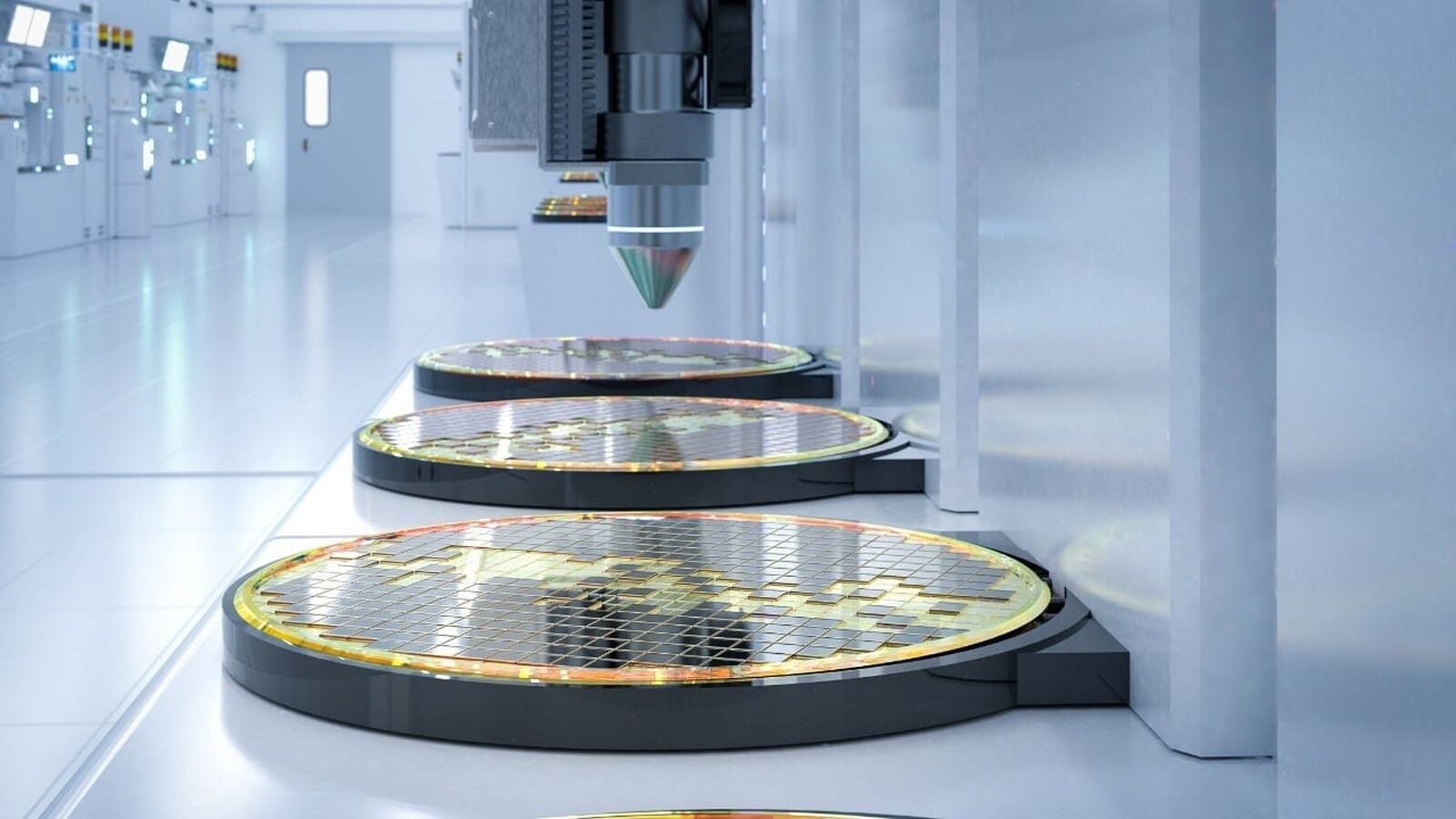
Standing inside a wafer fabrication cleanroom outside Hsinchu or Tainan, you hear the low, continuous thrum of air scrubbers pushing purified air down through ceiling filters at a pace engineered to keep a single rogue speck of dust from ruining a tray of silicon worth more than a luxury apartment. Your boots squeak faintly on perforated flooring. Your eyes ache behind safety lenses after four hours of staring at microscopic circuit pathways where tolerances are measured in nanometers—structures so small that a human hair looks like a redwood log.
When I first spent time around semiconductor engineers and supply-chain planners in Taiwan, I expected grand speeches about geopolitics. Instead, I heard people talk about yield percentages, shipment manifests, custom lithography masks, and the quiet dread of having no good options left.
Now those spreadsheets and trade clauses are colliding in public view. As Washington and Taipei negotiate deeper economic ties and tighter alignment over strategic technologies, curbing AI chip exports to China has moved from Washington policy memos and boardroom whispers onto the front page of global trade deals. On paper, it reads like a clean diplomatic bargain: Washington offers market access, tariff relief, or security assurances, and Taiwan tightens export controls on advanced artificial intelligence accelerators bound for mainland buyers.
On the ground, nothing about it is clean.
Why a Trade Clause Feels Like a Fault Line
Policy headlines love tidy nouns. Curbs. Deal. Compliance. They make international trade look like two chess players sliding wooden pieces across a board.
Real life does not move on a board. It moves through customs brokers in Keelung, logistics managers in Shenzhen, test engineers in Tainan, and families in Taichung whose mortgages, school fees, and retirement savings are tied to whether a factory runs three shifts or two.
To see how a bilateral trade commitment ripples outward, consider a hypothetical mid-sized electronics integrator we can call Lin Wei-chen, who runs a hardware systems firm in New Taipei City. (Lin is a composite character created to illustrate real commercial pressures in the Taiwan-China-US supply chain.) For fifteen years, Wei-chen’s business thrived on a rhythm that looked almost effortless from the outside: design and fabricate core boards and high-value silicon modules with trusted partners in Taiwan, ship subassemblies into southern China for rapid enclosure integration and regional customer deployment, and sell finished systems across Asia.
That rhythm was never just about cheap labor. It was about proximity, speed, and decades of accumulated muscle memory between engineering teams on both sides of the Taiwan Strait.
Then came the tightening ratchet of export controls on high-end AI chips—processors built on leading-edge nodes or configured with high interconnect bandwidth capable of training massive frontier models and running data-center-scale inference. When a US trade deal pushes Taiwan to lock down those shipments even harder, Wei-chen does not get a polite transition period. He gets compliance checklists, end-user verification demands, re-export restrictions, and sudden friction with longtime customers in mainland China who ask why a component that shipped last quarter now triggers red flags.
Caught.
That is the word that keeps coming up in conversations with people who work inside this corridor. Not victorious. Not settled. Caught.
The Invisible Stakes Behind Every Wafer
Most people outside the industry picture a microchip as a tiny square of dark glass with silver pins. That mental picture misses almost everything that makes AI chips consequential.
Think of a leading-edge AI accelerator not as a single hammer, but as an entire orchestra crammed onto a fingernail—billions of transistors acting as violins, cellos, and percussion, all keeping time at gigahertz speeds without tripping over one another. If even one tiny defect creeps in during exposure, etching, or advanced packaging, the whole note goes flat.
Modern AI clusters link thousands—sometimes tens of thousands—of these chips together so they can chew through astronomical matrices of numbers. That computing power is what trains language models, designs proteins, runs autonomous logistics, and powers modern military simulation and surveillance systems. Because compute scales capability, governments treat advanced AI silicon less like a consumer gadget and more like enriched uranium or jet propulsion.
Here is where the human and strategic stakes twist into a knot that is genuinely hard to untangle.
Taiwan sits at the center of global logic and advanced packaging manufacturing, producing the overwhelming share of the world’s most advanced chips. For decades, that concentration gave Taiwan an extraordinary economic engine and an asymmetric form of deterrence—the so-called "silicon shield," the idea that the global economy cannot afford to let Taiwan’s chip ecosystem be broken.
Yet the same concentration creates vulnerability. When a trade deal with the United States requires Taiwan to restrict AI chip exports to China more strictly, Taiwan is stepping directly into the crossfire between its largest security partner and its largest—or historically most deeply entangled—regional trading neighbor.
I have to admit something here: I do not pretend to have an easy formula that resolves this cleanly. Anyone who tells you the choice is simple is either ignoring Taiwan’s exposure or ignoring Washington’s security anxieties. When I sit with people who weigh both sides every day, the uncertainty is palpable. Push too hard on restrictions, and you risk sharp economic retaliation, strained cross-strait channels, or accelerated Chinese push toward domestic self-reliance. Move too slowly or leave loopholes open, and you risk friction with Washington at the exact moment Taiwan wants stronger diplomatic and economic footing.
What Happens When Old Trade Routes Narrow
To understand why export curbs hit deeper than top-line export statistics suggest, picture a metaphor: a river that has irrigated two valleys for thirty years, suddenly redirected through a narrower channel with new sluice gates. (This is a metaphor for trade diversion and supply-chain rerouting, not a literal description of geography.)
Water does not vanish when you narrow a channel; it backs up, seeks side paths, or erodes banks that were never meant to take the pressure.
In electronics manufacturing, "side paths" take many forms. Sometimes a restricted high-end chip cannot be shipped directly, so buyers look for older-generation chips, cloud-access arrangements, custom workarounds, or intermediary assembly hubs. Each workaround adds cost, latency, and legal risk. Compliance officers spend hours tracing provenance; engineers spend weeks redesigning boards around permitted components; sales teams watch margins shrink as customers look elsewhere or delay orders.
Meanwhile, the broader commercial picture is shifting beneath everyone’s feet. Global demand for AI compute has pulled enormous capital toward data centers, power grids, and specialized packaging lines. At the same time, companies in Taiwan, the United States, Southeast Asia, and Europe have been diversifying manufacturing footprints to hedge against single-point failures.
Yet diversification is slow. Building a modern fab or advanced packaging facility takes years and billions of dollars, plus specialized chemicals, ultra-pure water, steady power, and thousands of seasoned engineers who know how to coax high yields out of temperamental tools. You cannot simply draw a new line on a map and wish a cleanroom into existence by Tuesday.
Consider another composite figure, Mei-Ling Hsu, a customs and trade-compliance specialist based in Kaohsiung. (Again, a hypothetical character representing a very real profession.) Her days are spent reading dense regulatory annexes, cross-checking technical specifications like interconnect speeds and compute density, and advising mid-sized suppliers who have never had to think like intelligence analysts just to ship hardware legally.
A few years ago, Mei-Ling’s job was mostly about tariffs, classification codes, and shipping schedules. Today, a single misread parameter on a data sheet can turn a routine export into a regulatory crisis. "People think compliance is just paperwork," a compliance specialist once told me over lukewarm tea in a quiet café near a port district. "It’s actually a mirror. Every new rule shows you how nervous the world has become."
That line stayed with me because it captures the emotional weight underneath the policy jargon. Export controls are not merely technical guardrails. They are an expression of fear—fear of falling behind in an intelligence race, fear of dual-use technology empowering a rival, fear of being left standing alone if a crisis erupts.
The Trap of Simple Answers
When a topic grows this tense, public debate tends to flatten into slogans. One camp insists that national security overrides every commercial concern, full stop. Another camp argues that economic interdependence is the only real stabilizer, and squeezing trade only breeds resentment and accelerates rivals’ efforts to build independent supply chains.
Both arguments point to real risks. Ignoring security implications in frontier AI hardware is reckless when military and strategic competition is intensifying. Pretending that cutting off major trade flows carries no economic sting for Taiwanese exporters, workers, and local ecosystems is equally blind.
What often gets lost in loud arguments is how much of this negotiation is about leverage and credibility. A US trade deal involving AI chip export curbs is rarely just about a single category of semiconductors. It is part of a wider bargaining table where market access, supply-chain resilience, investment commitments, and strategic alignment are weighed together.
For Taiwan, participating in aligned export controls can serve as a signal of reliability to Washington—proof that Taipei is a serious, rules-aligned partner in safeguarding sensitive technologies. At the same time, Taiwanese policymakers and business leaders have every reason to press for clear definitions, predictable enforcement, and genuine reciprocal value so the burden does not fall lopsidedly on local firms without clear guardrails.
Notice how different that sounds from a zero-sum caricature. Real strategy lives in the tension between principle and preservation.
Where the Story Actually Lives
If you zoom out to satellite altitude, you see trade blocs, maritime chokepoints, and billion-dollar capital flows. Zoom back in to street level—to a cramped engineering office in Neihu, a logistics warehouse in Taoyuan, or a family dinner table where someone asks whether next year’s bonus depends on a Washington trade agreement—and the scale changes completely.
Technology policy is often sold as the future arriving ahead of schedule. In practice, it feels much more like living inside a moving machine while someone adjusts the gears. Every turn of the wrench changes the hum in the floor.
Out past the glass curtain walls and cleanroom airlocks, the night shift changes over under sodium and LED streetlights, coffee cups cooling beside monitors that glow with yield charts and shipping queues. A piece of polished silicon no bigger than a postage stamp holds billions of switches waiting to wake up—silent, exact, and heavy with a weight no single treaty can fully carry.