Rain hits the River Mersey differently than it hits the Thames. In London, rain is an inconvenience, a reason to duck into a Pret A Manger and check your phone. In Liverpool, the rain comes sideways off the Irish Sea, tasting faintly of salt and industrial memory, soaking through wool coats and settling into the limestone of the Liver Building.
For decades, if you grew up on those wet cobbled streets and wanted to act, the unspoken rule was brutal in its simplicity. You packed a bag. You bought a one-way ticket at Lime Street Station. You went south, softened your vowels until the hard edges of your Scouse accent became palatable to casting directors in Soho, and you waited by a landline for the chance to play a tragic sidekick, a comedic relief, or a nameless thug in someone else's story.
Jack McMullen stayed. Or rather, even when the work took him across the world, he carried the geography of Liverpool inside his ribcage like a compass needle that refused to swing away from true north.
Now, standing at the center of the BBC's visceral crime drama This City Is Ours, McMullen isn't just taking on another role. He is completing a quiet, twenty-year reclamation project. Watching him inhabit Jamie Phelan—a man caught in the tightening vise of loyalty, family, and illicit power—feels less like observing a performance and more like watching an entire city exhale.
The Weight of the Accent
To understand why McMullen's turn in This City Is Ours lands with such physical force, you have to understand the invisible tax levied on working-class actors in Britain.
Picture a hypothetical twenty-two-year-old from Norris Green or Kirkby stepping into a pristine audition room in West London. Let's call him Danny. Danny has spent three years working night shifts at a distribution warehouse while attending evening drama workshops. He knows the script backward. He understands the character's grief because he has seen that exact grief sitting at his own kitchen table. Yet, the moment Danny opens his mouth and the unmistakable, melodic, guttural cadence of Merseyside fills the room, the casting director's pen pauses. Suddenly, Danny isn't a leading man. He is a "type." To get the job, Danny has to perform twice: first, he has to translate his natural voice into a neutral, middle-class murmur; second, he has to act.
I remember sitting in the back row of a damp community theater in North West England years ago, watching local teenagers rehearse a play about their own neighborhood, only to see them instinctively flatten their accents the moment an adult with a clipboard walked into the room. That reflex—the shame stitched into your own tongue before you even reach adulthood—is hard to unlearn.
Jack McMullen never unlearned his voice because he refused to treat it as a defect.
Born in Liverpool in 1991, McMullen didn't arrive on screen through the velvet-roped corridor of elite drama schools like RADA or LAMDA. His education happened on the concrete sets of Brookside, the legendary Channel 4 soap opera filmed in a real cul-de-sac in West Derby. While other teenagers were memorizing Shakespearean monologues in wood-paneled halls, McMullen was learning camera angles, pacing, and emotional honesty alongside actors who sounded just like his neighbors. From Brookside to Grange Hill, from Waterloo Road to the raw, unforgiving intensity of Jimmy McGovern's Time and Moving On, his career built itself brick by unglamorous brick.
He wasn't an overnight sensation. He was a tradesman learning every inch of his craft.
Inside the Pressure Cooker of This City Is Ours
When Stephen Butchard, the acclaimed writer behind The Last Kingdom and Good Cop, crafted This City Is Ours, he wasn't interested in making another glossy, stylized gangster fantasy where criminals wear tailored suits and spout philosophical aphorisms over single malt whiskey. Crime in real port cities doesn't look like a perfume commercial. It looks like anxiety. It looks like missed birthdays, paranoid glances in rearview mirrors, and the slow, suffocating realization that the people you love most are the ones putting you in a grave.
The series centers on Ronnie Phelan, played with terrifying, weathered authority by Sean Bean, a veteran crime boss contemplating retirement after decades of running a lucrative cocaine smuggling operation into Liverpool. In any dynasty—whether a medieval monarchy, a family-owned haulage firm, or a criminal syndicate—the most dangerous moment isn't the war with outsiders. It is the succession.
Enter Jamie Phelan.
As Ronnie's son, Jamie sits at the intersection of expectation and inadequacy. And this is where McMullen does something extraordinary. A lesser actor would have played Jamie as a snarling, trigger-happy hothead, leaning on volume to simulate strength. McMullen goes the opposite direction. He plays Jamie from the inside out, letting the silence between his lines do the heavy lifting.
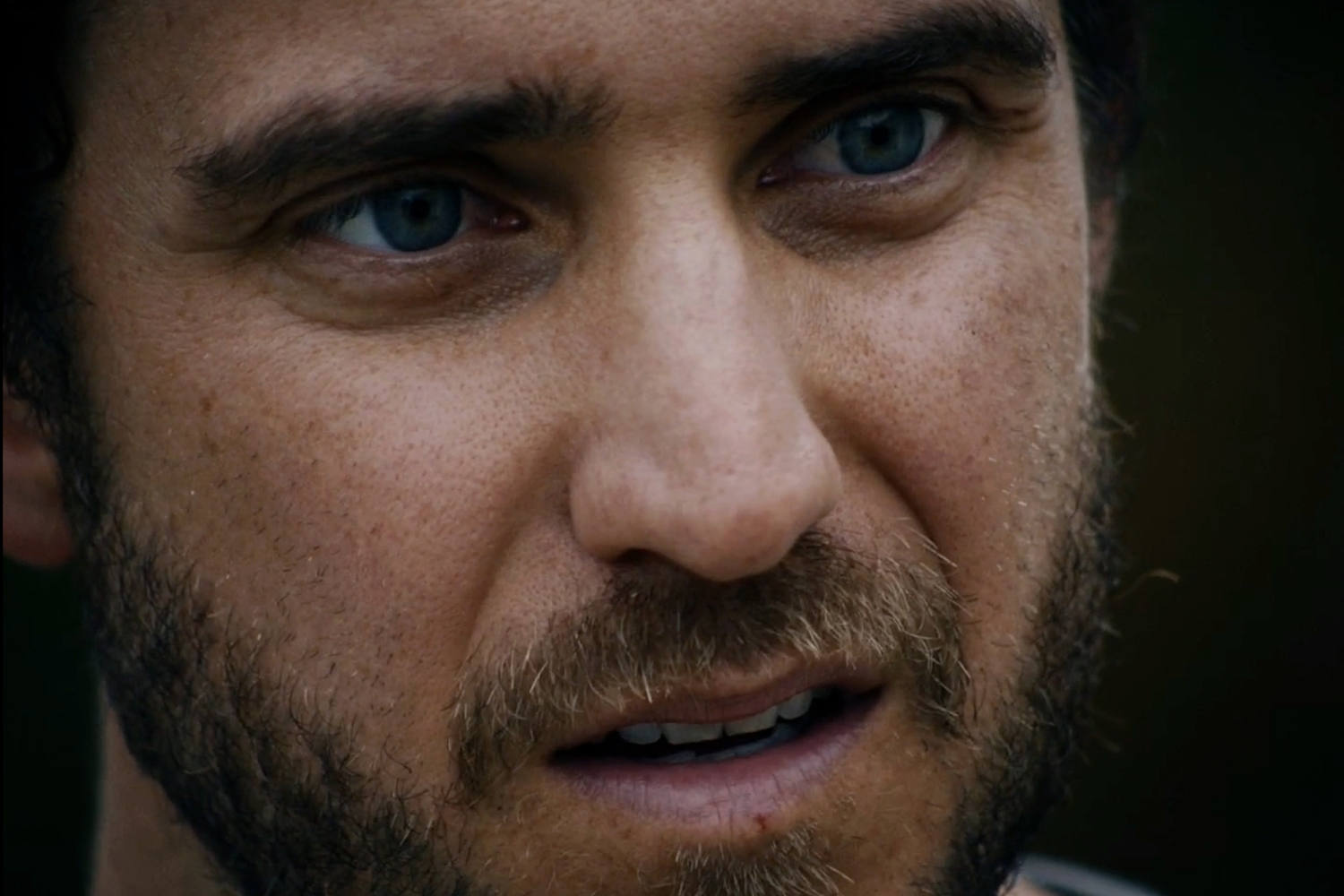
Look closely at his eyes in the quieter scenes of This City Is Ours. There is a constant, humming calculation happening behind them. When Jamie shares a frame with Sean Bean's Ronnie or James Nelson-Joyce's Michael Kavanagh—Ronnie's trusted lieutenant and Jamie's greatest rival for the throne—you don't see a caricature of a Liverpool gangster. You see a son desperate for a father's nod who realizes, too late, that the crown he wants is made of lead.
Think of the relationship between Jamie and Michael like two tectonic plates grinding beneath the same stretch of coastline. On the surface, the street looks calm. Cars pass. Shopkeepers pull up their shutters. Yet ten miles down, immense pressure is building along a fault line that has existed for decades, waiting for one minor tremor to fracture the entire landscape. McMullen plays that subterranean tension with frightening precision. His shoulders carry the posture of a man expecting a blow from behind, yet his voice retains that dry, razor-sharp Scouse wit that can disarm a room in three seconds flat.
Why Liverpool Needed This Story Told From the Inside
Liverpool has always had a complicated relationship with the cameras pointed at it. For half a century, television executives from outside the city treated Merseyside as a convenient backdrop for misery tourism—a place to film bleak stories about economic collapse, industrial strikes, or cartoonishly violent criminals. Even when the stories were sympathetic, they often felt like dispatches sent back by foreign correspondents who stayed at a city-center hotel for three weeks and thought they understood the soul of the place.
This City Is Ours breaks that pattern because its creative DNA is rooted in the soil it depicts. Filmed extensively on location across Liverpool—from the wind-scoured docks and industrial estates to the Victorian terraces and sweeping views of the waterfront—the show treats the city not as scenery, but as a living organism with a long memory.
And McMullen is the native guide who knows where every crack in the pavement leads.
Consider the sheer technical difficulty of what he is doing alongside heavyweights like Sean Bean, Julie Graham, and Hannah Onslow. Sean Bean brings four decades of mythic screen presence to every room he enters; when Bean speaks, the camera naturally bends toward him. Yet McMullen never shrinks in those scenes. Instead, he uses his smaller, coiled physicality as a counterweight. When Jamie argues with Ronnie, it doesn't feel like an actor trying to match a legend decibel for decibel. It feels like a real domestic dispute where history—years of unspoken resentments, childhood memories, and shared guilt—hangs in the air like cigarette smoke.
You can't fake that chemistry in a rehearsal room. It comes from lived familiarity with the rhythms of Northern working-class families, where affection is rarely announced with grand speeches and fury often hides behind a joke.
The Slow Burn of Real Craft
We live in an era obsessed with instant elevation. Social media algorithms reward the loudest voice in the room, and streaming platforms routinely pluck unknown faces from obscurity, thrust them into billion-dollar franchises, and discard them two seasons later when the novelty wears off.
Jack McMullen's trajectory is an antidote to that disposable culture.
Trace his filmography over the last fifteen years and a clear pattern emerges. Even in smaller supporting roles—whether appearing in Ford v Ferrari alongside Matt Damon and Christian Bale, stepping into Peaky Blinders, or delivering heartbreaking work in Little Boy Blue, the ITV drama recounting the murder of eleven-year-old Rhys Jones—McMullen has consistently chosen substance over vanity. He has never chased the easy glamour of red-carpet celebrity. In interviews, he speaks with the grounded, slightly self-deprecating candor of someone who still takes the bus when he goes home to visit his mates.
That humility is precisely why his arrival as a central force in This City Is Ours feels so earned. Audiences possess an instinctual radar for authenticity. We know when an actor is putting on a regional accent like a borrowed coat, checking the mirror every five minutes to make sure the collar sits right. We also know when an actor wears the identity like their own skin.
Watching McMullen navigate the moral quicksand of This City Is Ours, you realize how rarely British television allows working-class characters to be genuinely complex. Too often, writers reduce them to simple binaries: either noble victims of circumstance or irredeemable monsters. Jamie Phelan refuses both boxes. He is capable of tenderness and cruelty within the span of a single conversation. He loves his family fiercely, yet his ambition threatens to burn their house to the ground.
It is messy, uncomfortable, and deeply human.
Beyond the Docklands
Ask anyone in Liverpool about the city's export history, and they will talk about ships, music, and football. They will talk about the Beatles reshaping global culture from a damp cellar on Mathew Street, or the roar of the Kop echoing across Europe on Wednesday nights. Rarely does the conversation turn to acting, even though Merseyside has quietly produced some of the finest performers of the last half-century—from Jodie Comer and Stephen Graham to Cathy Tyson and David Morrissey.
Stephen Graham, in particular, paved a road that McMullen is now widening. Graham proved that a Scouse actor didn't have to sand down his identity to conquer Hollywood or anchor prestige British drama; he proved that specificity is what makes a performance universal. When you play a character with absolute fidelity to the street they grew up on, someone watching in Seoul, Chicago, or São Paulo recognizes the truth in it immediately.
McMullen stands firmly in that lineage. By refusing to leave Liverpool behind—artistically, culturally, or vocally—he has arrived at the exact peak that so many actors sacrifice their identities trying to reach.
The irony is unmistakable. For years, the industry whispered that sounding too local would keep the biggest doors locked. Yet it is McMullen's fierce, unapologetic fidelity to his roots that unlocked This City Is Ours and turned a gritty regional crime drama into one of the most compelling pieces of television in Britain.
Late one evening during filming along the Liverpool waterfront, as the arc lights cut through the mist rolling off the Mersey and the silhouettes of the cranes stood motionless against a bruised purple sky, McMullen stood waiting for the director to call action. Around him, dozens of local crew members, extras, and technicians moved quietly through the cold air, breath pluming in the damp dark, building a story about their own backyard on their own terms.
The cameras rolled. McMullen stepped into the light, opened his mouth, and didn't change a single syllable of who he was.