The coffee in Terminal 1 always tastes slightly burned, especially at four in the morning when the fluorescent lights hum like trapped wasps.
If you sit near the boarding gates at Billy Bishop Toronto City Airport before dawn, you will see them. They move with a practiced, unhurried precision. Crisp white shirts. Epaulettes gleaming under the harsh glare. Rolling black luggage dragged smoothly across polished linoleum. To the bleary-eyed business traveler clutching a boarding pass for New York or Ottawa, they are the reassuring constants of modern aviation. They are the reason you can drink lukewarm ginger ale at thirty thousand feet while hurtling through sub-zero air at five hundred miles an hour, completely unbothered by the physics keeping you alive.
You assume they have it figured out. You assume the glamour of the cockpit comes with security, respect, and a paycheck that matches the weight of carrying seventy-eight souls through a November crosswind.
Look closer at the eyes beneath the peaked caps. Look at the quiet conversations happening beside the jet bridges.
Right now, across Canada, hundreds of those men and women are staring at a ballot. And the choice they are making threatens to bring one of North America's fastest-growing airlines to a grinding halt.
The Myth of the Polished Cockpit
To understand why the pilots of Porter Airlines are voting on a strike mandate, you first have to dismantle a romantic lie.
For decades, the public has held onto a golden-age image of commercial aviation. We picture Pan Am clippers, leather-bound logbooks, and captains living in sprawling suburban homes with boats parked in the driveway. That world vanished years ago, replaced by regional feeders, razor-thin margins, and an industry-wide race to the bottom that treated flight decks like assembly lines.
Consider a hypothetical pilot. Let’s call him Marcus. Marcus isn’t a wide-eyed rookie fresh out of flight school, though plenty of those sit in the right seat beside him. He is thirty-eight, a father of two, with thousands of hours logged navigating brutal Canadian winters—icing conditions over Lake Ontario, blinding whiteouts in Halifax, sudden wind shear descending into St. John’s.
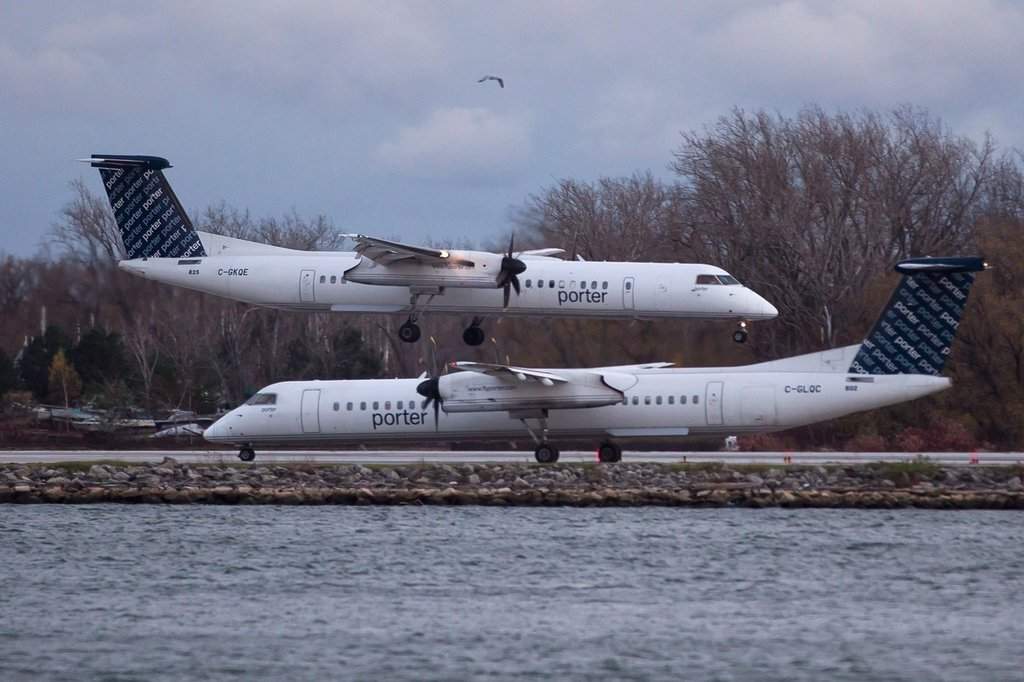
When Marcus joined Porter, the airline was a boutique darling. It operated turboprop Dash 8-400s out of Toronto’s island airport, offering free beer in real glassware and a civilized alternative to the chaos of Pearson International. The culture felt intimate. Scrappy. Family-oriented.
Then the ambition grew.
Porter ordered dozens of brand-new Embraer E195-E2 jets. Suddenly, the regional underdog was flying coast-to-coast across Canada, stretching down to Florida, California, and Las Vegas. The network exploded. Passenger numbers soared. The airline transformed overnight from a beloved regional niche into a fierce national competitor challenging the Air Canada and WestJet duopoly.
Yet, while the jets grew larger and the routes stretched across the continent, the foundational rules governing the people flying those planes remained stuck in another era.
Wait.
Read that again.
An airline built a modern, continent-spanning empire on the backs of pilots who didn't even have a collective bargaining agreement.
What Happens When Goodwill Runs Out
For years, Porter operated without a pilot union. Management relied on internal employee associations, open-door policies, and the genuine pride pilots took in building something unique. When an airline is small, goodwill can paper over a lot of cracks. You know the executives by name. You feel like a stakeholder in a shared adventure.
Scale destroys intimacy.
As the fleet expanded to include sleek jets alongside the workhorse turboprops, the cracks widened into chasms. Scheduling became punishing. Fatigue crept into the cockpit like a slow leak. Pilots flying the new E2 jets found themselves operating complex, long-haul domestic and transborder schedules for compensation that lagged drastically behind North American industry standards.
Think about what a contract actually is in aviation. It is not merely a list of hourly wages.
Imagine driving a semi-truck filled with explosives across an icy mountain pass, except your employer can change your route mid-drive, force you to sleep in a noisy motel for six hours before getting back behind the wheel, and alter your pay structure whenever corporate strategy shifts. A collective agreement is the guardrail on that mountain pass. It dictates maximum duty days, minimum rest periods, predictable scheduling, disability protections, and clear career progression.
Without a contract, those protections exist at the discretion of management. And discretion evaporates the moment quarterly earnings come under pressure.
In 2023, the pilots finally drew a line in the tarmac. They voted overwhelmingly to join the Air Line Pilots Association—ALPA—the largest pilot union in the world. It was a seismic shift. For the first time in Porter’s history, the flight deck had an independent, unified voice.
Then came the hard part.
The Long Grind at the Bargaining Table
If you have never sat inside a labor negotiation, picture two marathon runners tied together at the ankle, trying to run in opposite directions while smiling for the cameras.
Negotiating a first-ever contract is notoriously brutal. Unlike renewing an existing agreement—where both sides simply argue over percentages and tweak established language—a first contract requires building an entire legal universe from scratch. Every definition of a workday, every rule for deadheading on a commercial flight, every penny of per diem, every protocol for sick leave has to be drafted, debated, and fought over.
For more than a year, Porter’s pilot negotiating committee sat across from company executives. Months bled into seasons. Winter turned to spring, spring to summer, and back into the biting chill of autumn.
Meanwhile, the airline kept expanding. Press releases celebrated new routes, gleaming new aircraft deliveries, and rising market share. The pilots kept flying. They kept smiling at boarding doors. They kept executing flawless landings in crosswinds that made passengers grip their armrests.
Behind the locked cockpit door, however, patience was evaporating.
Negotiations stalled on the core pillars that actually matter to human beings trying to sustain a career: compensation that reflects the reality of flying modern commercial jets in North America, scheduling rules that allow pilots to actually see their families, and job security provisions that prevent management from outsourcing their flying.
When talks hit a wall, Canadian federal labor law dictates a specific choreography. Conciliation officers step in. A cooling-off period looms on the horizon. And before a union can legally walk off the job—or even threaten to do so with credible teeth—it must ask its members a terrifying, binary question.
Are you willing to strike?
The Weight of a Strike Mandate
Let’s be honest about what a strike vote actually means, because media headlines almost always flatten it into sensationalism.
When newspapers report that pilots are casting ballots on a strike mandate, panicked travelers immediately start checking refund policies. They picture picket lines tomorrow morning. They imagine stranded families sleeping on airport floors.
That is not how the mechanism works.
A strike authorization vote does not mean a strike is inevitable. In fact, in the vast majority of aviation disputes, a walkout never happens. Rather, the vote is a transfer of leverage. Up until the moment those ballots are counted, management can afford to treat the negotiating team as a handful of vocal activists who don’t truly speak for the quiet majority on the line.
A resounding "yes" vote shatters that illusion. It tells the executive suite: The person sitting in Seat 0A on Flight 412 is not bluffing.
Still, for the individual pilot clicking "yes" on an encrypted digital ballot, the psychological weight is immense. Nobody becomes an airline pilot because they dream of walking a picket line in freezing rain with a cardboard sign. Pilots are, by nature and training, conservative, procedural, mission-obsessed individuals. Their entire professional identity is built around safety, reliability, and getting people home.
To vote for a strike is to deliberately invite chaos into your own life.
Consider the hypothetical reality facing a junior first officer on the Dash 8 fleet—let’s call her Elena. Elena took out massive loans to pay for flight training. She spent years instructing in tiny single-engine Cessnas for barely above minimum wage, logging hours in freezing hangars just to qualify for a regional seat. She loves flying. She loves her colleagues. She actually likes the passengers who wave at her through the cockpit window.
Yet Elena looks at her pay stub, looks at the cost of rent in Toronto or Halifax, and compares her compensation to peers flying identical routes for competitors. She looks at a schedule that leaves her perpetually jet-lagged, missing birthdays and holidays while the company boasts about record growth.
When Elena casts her ballot, she isn’t angry. She is exhausted. And she has realized that politeness does not pay mortgages.
Why Every Traveler Should Care About This Vote
It is easy for the flying public to view labor disputes through a lens of personal inconvenience. When fares are already high and delays feel routine, the prospect of an airline shutdown feels like just another headache inflicted on the consumer.
That perspective misses the invisible stakes entirely.
Aviation safety is not an accident of engineering; it is a fragile ecosystem sustained by human alertness and institutional stability. You do not want the person managing an engine flameout at thirty-five thousand feet to be distracted by financial anxiety, chronic fatigue, or the knowledge that their employer views their livelihood as an acceptable casualty of corporate expansion.
The history of commercial aviation is written in the lessons learned when airlines tried to run on the cheap. For decades, regional carriers in North America paid poverty wages, forcing pilots to commute across time zones on their days off and sleep in shared crash pads because they couldn't afford local housing. It took tragic accidents and sweeping regulatory overhauls to force the industry to recognize a simple truth: you cannot separate pilot working conditions from passenger safety.
Fair contracts do not merely enrich pilots. They stabilize airlines.
When an airline pays market-standard wages and respects human circadian rhythms through sane scheduling rules, pilots stay. Experience accumulates in the cockpit. The captain sitting beside a newly minted first officer has ten thousand hours of institutional wisdom, not eighteen months before bolting to a legacy carrier at the first opportunity.
Right now, Porter Airlines is at a crossroads that every ambitious upstart eventually faces. You cannot run a major national airline using the compensation playbook of a boutique startup. You cannot ask pilots to fly transcontinental jets while treating them like regional apprentices.
The Silence Before the Count
Inside the crew rooms in Toronto, Ottawa, Montreal, and Halifax, the mood over these voting days is strangely quiet. There are no fiery speeches echoing off the walls. Pilots aren't shouting slogans.
Instead, you see small clusters of aviators huddled over tablets between flights, comparing notes on duty rigs, reserve rules, and pension contributions. You see veterans who have lived through mergers and bankruptcies at other carriers quietly explaining the math to twenty-five-year-olds experiencing their first union drive.
Management, for its part, insists it wants a fair deal. Airlines always do. They point to the investments made in new aircraft, the jobs created, the competitive pressures of a notoriously brutal Canadian aviation market where upstarts routinely go bankrupt within years of launching. Those pressures are real. Running an airline in Canada—with its vast distances, sparse population, brutal weather, and astronomical airport fees—is not for the faint of heart.
Yet the pilots have watched the company find hundreds of millions of dollars to finance shiny new jets, sleek marketing campaigns, and aggressive route expansions. They have heard the speeches about how vital they are to the airline’s success. Now, they are simply asking for that appreciation to be written down in binding ink.
The ballots will close soon. The numbers will be tabulated, verified, and released to the public. If history is any guide, the margin will be overwhelming—often north of ninety percent in modern pilot strike votes.
Then the real clock starts ticking.
Tomorrow morning at four o’clock, the lights in Terminal 1 will flicker on again. The coffee will still taste slightly burned. Pilots in crisp white shirts will still walk down the jet bridges, run their pre-flight checklists with meticulous precision, and welcome you aboard with warm, practiced professionalism.
They will get you safely to your destination. They always do.
Just remember, as the cabin door swings shut and the engines spool up into a low, steady roar, that the people sitting behind that armored bulkhead are quietly fighting to make sure their career is worth the weight of the lives behind them.