The rain in Central does not fall; it presses against the glass.
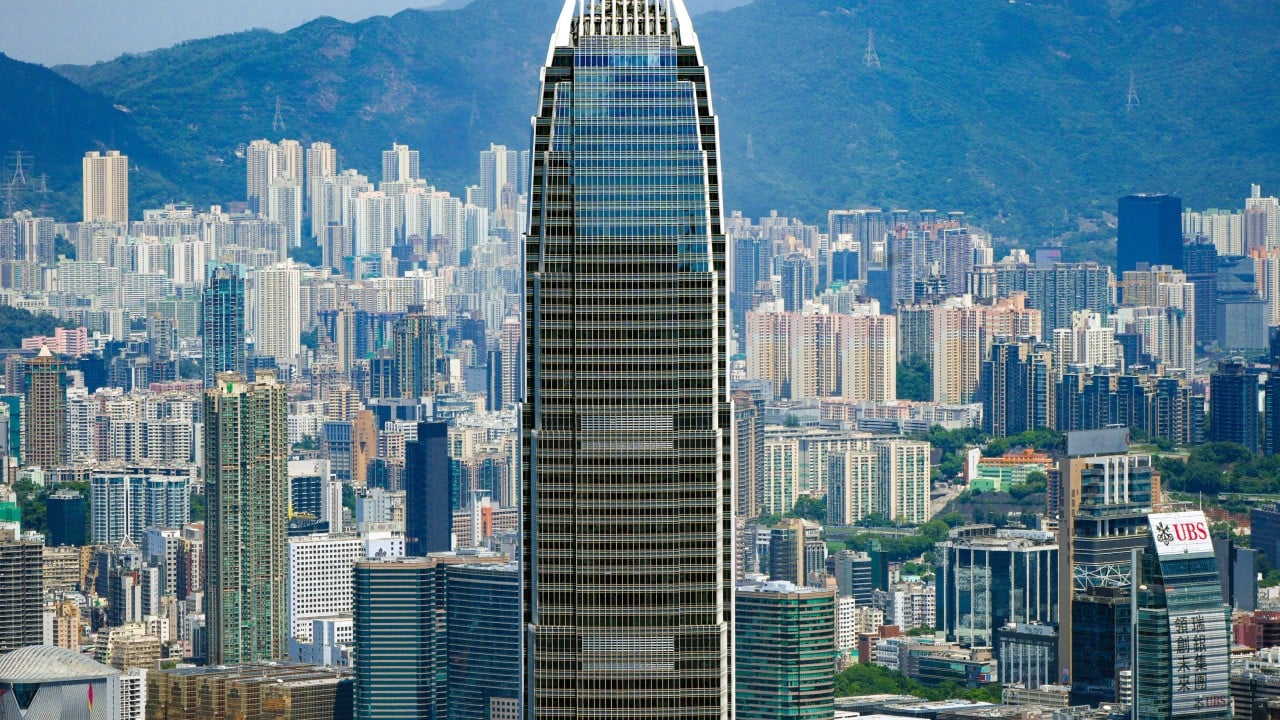
Stand on the forty-second floor of a tower in Exchange Square at six in the morning, and you can watch the fog swallow the peaks of Victoria Harbour whole. Below, the Star Ferry cuts a white scar across slate-gray water. Above, in boardrooms smelling faintly of ozone and dark roast, men and women in bespoke wool suits are doing something that would have seemed unthinkable to their predecessors just five years ago.
They are tearing up the old rules.
For decades, Hong Kong’s financial playbook was written in permanent ink. It was a simple, lucrative formula: act as the frictionless tollbooth between Western capital and Eastern growth. Money flowed in from New York and London, paused briefly in the gleaming towers of Central to be priced, packaged, and blessed by international lawyers, and marched steadily north into mainland China. Everyone got rich. Nobody had to improvise.
Then the world tilted.
Supply chains fractured. Geopolitical temperatures dropped. Interest rates climbed at the fastest pace in a generation, turning cheap money into a fond memory. Suddenly, the tollbooth model looked less like an engine of inevitable prosperity and more like a museum piece. Headlines across the globe began drafting Hong Kong’s financial obituary, predicting a slow fade into regional irrelevance as capital sought quieter harbors in Singapore, Tokyo, or Dubai.
Yet this week, hundreds of the world’s most powerful bankers—chief executives from Wall Street titans, sovereign wealth managers from the Gulf, private equity chiefs from London—are boarding long-haul flights bound for Chek Lap Kok. They are not coming to pay their respects. They are coming to take notes.
They are gathering in Hong Kong to see how a city written off by the consensus has quietly rewritten its entire operating manual.
The Anatomy of a Pivot
To understand why the titans of global finance are converging on this rocky archipelago, you first have to understand what happens when a financial hub loses its muscle memory.
Consider a hypothetical managing director—let’s call him Marcus—who has spent twenty years structuring cross-border deals out of a corner office overlooking Statue Square. Five years ago, Marcus’s calendar was a monotonous blur of initial public offerings for mainland tech giants and syndicated loans for state-owned enterprises. His job was essentially translation: taking Chinese growth stories and wrapping them in a language that pension funds in California and insurers in Zurich could digest.
By 2023, Marcus’s phone had gone unnervingly quiet. Western institutional investors were pulling back, spooked by regulatory shifts and geopolitical crosswinds. The traditional IPO pipeline, long the lifeblood of Hong Kong’s exchange, had slowed to a trickle. Marcus found himself staring at spreadsheets that no longer made sense, wondering if the city’s best days were trapped behind glass.
If you have ever watched an industry you love undergo a structural earthquake, you know that specific brand of quiet panic. It is not the sharp terror of a sudden market crash—the kind where screens flash red and adrenaline carries you through the afternoon. It is a slow, creeping doubt. You start questioning your own instincts. You wonder if the skills you spent decades sharpening have suddenly become obsolete.
That doubt hung over Hong Kong like the summer humidity. But beneath the surface, away from the loud pronouncements of pundits three time zones away, the city’s financial architects began executing a radical, unglamorous pivot.
They stopped waiting for the old world to come back. Instead, they rebuilt the plumbing.
Think of a great financial center not as a collection of skyscrapers, but as a massive, intricate hydraulic system. For years, Hong Kong’s pipes were built for a single directional flow: West to East. When that pressure dropped, the city’s regulators, bankers, and policymakers—led by institutions like the Hong Kong Monetary Authority and the Securities and Futures Commission—didn't just sit around polishing the brass fittings. They began laying entirely new pipelines pointing south, west, and deep into the emerging world.
Follow the New Water
Look closely at who is sitting in the front rows of this week’s summit, and you will see the new map of global money.
Alongside the familiar faces from Manhattan and Canary Wharf are delegates from Riyadh, Abu Dhabi, Jakarta, and Bangkok. This is not accidental. While Western commentators were busy counting how many expats were leaving Hong Kong, the city’s financial leadership was quietly logging thousands of air miles across the Middle East and Southeast Asia.
They recognized a fundamental truth that many in the West were slow to grasp: the center of gravity for global capital was shifting. Sovereign wealth funds in the Gulf, flush with energy revenues and hungry to diversify away from oil, needed a sophisticated gateway to deploy hundreds of billions of dollars into Asian technology, green energy, and infrastructure. Meanwhile, Southeast Asian family offices—the quiet engines of wealth across Indonesia, Thailand, and Malaysia—were looking for institutional-grade asset management closer to home.
Hong Kong positioned itself as the indispensable clearinghouse for this new South-South corridor.
Take the numbers, which tell a story far louder than the skeptics' whispers. Total deposits in Hong Kong’s banking system have not collapsed; they have climbed steadily past the 16 trillion Hong Kong dollar mark. Assets under management in the city’s wealth management sector hover around $4 trillion, putting Hong Kong on a trajectory to overtake Switzerland as the world’s largest cross-border wealth hub within a few years.
Numbers, of course, can feel abstract until you see how they move on the ground.
Return to our hypothetical banker, Marcus. Today, his calendar is full again, though the names on his notepad look entirely different. On Monday morning, he isn't pitching a New York hedge fund; he is structuring a joint venture between a Shenzhen electric-vehicle battery maker and a sovereign investment arm in Abu Dhabi. On Wednesday, he is helping a third-generation shipping dynasty in Jakarta set up a single-family office in Central, taking advantage of tax concessions and streamlined residency rules that didn't exist three years ago.
The work is harder now. It requires more shoe leather, deeper cultural fluency, and a willingness to build deals from scratch rather than relying on cookie-cutter templates. The easy money is gone. In its place is something far more durable: genuine necessity.
The Architecture of Resilience
Why did this reinvention work when so many predicted failure?
The answer lies in a psychological trap that catches almost every observer of financial markets: we confuse cyclical pain with permanent decline. When a market hits a rough patch, human nature urges us to extrapolate the current misery out to infinity. We forget that great commercial cities are evolutionary organisms. They survive precisely because they are unsentimental about shedding their old skin.
Hong Kong has done this before. In the 1950s, when an embargo crippled its traditional entrepôt trade, it reinvented itself as a manufacturing powerhouse of textiles and plastics. In the 1980s, as factory costs rose and mainland China opened its doors, it shed its industrial base almost overnight to become a premier financial and services hub. Each transition felt existential at the time. Each time, the city emerged leaner and more profitable.
This latest iteration—what top bankers are flying in to dissect—is built on three distinct pillars that turn Hong Kong’s unique political and geographic position from a perceived liability into an asymmetric advantage.
First, there is the deepening of the "Connect" schemes. If you want to understand how Hong Kong actually functions, stop thinking of it as an isolated island and start thinking of it as an airlock. On one side sits mainland China, the world’s second-largest economy, with a massive pool of domestic savings and strict capital controls. On the other side sits the global financial system, with freely convertible currencies and Western legal frameworks.
Hong Kong is the pressurized chamber between the two. Through Stock Connect, Bond Connect, Swap Connect, and Wealth Management Connect, capital can move between these two worlds in a controlled, transparent, and regulated manner. Over the past two years, regulators have systematically widened these pipes—adding exchange-traded funds, expanding interest rate derivatives, and allowing mainland investors easier access to Hong Kong-listed shares. For global banks, that airlock remains the single most profitable bridge into China’s capital markets, and it cannot be replicated in Singapore or Tokyo.
Second, Hong Kong has made an aggressive, calculated bet on the future of financial plumbing itself: digital assets and green finance.
While regulators in the United States spent years locked in courtroom battles over cryptocurrency and digital tokens, Hong Kong rolled out a clear, strict licensing regime for virtual asset exchanges and began piloting tokenized green bonds. They treated digital ledger technology not as a speculative casino, but as the next generation of settlement infrastructure. Today, traditional institutional banks are actively testing tokenized deposits and cross-border central bank digital currency bridges—like Project mBridge—right here in the city.
Third, there is the quiet boom in private wealth and family offices. Walk through the lobby of the Four Seasons or the Mandarin Oriental on a Tuesday afternoon, and you will hear a symphony of languages—Mandarin, Cantonese, English, Arabic, Bahasa Indonesia. More than 2,700 single-family offices now operate out of Hong Kong, drawn by a combination of zero capital gains tax, deep pools of legal and accounting talent, and proximity to the fastest-growing economies on earth.
The Invisible Stakes
Still, let’s be honest about the terrain. Pretending that Hong Kong’s path forward is effortless would be a disservice to the truth.
The city operates in a world where economics and geopolitics are permanently entangled. Every global bank chief landing in Hong Kong this week is walking a tightrope. Back in Washington and Brussels, politicians scrutinize every dollar invested in Chinese technology. Compliance departments in New York have grown into small armies, parsing sanctions lists and cross-border data rules with magnifying glasses.
Meanwhile, Hong Kong faces fierce, relentless competition. Singapore has captured massive inflows of regional wealth and corporate headquarters, offering a stable, predictable alternative that appeals deeply to Western multinationals. Dubai has transformed itself into a magnet for hedge funds and crypto entrepreneurs, boasting tax-free allure and a time zone that bridges Europe and Asia.
There are real structural headaches at home, too. Commercial real estate vacancies in Central sit at multi-year highs, a visible reminder that the era of runaway office rents is over. The IPO market, while showing signs of life with major listings returning to the exchange, still hasn't recaptured the euphoric volumes of 2020. And the talent pool, though replenishing rapidly through aggressive government visa schemes that have brought in tens of thousands of skilled professionals, is still adjusting to a new demographic mix.
If you ask a candid banker in Central whether the future is guaranteed, they will look you in the eye and say no. Nothing in global finance is guaranteed anymore. The era of effortless globalization—where capital flowed everywhere without friction or political consequence—is dead.
And that is precisely why this gathering matters so much.
The executives converging on Hong Kong are not looking for a fairy tale. They are looking for a survival guide. Every major financial institution on earth is currently grappling with the exact same dilemma: how to operate profitably in a fragmented, multipolar world without getting crushed between competing superpowers.
Wall Street banks cannot simply abandon Asia, where the vast majority of global economic growth will occur over the next two decades. Nor can they ignore the realities of Western regulatory pressure. They need a laboratory where the rules of engagement for this new era are being written in real time.
Hong Kong has become that laboratory.
What Happens When the Lights Come On
Picture the ballroom of a luxury hotel in Admiralty tomorrow morning.
At the front of the room, under the glare of stage lights, the chief executives of the world’s largest banks will sit in leather armchairs, speaking in measured, diplomatic tones about "resilience," "connectivity," and "regional integration." The cameras will click. The press releases will go out.
Watch the hallways outside that ballroom instead.
That is where the real playbook is being shared. Over espresso in quiet corners, a London asset manager will ask a local regulator how the new cross-border wealth rules actually work in practice. A sovereign fund director from Riyadh will compare notes with a Hong Kong private equity partner on co-investing in Southeast Asian data centers. A head of trading from New York will walk down Des Voeux Road, feeling the sheer, kinetic density of a city that has spent nearly two centuries turning geographic improbability into immense wealth.
They will look past the headlines and see the machinery underneath. They will see a legal system rooted in common law that still commands the trust of international counterparties. They will see a currency pegged to the US dollar that has weathered every financial storm since 1983 without breaking. Most of all, they will see a culture defined by a relentless, almost stubborn pragmatism—a city that treats crisis not as an excuse to surrender, but as a prompt to renegotiate the terms.
By late afternoon, the fog over Victoria Harbour usually begins to lift. The heavy gray clouds break apart, letting shafts of sharp, late-autumn sunlight hit the glass towers of Central, turning the skyline into a wall of blinding gold. Down below, the ferries keep crossing the water, back and forth, linking one shore to the other just as they have for more than a hundred years.
The playbook has changed. The players have changed. The game is harder, faster, and infinitely more complex than it used to be.
The bankers flying into Hong Kong this week understand a simple truth that the rest of the world is only beginning to figure out: you don't bet against a city that knows how to rebuild the bridge while standing on it.