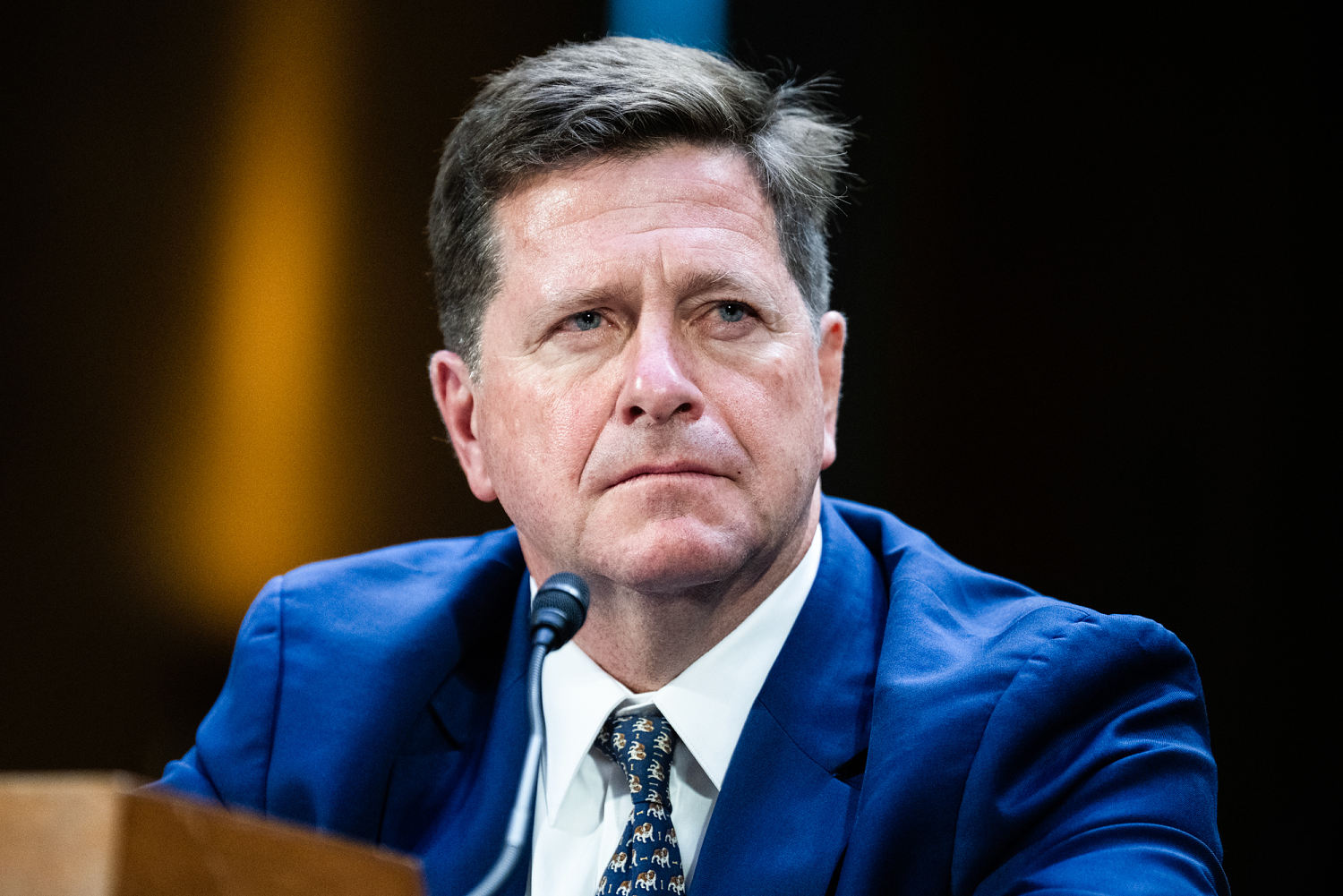
Power rarely announces itself with a thunderclap. More often, it arrives in the dull, steady hum of a Senate voting machine registering numbers on a screen. Fifty-one to forty-seven.
The tally brought an end to weeks of administrative turbulence at the top of the nation's security apparatus, seating Jay Clayton as the new director of national intelligence. To understand why this matters, step away from the marble hallways of Washington and picture an anonymous analyst sitting in a secure, windowless basement at Langley, staring at satellite telemetry from halfway across the globe. That analyst does not care about partisan bickering. They care about continuity. They care about whether the person standing at the very top of the eighteen-agency hierarchy can protect the integrity of the data stream or whether the leadership structure will shift beneath their feet yet again.
For six chaotic weeks, that instability was the reality. Bill Pulte, a housing official thrust into an acting role following early leadership departures, presided over a series of abrupt personnel purges that left career operatives anxious and lawmakers on both sides of the aisle deeply unsettled. The Office of the Director of National Intelligence, built in the wake of historic security failures to act as the central nervous system of American espionage, was suddenly caught in a cycle of internal friction.
Enter Clayton.
Initially, his nomination was treated by weary congressional Democrats as a welcome relief—a predictable, establishment figure who had previously steered the Securities and Exchange Commission. They envisioned a stabilizing anchor capable of putting out fires and, crucially, unlocking the legislative stalemate surrounding Section 702 of the Foreign Intelligence Surveillance Act. That vital warrantless surveillance authority had drifted into a dangerous legal void, expiring weeks prior while political factions dug in their heels.
Politics, however, rarely follows a straight script.
During his confirmation hearings before the Senate Intelligence Committee, the mood curdled. Pushed by lawmakers to clearly address the outcome of the 2020 presidential election, Clayton sidestepped, declining to state definitively that Donald Trump had lost, pointing instead to certified results while voicing broader concerns over ballot processing integrity. For opponents, it was a bridge too far. The committee split entirely along party lines, setting the stage for a bitter, divided floor vote that exposed the deep fractures underlying the nation's security oversight.
Yet the clock does not stop for political posturing.
The sprawling machinery of American intelligence continues to hum, processing millions of intercepted signals, tracking foreign adversaries, and assessing global threats in real time. Clayton now sits at that apex, tasked with managing a fractured bureaucracy while a lapsed surveillance framework waits for legislative repair.
Whether this transition brings genuine operational stability or simply a new chapter of ideological struggle remains entirely unwritten. The vote is cast. The gavel has fallen. But down in the secure rooms where the warnings are first heard, the real test has only just begun.
Jay Clayton opening statement at confirmation hearing
This video provides a direct look at Jay Clayton delivering his opening statement before the Senate Intelligence Committee, offering insight into his presentation and demeanor during the confirmation process.