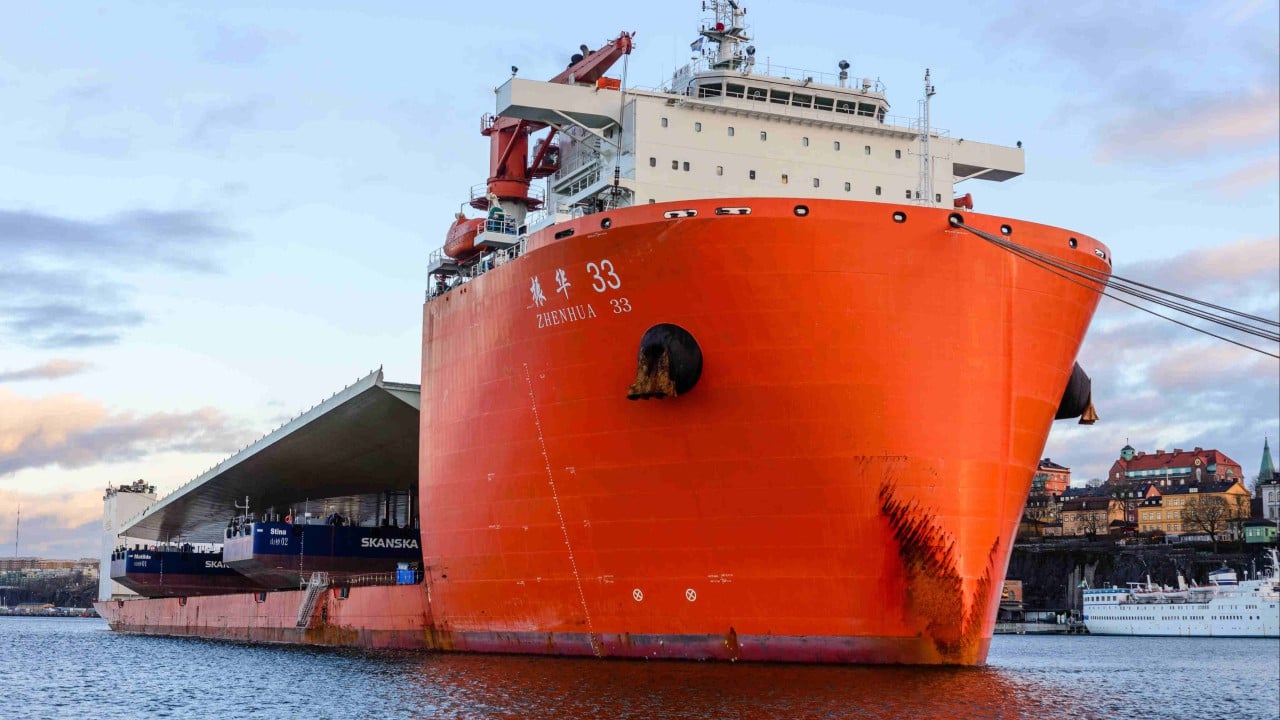
Salt crusted the steel railing of the container ship long before the horizon darkened. Standing on the bridge, staring out at forty thousand tons of stacked corrugated boxes, the sheer scale of modern global commerce becomes impossible to ignore. Every crate represents someone's livelihood, a factory's output, a supply chain humming with quiet efficiency across restless oceans.
To the untrained eye, this is simply the heartbeat of peacetime trade. Giant vessels move quietly between continents, carrying everything from sneakers to microchips. Yet history has a habit of repeating its heaviest lessons in whispers before shouting them aloud.
Consider a dockworker in a major Pacific port during the mid-twentieth century. He watched rows of liberty ships loaded not with bananas or automobiles, but with cold steel, rations, and artillery. Today, the uniforms have changed. The ships have grown exponentially larger. The underlying reality, however, remains remarkably constant. When a nation looks across vast maritime expanses and calculates the sheer volume of logistics required to sustain its defense, civilian fleets stop looking like mere business assets. They start looking like the only lifeline available.
China is currently rewriting that calculus.
Beijing has urged its maritime sector to prepare commercial vessels for wartime utility. This is not a sudden panic. It is a calculated, methodical integration of state commerce and military contingency. Behind the dry bureaucratic language of national defense directives lies a profound recognition of geographic reality. Modern military transport fleets, no matter how powerful, are finite. When conflict strikes across contested waters, gray-hulled warships alone cannot shoulder the colossal weight of sustained logistical support. They need the massive displacement of container ships, roll-on/roll-off ferries, and bulk carriers.
To understand why this shift matters so deeply, step inside a modern shipyard. Picture the cavernous hull of a newly constructed mega-ferry designed for civilian vehicle transport. To a passenger, it is a floating garage connecting two bustling commercial hubs. To a military planner, it is an amphibious staging platform capable of moving hundreds of heavy tactical vehicles across a hostile strait.
This dual-purpose design philosophy is old, but its modern execution is staggering. Standardization is the quiet weapon here. By ensuring that commercial vessels conform to military ramp specifications, reinforced deck tolerances, and secure satellite communication protocols, maritime authorities erase the friction between peace and crisis. When the order arrives, conversion does not require months in a dry dock. It requires a software patch, a painted designation, and a shift in orders.
Yet, this convergence carries heavy psychological and geopolitical weight.
Fishermen steering trawlers along contested coastlines suddenly find themselves participating in maritime militia exercises. Corporate executives overseeing fleets of container vessels must weigh commercial profitability against strategic state mandates. The boundary between the civilian marketplace and the military apparatus blurs until it is nearly invisible.
Pause for a moment to consider what this means for the global supply chain.
When commercial shipping capacity becomes tethered to military contingencies, risk assessments transform overnight. Insurance premiums spike. Routes shift. Shippers forced to factor geopolitical friction into their daily equations pass those costs down to every consumer on Earth. The price of a television set or a barrel of oil suddenly carries the invisible tax of potential mobilization.
History teaches us that maritime nations ignore logistics at their peril. In every major conflict of the past two centuries, the victor was rarely the side with the flashiest initial strike. It was the side that could feed its troops, repair its engines, and replenish its fuel across thousands of miles of contested ocean. By mobilizing its civilian fleet now, Beijing is attempting to solve the tyranny of distance before a single shot is fired.
The strategy relies on absolute scale. China boasts the largest commercial shipbuilding industry and one of the most formidable merchant fleets on the planet. By converting this vast commercial infrastructure into a strategic reserve, the state creates an enormous logistical cushion. It deters adversaries through sheer mass. After all, how do you blockade a nation whose entire mercantile marine can double as a secondary logistical navy?
At the same time, this escalation triggers a nervous reaction across rival capitals. Neighboring nations watch container ships practicing ramp deployments and roll-on maneuvers with growing unease. Every drill is scrutinized. Every new commercial vessel order is analyzed for hidden military utility. A spiral of suspicion takes root, turning the peaceful blue of the open ocean into a chessboard where every merchant ship is a potential rook.
We live in an era that desperately wants to believe trade has permanently pacified power. We look at sleek cargo terminals and automated cranes and assume that commerce has rendered conflict obsolete. That is a comforting illusion. Trade does not prevent war; it merely alters its logistics.
The salt spray still hits the glass of the bridge. The engines continue their relentless, rhythmic thrumming beneath the deck plates. But the water ahead feels colder now, deeper, and freighted with the quiet certainty that the ships carrying our daily goods are sailing straight into a more complicated future.