Static.
A sudden, sharp burst of white noise over an air traffic control frequency in central Florida is often the only sound that marks the transition from an ordinary Tuesday afternoon to an irreversible local tragedy. When authorities finally release the names from the manifest—a tech executive, his wife, and their two young children—the public reaction follows a predictable, somber script. Headlines reduce a lifetime of ambition, Saturday morning soccer games, and late-night coding sessions into a cold, clinical summary of net worth and aviation tail numbers.
We read the news over morning coffee, shake our heads at the fragility of life, and scroll on. Yet beneath the surface of this heartbreaking Florida plane crash lies a much deeper, uncomfortable truth about how modern success alters our relationship with risk.
The Architecture of Invincibility
To understand how a brilliant mind ends up at the controls of a single-engine turboprop in deteriorating weather, you have to understand the psychology of the modern founder. I spent years working alongside early-stage technology executives in the Southeast, watching them bend reality to their will. When you build a software company from a spare bedroom into a nine-figure enterprise, you develop a specific kind of muscle memory. You learn that obstacles are merely engineering problems waiting for a clever workaround. Regulations are friction to be optimized. Delays are inefficiencies to be eliminated.
In the boardroom, this relentless drive is rewarded with capital and applause. At ten thousand feet, inside a pressurized cabin surrounded by glowing glass-cockpit displays, that exact same mindset becomes lethal.
Consider a hypothetical scenario—a composite of dozens of real flights logged across the Florida peninsula every week. Imagine an executive who has spent the morning closing a series of exhausting meetings in Miami. His family is waiting at a regional airfield near Orlando, eager to make a dinner reservation or catch the start of a long weekend. Commercial flights mean security lines, rigid schedules, and lost hours. His personal aircraft, parked twenty minutes away at an executive terminal, represents the ultimate expression of autonomy. He checks the radar on his tablet. A line of afternoon thunderstorms is building over the Everglades, standard for Florida in the warmer months, but there appears to be a corridor to the west. He calculates the fuel burn, files an instrument flight plan, and taxies to the runway.
He isn't reckless. In fact, he is likely hyper-focused, treating the flight plan like a product roadmap. He has the best avionics money can buy, synthetic vision that paints the terrain in bright green polygons even in zero visibility, and an autopilot capable of landing the plane on its own. He feels completely in command.
The Illusion of the Glass Cockpit
Aviation safety experts have a term for what happens next, though it rarely makes it into the initial news reports: risk homeostasis.
Think of it like driving a modern luxury SUV in a blizzard. Because you have all-wheel drive, heated seats, anti-lock brakes, and lane-keep assist, you feel insulated from the storm outside. Subconsciously, you drive ten miles an hour faster than you would in an older sedan. The technology didn't eliminate the ice on the road; it simply masked your perception of the danger until the moment physics reasserted its authority.
General aviation—the broad category covering all non-commercial, non-military flying—has undergone a technological revolution over the past two decades. Modern private planes boast safety systems that rival commercial airliners. Yet, according to long-term data from the National Transportation Safety Board, the fatal accident rate for personal flying remains stubbornly higher than that of commercial aviation.
Why does the gap persist? Because commercial airline pilots operate within a rigid, redundant ecosystem designed to strip away individual ego. Two highly trained professionals sit in the cockpit, bound by strict company minimums, supported by a team of dispatchers on the ground whose sole job is to say no when the weather turns sour. An airline captain has zero financial or personal stake in getting the passengers home by dinner. If a storm blocks the path, the flight cancels, the passengers complain, and everyone goes to a hotel.
The owner-pilot has no dispatcher. When the founder is also the captain, the person evaluating the risk is the exact same person who desperately wants to get home.
The Anatomy of a Florida Squall
Anyone who has lived through a Florida summer knows that the weather doesn't just change; it detonates. The peninsula sits trapped between the warm waters of the Gulf of Mexico and the Atlantic Ocean. As the midday sun heats the land, sea breezes collide inland, forcing moist air upward at violent speeds. Within twenty minutes, a clear blue sky can morph into a towering cumulonimbus cloud reaching fifty thousand feet—higher than commercial jets cruise.
Inside these storms, updrafts and downdrafts shear past one another at speeds exceeding sixty miles per hour. Rain falls so heavily it can choke a turbine engine, while hailstones the size of golf balls batter aluminum skins. Even if an aircraft stays clear of the core, the turbulence surrounding these cells can disorient the human inner ear in seconds.
Flight instructors call this spatial disorientation, and it is one of the primary culprits in weather-related crashes. When a pilot enters thick clouds without visual references to the horizon, the vestibular system in the inner ear begins to lie. A banking turn feels like straight-and-level flight. A steep dive feels like a climb. The pilot must ignore every physical instinct screaming in their body and trust only the digital attitude indicator on the screen.
If a moment of distraction occurs—a child crying in the back seat, a sudden flash of lightning, a chime from an onboard alert—the pilot's scan breaks. The wings dip. Airspeed builds rapidly. By the time the pilot realizes the instruments are showing a spiral dive, the aircraft may already be exceeding its structural limits.
The Invisible Stakes in the Cabin
When we read that a tech tycoon, his wife, and their two children perished, our minds naturally gravitate toward the dramatic final seconds. We imagine terror. We imagine panic. Yet the true tragedy of these accidents is almost always quiet, mundane, and completely devoid of cinematic drama right up until the end.
In the minutes before a crash, the cabin of a private plane looks like any family minivan on a road trip. Children are wearing oversized noise-canceling headsets, watching cartoons on tablets, or coloring in notebooks. A spouse is scrolling through photos from the trip or checking messages. There is a thermos of coffee in the cup holder, stuffed animals tucked beside seatbelts, and weekend duffel bags strapped into the cargo net behind the rear seats.
This is the invisible stake of private aviation. When an executive steps onto a private tarmac, they aren't just betting their own life against the weather and their currency in the cockpit. They are placing their entire family inside a single-point-of-failure system.
I remember standing on the ramp of a small municipal airport in central Florida years ago, watching a young family load into a sleek, six-seat single-engine plane as dark anvil clouds bruised the horizon to the north. The father was brisk, confident, wearing a fleece vest with his company's logo embroidered on the chest. He walked around the aircraft, checking the fuel caps and control surfaces with practiced efficiency. His wife buckled their two toddlers into car seats in the back, laughing at something one of them said.
Watching them taxi away, I felt a cold knot form in my stomach—not because the plane was unsafe, nor because the pilot was incompetent, but because I recognized the subtle, intoxicating pressure of the schedule. You don't want to disappoint your kids. You don't want to waste the money spent on the trip. You don't want to admit that the machine you worked so hard to afford is powerless against a wall of water and wind.
What the Data Actually Tells Us
There is a persistent myth that small planes simply fall out of the sky due to sudden, catastrophic mechanical failure. In reality, modern aircraft engines and airframes are extraordinarily reliable. When investigators from the NTSB sift through the wreckage in a Florida palmetto scrub or a marshy lakebed, they rarely find a broken wing spar or a seized turbine that wasn't caused by the impact itself.
Instead, the data points overwhelmingly toward human factors—specifically, a chain of small, seemingly harmless decisions that compound until there are no exits left.
- Get-There-Itis: Aviation psychologists use this informal term to describe the fixation on reaching a destination despite mounting evidence that the flight should be abandoned. It affects corporate executives disproportionately because their entire careers are built on overcoming resistance.
- Proficiency vs. Currency: To legally carry passengers, a private pilot only needs to complete three takeoffs and landings within the preceding ninety days. Being legal to fly is vastly different from being proficient at handling an emergency in zero-visibility instrument conditions while managing a demanding workload.
- The Single-Pilot Trap: Flying a high-performance aircraft through complex airspace while communicating with air traffic control, monitoring weather radar, and troubleshooting systems requires immense cognitive bandwidth. When an unexpected crisis hits, a solo pilot can saturate their mental capacity in seconds.
The Burden of Knowing
I admit that writing about these crashes leaves me deeply conflicted. There is a profound beauty in general aviation. Looking down at the emerald coastline of Florida from eight thousand feet, watching the shadow of your wings skim across the clouds, offers a perspective on the world that few human beings ever experience. It connects people across vast distances and allows small businesses to thrive in communities ignored by major airlines. To paint every private pilot as a reckless gambler would be dishonest and unfair to the thousands of disciplined aviators who treat every flight with extreme humility.
Yet, when another family is lost, the silence from the aviation community can feel deafening, often replaced by premature speculation on internet forums where armchair pilots dissect radar tracks to prove they would never have made the same mistake. That impulse is a defense mechanism. If we can convince ourselves that the pilot was uniquely negligent, we can preserve our own illusion of safety.
The harder, more necessary truth is that the victim was likely a lot like us—smart, capable, deeply devoted to his family, and entirely convinced that his preparation was enough to beat the odds.
The Empty Hangar
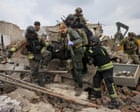
Days after the headlines fade and the news trucks pack up their satellite dishes along the perimeter fence of the Florida airfield, the cleanup begins. Recovery crews haul the twisted, mud-caked aluminum onto flatbed trailers, transporting the pieces to a secure warehouse where federal investigators will lay them out like a grim jigsaw puzzle. Over the next twelve to eighteen months, specialists will download data from surviving memory chips, analyze fuel samples, and listen to the final transmissions between the cockpit and Jacksonville Center.
Eventually, a final report will be published, written in the dry, emotionless prose of government bureaucracy. It will cite probable causes—perhaps spatial disorientation, perhaps an inadvertent encounter with severe convective weather, perhaps a loss of control during an instrument approach.
None of those technical terms will capture the true weight of what vanished in that burst of radio static. They won't mention the half-finished projects sitting on an office desk, the empty chairs at a school concert, or the quiet neighborhood street where two bicycles will remain parked in a garage, waiting for riders who are never coming home.