The unsealing of a federal murder indictment against 94-year-old former Cuban President Raúl Castro at Miami’s Freedom Tower makes for fantastic political theater. It gave politicians the perfect backdrop on Cuban Independence Day to beat their chests, and it handed cable news an explosive headline: "U.S. Indicts Dictator for 1996 Murder."
But let’s stop pretending this is a monumental breakthrough for international justice or a masterstroke of foreign policy. It is neither.
The prevailing media consensus frames this indictment as a long-overdue legal reckoning that will shake the Cuban regime to its core and force an economic opening. That narrative is fundamentally broken. I have spent decades watching administrations of every political stripe try to leverage legal and economic sanctions to force regime change in Havana, only to watch the Cuban government dig its heels in deeper. Charging a retired, nonagenarian revolutionary for a 30-year-old military shootdown will not liberate the Cuban people, nor will it break the Communist Party’s grip on power.
If anything, this move achieves the exact opposite of its intended goal. It guarantees that the current leadership in Havana will never negotiate, never reform, and never step down.
The Flawed Illusion of Legal Leverage
The core argument driving this indictment is that applying American legal pressure to Cuba’s ultimate decision-maker will force the island to open up its economy and release political prisoners. This logic ignores everything we know about authoritarian survival mechanics.
When you back a nuclear-adjacent or deeply entrenched regime into a legal corner with no exit strategy, you do not incentivize cooperation. You incentivize survival at all costs. Authoritarian regimes do not look at an American arrest warrant and think about structural economic reform. They look at it as an existential threat.
Imagine a scenario where a corporate board faces a hostile takeover that threatens not just their jobs, but their literal freedom. Do they liquidate and hand over the keys? No. They burn the company to the ground to protect themselves. By indicting Castro, the United States has signaled to every high-ranking official within the Cuban military and the ruling apparatus that compliance or negotiation with Washington ends in a federal prison cell.
This is not a theoretical assumption. We saw the immediate geopolitical ripple effects earlier this year when U.S. special forces executed a raid on Caracas to capture Venezuelan President Nicolás Maduro under a drug trafficking indictment. While that operation successfully removed a dictator from the board, it also cost the lives of 32 Cuban personnel present in Venezuela.
Instead of trembling, Havana immediately circled the wagons. President Miguel Díaz-Canel did not offer concessions; he immediately denounced the Castro indictment as a manufactured pretext for direct military aggression. The Department of Justice claims this is an actionable legal maneuver, with acting Attorney General Todd Blanche stating, "We expect him to show up, either by his own will or by another way." Let’s be completely honest: Raúl Castro is never setting foot in a U.S. courtroom unless American boots land on the beaches of Havana.
The Reality of the 1996 Shootdown
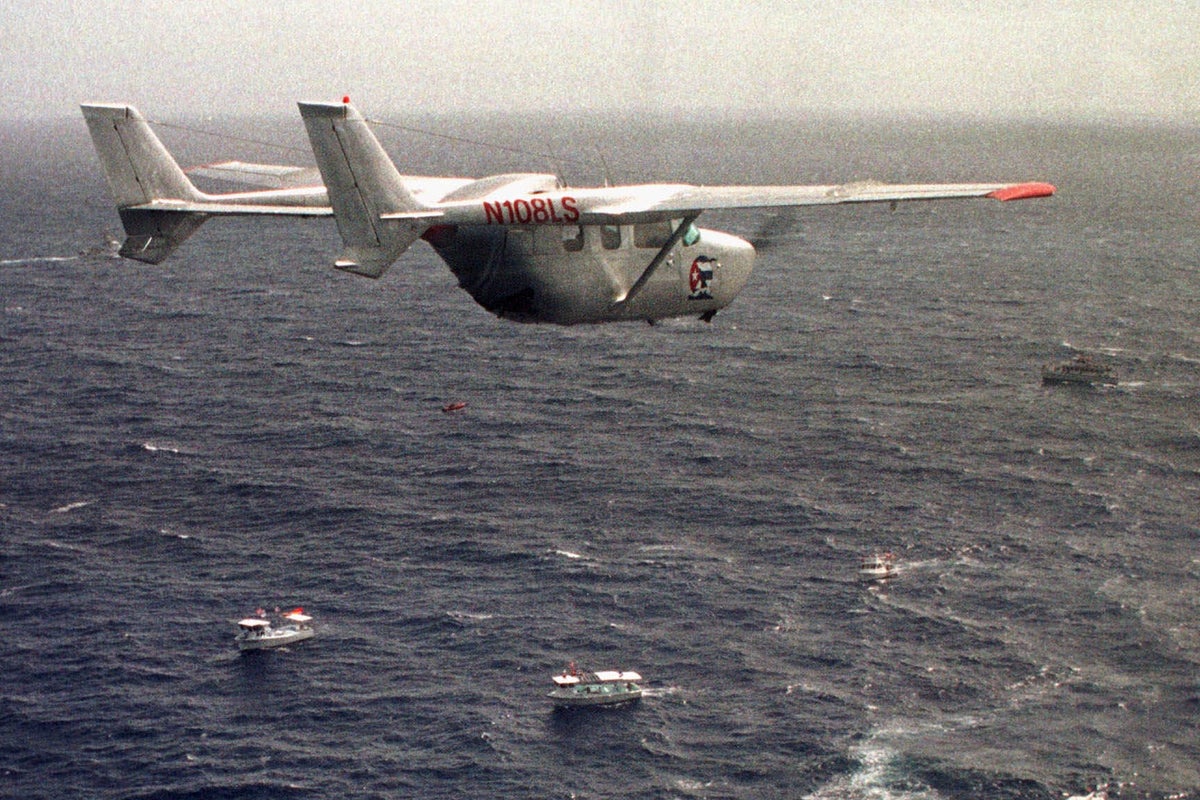
To understand why this indictment is being deployed now, we have to look at the mechanics of the 1996 Brothers to the Rescue shootdown itself. The facts of the tragedy are well-documented by international bodies like the United Nations' International Civil Aviation Organization. On February 24, 1996, Cuban MiG-29 fighter jets fired air-to-air missiles at three unarmed civilian Cessna planes operated by Miami exiles. Four men died: Carlos Costa, Armando Alejandre Jr., Mario de la Peña, and Pablo Morales.
The U.S. position has always been that the planes were obliterated over international waters. Cuba has maintained for thirty years that the aircraft violated their sovereign airspace. But the critical nuance missed by the standard historical retelling is that the shootdown was not an isolated, unprovoked flash of madness. It followed months of high-stakes escalation and deliberate intelligence infiltration.
The Cuban government had successfully embedded intelligence operatives deep inside the Brothers to the Rescue organization. These spies fed the Cuban military precise flight paths and schedules. More importantly, in the months leading up to the attack, planes flown by the exile group had repeatedly buzzed directly over Havana, dropping political leaflets calling for a mass uprising.
To a highly paranoid, besieged surveillance state, those flights were not seen as humanitarian search-and-rescue missions for rafters; they were viewed as deliberate violations of national security and precursors to an invasion. Raúl Castro, acting as Cuba’s defense minister, oversaw the military chain of command that executed the strike. It was a brutal, disproportionate, and illegal violation of international aviation norms, but it was also a calculated trap that the exile group’s leadership flew straight into.
The immediate fallout of that attack did not weaken the regime. Instead, it triggered the passage of the 1996 Helms-Burton Act in the United States. That single piece of legislation codified the Cuban embargo into absolute law, stripping the executive branch of the power to lift sanctions without congressional approval. For three decades, that embargo has given the Cuban government the ultimate political shield. Every economic failure, every blackout, and every food shortage on the island is blamed on the American blockade. The shootdown did not end the regime; it locked it into place for another thirty years.
Red Meat vs. Real Strategy
If this indictment has zero chance of resulting in an actual trial or forcing structural reform in Havana, why file it now? The answer lies not in foreign policy, but in domestic political geography.
This indictment is a textbook example of symbolic legal action designed to feed a specific domestic constituency. Miami’s South Florida Cuban-American community has carried the profound pain and anger of the 1996 shootdown for a generation. For political figures looking to solidify their base ahead of high-stakes elections, unsealing an indictment against the ultimate symbol of the old regime is an easy win. It costs nothing, satisfies a vocal voting bloc, and generates powerful headlines.
But symbolic victories make for atrocious geopolitics. The current administration has simultaneously escalated sanctions targeting Cuba's military-run conglomerate, Gaesa, which controls the vast majority of the island's retail, tourism, and financial transactions. Secretary of State Marco Rubio recently released a direct video message to the Cuban people, asserting:
"The real reason you don't have electricity, fuel, or food is because those who control your country have plundered billions of dollars, but nothing has been used to help the people."
While Rubio’s assessment of systemic regime corruption is entirely accurate, the policy prescription of combining total economic isolation with symbolic criminal indictments creates a dangerous paradox. We are targeting a country that is already facing its worst economic crisis since the collapse of the Soviet Union. The island suffers from chronic, rolling blackouts and severe food and medicine shortages.
When you push a country to the brink of absolute economic collapse while simultaneously cutting off all diplomatic escape hatches by indicting its historical leadership, you do not create a smooth transition to democracy. You create chaos. You trigger massive, uncontrollable migration crises that wash up directly on the shores of Florida. You create a power vacuum that geopolitical adversaries are all too eager to fill.
While the U.S. Attorney’s Office for the Southern District of Florida celebrates its legal paperwork, Havana is quietly diversifying its survival strategy. Just days before this indictment was unsealed, Cuban officials held high-level meetings with American intelligence leadership, where it was communicated that Washington would be open to security and economic discussions only if Cuba implemented "fundamental changes."
By immediately following that quiet diplomatic channel with a public murder indictment of Castro, the U.S. completely undermined its own backchannel leverage. No junior military official or rising reformist within the Cuban Communist Party will dare advocate for economic liberalization now. To do so would look like capitulation to an American justice system that is actively seeking to put their revolutionary icons in handcuffs.
The Cost of the Contrarian Truth
The hard truth that Washington refuses to admit is that the old playbook of total isolation, economic strangulation, and symbolic legal warfare has achieved a 0% success rate over seven decades.
If the goal of American foreign policy is truly to alleviate the suffering of the Cuban people and weaken the grip of the ruling elite, the strategy must be flipped completely. Authoritarian regimes thrive in isolation. They wither under exposure.
The real way to disrupt the Cuban regime’s status quo is not by issuing un-executable arrest warrants for 94-year-olds. It is by flooding the island with American capital, American tourism, and direct digital connectivity. Dictatorships can easily control a starved, isolated population that relies entirely on government rations. They cannot control a population that is financially independent, connected to the global economy, and running private businesses fueled by foreign investment.
By choosing the path of symbolic indictments, we are choosing to keep Cuba frozen in time. We are choosing to allow the regime to continue using the threat of American aggression to justify its internal repression. This indictment may settle a thirty-year-old moral debt in the minds of South Florida prosecutors, but it leaves the actual living citizens of Cuba trapped in the exact same cage they have been in since 1959.
Stop celebrating the paperwork. The indictment of Raúl Castro is not the beginning of the end for the Cuban regime; it is the ultimate guarantee of its status quo.