Stop Treating Industrial Accidents Like Unforeseen Disasters
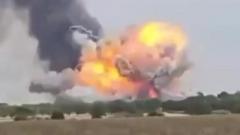
Every time black smoke hits the sky over an industrial estate in Essex, the standard media playbook unfolds within minutes. Local outlets rush out breathless headlines about "huge explosions," sirens blaring, and immediate threats to public safety. They treat every blaze like a black swan event—an unpredictable tragedy that demands immediate, sensationalized panic.
That reaction is fundamentally flawed.
Industrial sites are high-risk environments by design. They process, store, and manage volatile substances so that residential communities do not have to. When an incident occurs at a logistics hub, chemical plant, or recycling facility, it is rarely a failure of divine proportion. It is almost always an operational breakdown within a known system of risk management.
By framing every site fire as an apocalyptic surprise, media coverage distracts from the actual mechanics of risk mitigation, regulatory compliance, and structural safety protocols that keep these facilities operational 99.9% of the time.
The Flawed Logic of Sensational News Coverage
When breaking news hits, the immediate reporting focuses on sensory drama: the height of the flames, the thickness of the smoke, and the sheer number of fire engines dispatched. What is routinely ignored is the context of industrial architecture.
+-----------------------------------------------------------------------+
|                       Sensational Narrative                           |
|  [Explosion] ---> [Immediate Panic] ---> [Calls for Total Shutdown]   |
+-----------------------------------------------------------------------+
                                   vs
+-----------------------------------------------------------------------+
|                          Systemic Reality                             |
|  [Containment Systems] ---> [Managed Incident] ---> [Risk Audit]      |
+-----------------------------------------------------------------------+
What Conventional Coverage Focuses On
- Visual Drama: Focusing entirely on raw footage of smoke plumes to drive clicks and engagement.
- Blanket Warnings: Advising entire boroughs to seal their doors and windows without providing precise, real-time chemical risk data.
- Immediate Blame: Demanding instant accountability before fire investigators have even set foot on the secure perimeter.
What Actually Matters
- Containment Mechanics: Did the site's structural fire walls, automated foam suppression systems, and bunding hold the threat within designated zones?
- Regulatory Pre-Audits: How recently did the Health and Safety Executive (HSE) inspect the premises, and what were the documented compliance ratings?
- Supply Chain Resilience: How does the localized loss of inventory impact downstream distribution and regional economic output?
The insistence on prioritizing fear over forensic reality turns a technical incident into a public hysteria engine.
Risk Is Not Zero, Nor Should We Expect It To Be
Having evaluated risk management strategies across heavy logistics and manufacturing sectors, I can tell you that the public conversation around safety is deeply broken. The general consensus demands absolute zero risk. That is an impossible standard for modern industrial economies.
If you manufacture goods, process waste, or distribute petroleum products, residual risk exists. The goal of industrial safety is not the total elimination of hazards—it is the strict containment of consequence.
"A well-designed industrial facility is built on the assumption that a fire will happen eventually. The true test of engineering is not whether a spark occurs, but how effectively the building prevents that spark from becoming a catastrophic loss."
When an Essex facility goes up in flames, the critical question isn't "How could this happen?" The real question is: "Did the safety infrastructure perform as engineered to prevent off-site casualties?"
If automated fire doors dropped, if containment runoff basins prevented toxic chemicals from reaching the Thames Estuary, and if emergency protocols evacuated workers within minutes without fatality, then the core engineering controls succeeded—even if the building itself burned to the ground.
Re-Engineering the Public Intent
People searching for updates on local industrial fires are usually asking the wrong questions because the media feeds them bad framing.
| Standard Question | The Strategic Counter-Question |
|---|---|
| "Is the air safe to breathe right now?" | "What specific substances were stored on site, and what do regional air-monitoring sensors report?" |
| "Who is going to pay for this damage?" | "How will insurance underwriters re-evaluate risk profile assessments for adjacent commercial zones?" |
| "Why haven't they put the fire out yet?" | "Are fire crews executing a controlled burn strategy to minimize toxic runoff into local waterways?" |
Sometimes, letting an isolated industrial fire burn itself out under controlled conditions is vastly superior to dumping hundreds of thousands of liters of water on it, which creates thousands of tons of toxic wastewater that contaminates local aquifers. Yet, to the layperson watching a live stream, a controlled burn looks like incompetence. To a fire chief, it is environmental containment.
The Uncomfortable Truth About Industrial Zonation
We want cheap goods, rapid delivery, and instant waste processing. But we also want industrial facilities pushed out of sight, and when they inevitably malfunction, we react with outrage.
The hard reality is that high-density industrial corridors like Essex exist precisely to concentrate these operational risks away from primary population centers. When an incident occurs, it proves that regional zoning works as intended: the damage is contained to an industrial park, not a high street or a residential suburb.
Demanding stricter, suffocating regulations after every publicized plume of smoke doesn't make operations safer. It simply drives manufacturing and logistics off-shore to jurisdictions with far weaker safety standards, lower labor protections, and zero transparency.
Stop panicking over the smoke. Start looking at the structural containment.