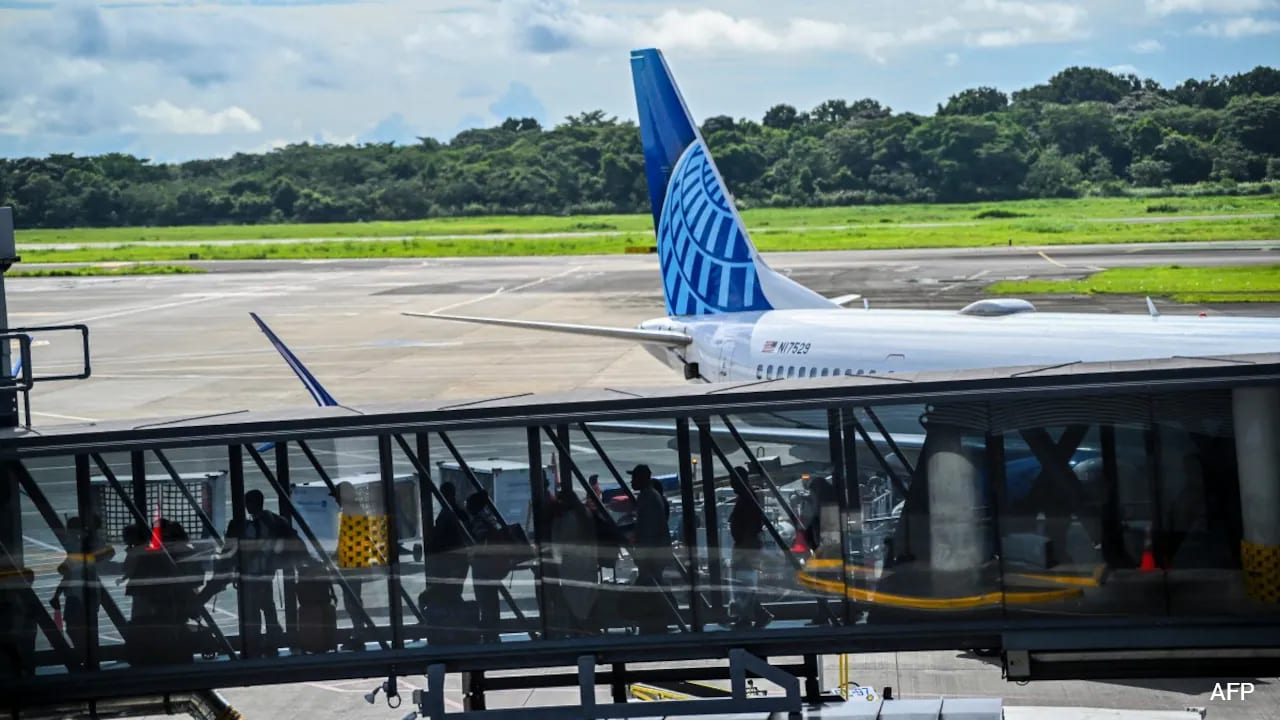
When a passenger allegedly threatens to hijack a United Airlines flight, the aircraft does not continue to its destination. It drops altitude immediately, diverts to the nearest suitable runway, and is met on the tarmac by armed federal agents. The public usually consumes these incidents as fleeting viral clips of a screaming traveler being dragged down the aisle in zip ties. That surface-level coverage misses the actual story. Beneath every emergency diversion lies a rigid, billion-dollar security apparatus engineered after September 11, 2001, one that treats a drunken outburst with the exact same tactical severity as a coordinated terror plot.
Airlines operate under a zero-tolerance mandate that leaves zero room for crew improvisation. Once the word "hijack" or any reference to a bomb leaves a passenger's mouth, the flight deck initiates an irreversible chain of command. Pilots do not evaluate the credibility of the threat. They do not ask the flight attendants if the passenger seems intoxicated, mentally ill, or merely angry about a missed connection.
The Mechanics of an Immediate Diversion
The cockpit door stays locked. That is rule number one. Reinforced with Kevlar and ballistic steel, modern flight deck barriers are designed to withstand small-arms fire and explosive breaches. When a disturbance erupts in the cabin, the flight attendants communicate with the pilots via the interphone system, relaying the exact phrasing used by the disruptive passenger.
If the phrasing crosses the threshold into a security threat, the captain declares an emergency with Air Traffic Control. They squawk 7500 on the aircraft's transponder—the universal aviation code for unlawful interference—or 7700 for a general emergency, depending on the specific threat assessment and airline protocol. Within seconds, military radar operators and the Domestic Events Network (DEN) are notified. The DEN is a 24/7 federal teleconference line connecting the Federal Aviation Administration, the Transportation Security Administration, the FBI, and the North American Aerospace Defense Command (NORAD).
In extreme cases, fighter jets are scrambled to intercept the commercial airliner before it even touches the ground.
Why Crews Cannot Negotiate
Critics occasionally question why flight attendants cannot simply de-escalate a verbal outburst without grounding an entire Boeing 737 or Airbus A320. The answer lies in the asymmetry of aviation risk. At 35,000 feet, inside a pressurized aluminum tube traveling at 500 miles per hour, there is no backup.
If a crew guesses wrong and assumes a threat is a bluff, the consequences are catastrophic. Consequently, aviation doctrine dictates that every threat is treated as legitimate until law enforcement clears the aircraft on the ground. Flight attendants are trained in self-defense and physical restraint techniques, utilizing flex-cuffs and onboard restraint kits, while recruiting able-bodied passengers to assist in holding a suspect down until the wheels hit the tarmac.
The Financial and Operational Fallout
Diverting a commercial airliner is an astronomical expense. Industry analysts estimate that an unscheduled landing costs an airline anywhere from $15,000 to well over $100,000, depending on the size of the aircraft, the fuel burned, and the downstream network disruption.
Consider the immediate operational domino effect triggered by a single diverted United flight:
- Fuel Dumping and Overweight Landings: Long-haul aircraft carrying tons of jet fuel cannot safely land immediately after takeoff without exceeding maximum structural landing weights. Pilots must either circle to burn fuel or dump it over designated unpopulated areas, wasting tens of thousands of dollars in aviation fuel.
- Crew Timeout Regulations: Commercial pilots and flight attendants operate under strict federal duty-time limits. A two-hour diversion often pushes a crew past their legal maximum hours, rendering them unable to fly the plane onward once the disruptive passenger is removed. The airline must then fly in a replacement crew or cancel the leg entirely.
- Gate and Ground Logistics: Landing at an unscheduled airport means paying emergency landing fees, contracting local ground handlers to deplane passengers, and arranging hotel vouchers and meal stipends for hundreds of stranded travelers.
- Network Ripple Effects: That single aircraft was likely scheduled to fly three more routes later that day. Grounding it in a secondary city delays or cancels subsequent flights across the country, stranding thousands of passengers who never even saw the unruly traveler.
Federal Prosecution and the Lifetime Ban
The person who utters a hijacking threat rarely understands the legal machinery they have just activated. Interference with a flight crew is a federal felony under 49 U.S.C. § 46504. Unlike a standard disorderly conduct charge on the street, which might result in a night in a local jail and a modest fine, aviation offenses fall under the jurisdiction of the FBI and the Department of Justice.
Conviction carries a statutory maximum sentence of 20 years in federal prison. If a dangerous weapon is involved, that sentence can stretch to life. Even when no weapon exists, federal prosecutors routinely seek prison time alongside massive financial restitution orders. Courts frequently compel convicted passengers to reimburse the airline directly for the cost of the dumped fuel, crew overtime, and passenger accommodations—a debt that can easily exceed $50,000 and cannot be discharged in bankruptcy.
The FAA Civil Penalty Hammer
Criminal prosecution is only half the legal battle. Independently of the Department of Justice, the Federal Aviation Administration pursues civil penalties against unruly passengers. Under the FAA's zero-tolerance enforcement policy, fines for interfering with crew members regularly reach $37,000 per violation. Because a single incident often involves multiple violations—refusing to follow seatbelt signs, verbally threatening crew, assaulting a passenger—the total civil fine can climb well past $80,000.
Simultaneously, the airline places the individual on its internal permanent no-fly list. While the federal government maintains a separate, stricter No Fly List administered by the Terrorist Screening Center for known or suspected terrorists, individual carriers share internal ban lists and coordinate closely on high-risk offenders. A single outburst can permanently strip an individual of the ability to travel by air for the rest of their life.
The Post-Pandemic Surge in Cabin Volatility
To understand why these incidents continue to make headlines, one must look at the structural pressures inside modern commercial aviation. While unruly passenger incidents spiked dramatically during the 2021 federal mask mandate disputes, baseline volatility has remained stubbornly elevated compared to pre-2020 norms.
Several converging factors fuel this friction:
- Record Load Factors: Airlines are flying planes fuller than ever, regularly exceeding 85 to 90 percent capacity. When every middle seat is occupied and overhead bin space vanishes halfway through boarding, passenger stress spikes before the cabin door even closes.
- Shrinking Seat Pitch: Economy seating has compressed over the last two decades, reducing personal space and increasing physical discomfort on flights longer than two hours.
- Alcohol Consumption: Airport bars operate with few restrictions, and passengers frequently board flights already intoxicated, unaware that lower cabin pressure at cruising altitude amplifies the physiological effects of alcohol.
- Mental Health Crises: A significant percentage of severe diversions—particularly those involving bizarre, irrational threats to hijack an aircraft without a weapon—stem from acute psychiatric episodes, medication withdrawals, or severe panic attacks triggered by claustrophobia.
The Blurry Line Between Terror and Breakdown
Here lies the uncomfortable gray area that aviation regulators struggle to address. The security protocols governing a hijacking threat were written to stop ideological extremists armed with box cutters or explosives. Today, those exact same protocols are triggered almost exclusively by unarmed civilians experiencing severe intoxication, psychological breaks, or unchecked rage.
Because flight crews cannot diagnose a psychiatric emergency mid-flight, they must treat a hallucinating passenger screaming about taking over the plane identically to a trained terrorist. The protocol works—commercial aviation in the United States has not suffered a successful hijacking since 2001—but it comes at a steep operational cost.
Every time an aircraft makes an emergency descent because of an empty threat, the system proves its resilience while exposing its vulnerability to human instability. Airlines have pushed for a centralized, industry-wide no-fly list shared across all major carriers to keep repeat offenders out of terminals altogether, yet privacy advocates and lawmakers remain deadlocked over due process concerns and wrongful-inclusion safeguards. Until a unified federal database clears those legal hurdles, gate agents and flight attendants remain the final line of defense, forced to spot the ticking time bomb before the cabin door seals shut.