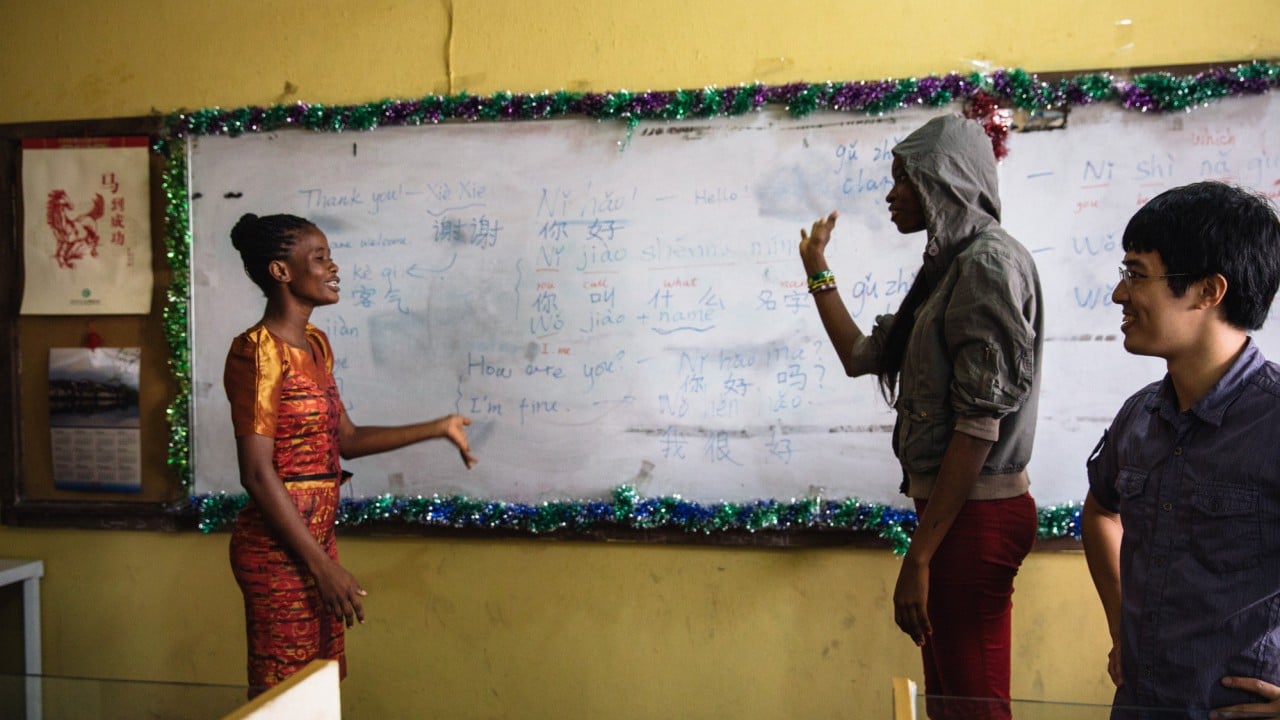
In a high-rise office in Nairobi, a young Kenyan software developer spends her lunch break hunched over a mobile app, tracing the character for "strength." She isn’t doing it for the love of calligraphy or a sudden passion for Tang dynasty poetry. She is doing it because, in 2026, proficiency in Mandarin is the most aggressive lever for upward mobility in the African job market.
The surge is undeniable. Across the continent, from the copper mines of Zambia to the burgeoning tech hubs of Lagos, a Mandarin speaker can command a salary significantly higher than their monolingual peers. In South Africa, recent data suggests that Mandarin-proficient roles offer some of the highest average annual salaries for language-specific positions, often outstripping European languages like French or German. The motivation is purely transactional: China is Africa’s largest trading partner, and as the Belt and Road Initiative (BRI) enters its next phase of "value addition" and industrialization, the need for a linguistic bridge has shifted from a luxury to a baseline requirement. Learn more on a similar topic: this related article.
The Infrastructure of Influence
The "Mandarin boom" is not an organic cultural shift. It is the direct byproduct of a decade of heavy infrastructure lending and a more recent pivot toward Chinese State-Owned Enterprises (SOEs) capturing local markets. We are no longer just talking about Chinese crews building roads and disappearing. We are seeing the establishment of long-term industrial parks, special economic zones, and local processing plants that require a permanent, bilingual workforce to manage operations, logistics, and middle management.
This creates a specific hierarchy in the labor market. A local engineer with an HSK (Hanyu Shuiping Kaoshi) Level 4 certification isn't just an engineer anymore; they are a project lead. They are the person who can translate the technical specifications from a headquarters in Shenzhen into a workable plan for a crew in Addis Ababa. This "translation premium" is the engine driving the enrollment spikes in Confucius Institutes, which have proliferated across the continent. Additional journalism by The Motley Fool delves into related views on the subject.
The Two Percent Problem
Despite the clear economic incentives, there is a deep-seated tension beneath the surface. While the financial rewards are high, public sentiment remains lukewarm. Survey data from Afrobarometer has historically shown that a mere 2% of Africans view Mandarin as the most important international language for the next generation. English and French still dominate the cultural and aspirational psyche of the youth.
This creates a fascinating "utility vs. identity" paradox. African students who have studied in China—of which there are now tens of thousands—return with a pragmatic view of the language. They see it as a tool, much like a specific programming language or a specialized piece of heavy machinery. But outside of that professional bubble, Mandarin is often viewed with a mix of suspicion and indifference, seen as the language of a "creditor" rather than a cultural partner.
The Salary Gap
To understand the "why," you have to look at the numbers. In many African markets, a Mandarin translator or bilingual manager can earn up to five times the national minimum wage.
| Language | Typical Role | Salary Premium (Estimated) |
|---|---|---|
| Mandarin | Project Manager, Logistics Lead | 40% - 100% Above Base |
| French | Customer Service, NGO Liaison | 15% - 25% Above Base |
| English | Standard Professional | Baseline |
Beyond the Construction Site
The narrative that Mandarin is only for "bricks and mortar" projects is outdated. In 2026, the demand has moved into the digital and manufacturing sectors. As China extends zero-tariff treatment to all African Union members (excluding Eswatini), local firms are desperate for staff who can navigate Chinese e-commerce ecosystems and customs protocols.
We are seeing a rise in "Digital Silk Road" jobs. These involve setting up 5G networks, managing data centers, and overseeing the assembly of electric vehicles (EVs) in countries like Kenya and Ethiopia. These roles require more than just "coffee shop" Mandarin; they require technical fluency. The job market is no longer looking for people who can say "hello"—it wants people who can explain a circuit board failure or a supply chain bottleneck in the native tongue of the supplier.
The Hidden Cost of the Bilingual Boom
There is a darker side to this trend that industry analysts often overlook. The reliance on Mandarin-speaking local intermediaries can lead to a "gatekeeper" culture. These individuals hold immense power within Chinese firms, often controlling access to promotions and filtering information between Chinese management and the local workforce. This can sometimes insulate Chinese firms from local labor laws or environmental standards, as the "bridge" between the two cultures becomes a bottleneck.
Furthermore, the "Mandarin requirement" can act as a barrier to entry for talented individuals who cannot afford the time or cost of intensive language training. This risks creating a new class of "linguistic elites" who monopolize the benefits of foreign investment, while the broader workforce remains stuck in low-wage, manual labor roles.
The Shift to Value Addition
The current phase of China-Africa relations—defined by the 2024 FOCAC summit and the 2026 "Year of People-to-People Exchanges"—is focused on moving away from raw resource extraction. The goal is "value addition," meaning processing minerals and manufacturing goods within Africa. This requires a level of technology transfer that is impossible without deep linguistic integration.
If a factory in Zambia is going to process copper into wire rather than just shipping the ore to Shanghai, the technicians on the floor must be able to read the manuals and communicate with the engineers who designed the machines. This is the "how" of the boom: language is the lubricant for the machinery of industrialization.
The era of the "unskilled" laborer on a Chinese project is ending. The era of the bilingual technocrat has begun. Whether this leads to genuine African development or simply a more efficient form of external market capture depends entirely on how African governments regulate these partnerships and whether they can integrate Mandarin training into their own national education systems, rather than outsourcing it to foreign-funded institutes.
The paycheck is there, but the strings are written in characters that most of the continent is only just beginning to decode.
China-Africa Economic Cooperation 2026
This video provides a deep dive into the 2026 economic outlook for China-Africa relations, focusing on the shift toward industrialization and people-to-people exchanges that drive the current job market trends.


