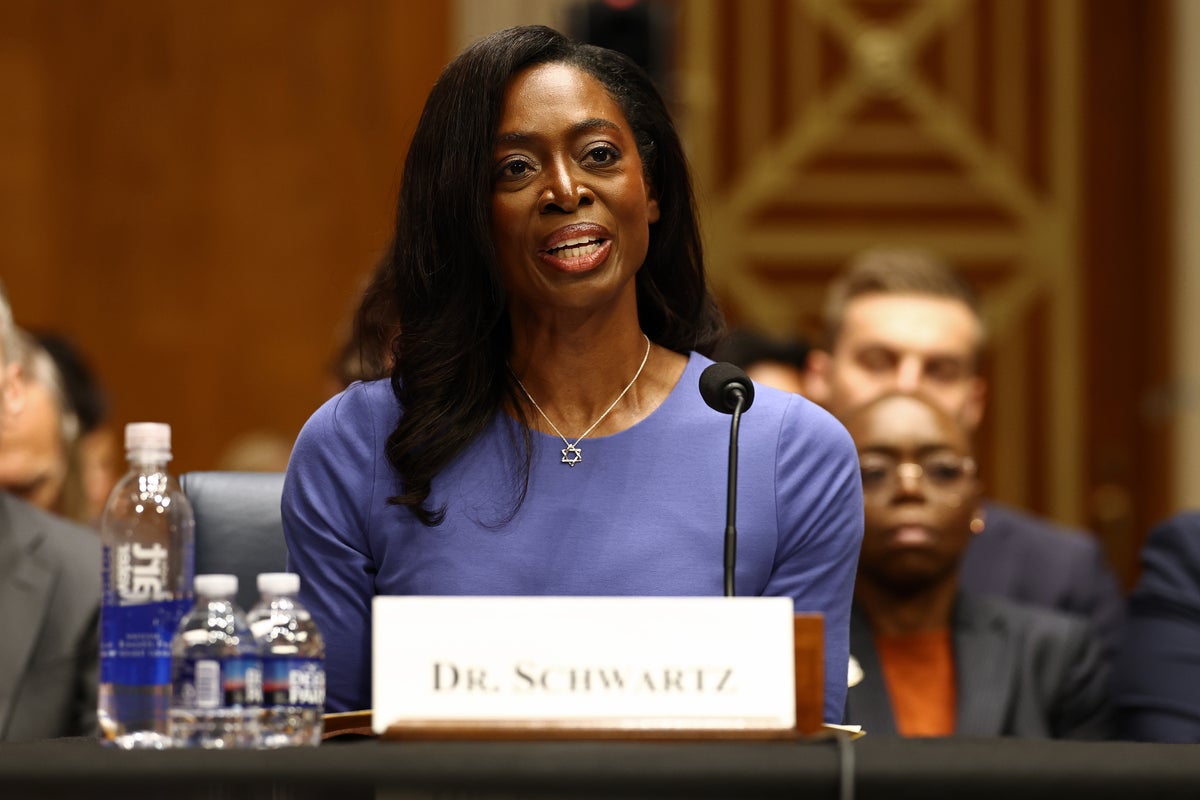
The United States Senate voted 51 to 44 to confirm Dr. Erica Schwartz as the director of the Centers for Disease Control and Prevention, ending a chaotic, year-long leadership vacuum at the nation's premier public health institution. Yet celebrating this confirmation as a return to normalcy is a profound misreading of Washington mechanics. Behind the tally lines and the sighs of relief from institutional veterans lies an agency structurally altered, deeply demoralized, and caught in an ongoing power struggle between career scientists and political appointees.
For nearly twelve months, the CDC functioned without a permanent head. That vacancy was no accident of bureaucratic delay. It was the direct byproduct of an administrative collision over institutional autonomy, highlighted last year when Health and Human Services Secretary Robert F. Kennedy Jr. ousted Susan Monarez less than a month after her Senate confirmation. Monarez's removal sent a chilling message through the corridors of the Atlanta headquarters: compliance with political mandates superseded empirical defense of public guidance.
Enter Schwartz, a retired Navy rear admiral, former deputy surgeon general, and a trained attorney with a background in biomedical engineering. Her resume commands respect. Her administrative competence is undisputed. But her survival in this post will not depend on her credentials. It will depend entirely on how she navigates a minefield where scientific integrity and political ideology occupy mutually exclusive territories.
The Anatomy of the Confirmation Clash
During her confirmation hearings before the Senate Health, Education, Labor, and Pensions Committee, lawmakers from both sides of the aisle pushed past polite diplomatic pleasantries. They were not merely vetting a nominee; they were interrogating a firewall.
Senators hammered Schwartz on whether she would resist political directives that run counter to established epidemiological data, particularly concerning childhood immunization schedules. Her answers were heavily parsed. She pledged that she would "never betray the science", yet she routinely sidestepped direct commitments regarding specific administrative edits made to agency advisory panels and public-facing websites.
This tightrope walk satisfied just enough skeptical lawmakers—including committee chair Bill Cassidy—to secure her narrow victory. Republican support crystallized only after private assurances that Schwartz could maintain operational control. Meanwhile, Democrats remained largely unconvinced, with only a single vote crossing party lines. They viewed her guarded responses not as diplomatic prudence, but as an ominous sign of eventual capitulation.
What Lies Beneath the Vacancy Crisis
The fixation on who sits in the director's chair masks a more insidious operational reality. Over the past year, successive waves of workforce reductions and voluntary departures stripped the agency of nearly a quarter of its specialized personnel. Epidemiologists, data modelers, and career toxicologists left in droves, exhausted by constant restructuring and ideological oversight.
When an agency loses institutional memory on this scale, its capacity to respond to acute crises degrades instantly. Consider the concurrent pressures Schwartz inherits on day one:
- A multi-state outbreak of cyclosporiasis demanding immediate environmental tracing.
- Reurgent domestic measles clusters tied to dipping vaccination uptake.
- Ongoing international monitoring of viral hemorrhagic fevers.
Managing these threats requires a functioning administrative engine, not just a figurehead. Morale is low. Staff members operate under the looming threat that their peer-reviewed findings might be scrubbed or altered to fit an external political narrative. Restoring public trust requires more than press releases about transparency; it demands verifiable independence.
The Structural Conflict Ahead
The fundamental friction point inside the Department of Health and Human Services remains unresolved. Secretary Kennedy has long championed skepticism toward traditional pharmaceutical interventions and federal health mandates. The CDC, conversely, exists to codify and distribute consensus-driven medical countermeasures.
If Schwartz attempts to restaff critical vacancies with veteran scientists committed to traditional evidence-based metrics, she risks immediate collision with political leadership. If she acquiesces to outside pressure to dilute guidance on proven immunizations or environmental safety standards, she triggers an internal staff revolt and permanently fractures the agency's remaining credibility with the global scientific community.
The Senate has given the CDC a leader. It has not given it safety. Schwartz steps into an office where every policy memo will be audited for ideological compliance, and every public health advisory will be weighed against political cost. The true test of her tenure will not arrive during routine administrative management, but at the exact moment she is told to look away from data that contradicts the prevailing narrative.
The machinery of public health is running on borrowed time and depleted talent. How long that engine holds together under its new leadership is the question that should keep Washington awake at night.