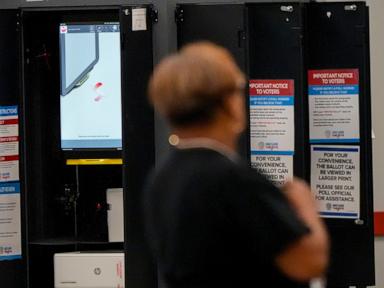
Georgia election officials face a self-inflicted administrative disaster as lawmakers scramble to undo a statutory deadline that threatens to invalidate the state's entire voting infrastructure. The Republican-led state Senate recently passed a measure to delay a looming ban on ballot QR codes until 2028, but attached a contentious amendment requiring a mandatory hand recount of the top two races on the ballot before any election can be certified. Democrats and county administrators argue this late-stage addition introduces an expensive, error-prone layer of bureaucracy designed to appease election skeptics while creating systemic delays.
The compromise represents a volatile political trade-off. By extending the lifespan of the current touchscreen system, lawmakers avoid the immediate operational freeze that a July 1 deadline would have triggered. Yet, by forcing local workers to manually tally hundreds of thousands of paper sheets, the legislation introduces human error into a system already suffering from deep partisan divisions.
The Legislative Traps of Election Mechanics
Electoral logistics depend on predictability. When the Georgia General Assembly passed legislation two years ago setting a strict expiration date on the use of QR codes for vote tabulation, it did so without providing an alternative system or the funding to procure one. The state remained anchored to its hundred-million-dollar touchscreen voting machines, which print a paper receipt showing text alongside a scannable barcode that contains the actual data read by scanners.
Critics from both sides of the political aisle have long targeted these barcodes. Election integrity advocates point out that human voters cannot read a QR code to verify if the machine accurately recorded their choices. Meanwhile, factional political leaders used this lack of transparency to seed doubt about the results of previous election cycles.
Lawmakers adjourned their regular session earlier this year without passing a fix. This failure forced Governor Brian Kemp to call a special legislative session to address the legal vacuum. Without corrective action, the state risked entering the upcoming fall elections with a counting method that was explicitly illegal under state law.
The Senate response, backed by Lieutenant Governor Burt Jones, was to push the ban back to January 1, 2028. This extension gives the state breathing room to study alternative methods, shifting the procurement headache past the immediate horizon. The peace was brief. Before the bill could clear the chamber, Senate Republicans added the hand-count requirement, fracturing a fragile bipartisan consensus on the necessity of the delay.
The Operational Reality of Hand Counts
Manual tabulation is slow. Academic research and historical data from local governments show that human beings are remarkably inefficient at counting identical pieces of paper over extended periods.
In a typical machine-tabulated system, high-speed optical scanners process ballots in seconds, flagged only for ambiguous marks. A full hand recount requires teams of workers to visually inspect every ballot, tally the votes on paper ledgers, and reconcile discrepancies. The Senate amendment targets the top two races on the ticket, which would mean manually counting every vote cast for governor and U.S. Senate.
The financial burden falls directly on individual counties. Local election boards operates on tight, inflexible budgets that do not account for hundreds of temporary workers, secure facilities, and extended security details needed to conduct manual tallies. Rural counties with limited staff will struggle to find qualified personnel, while high-population urban centers will face logistical bottlenecks trying to manage millions of paper pages.
Minority Whip Kim Jackson noted that the financial impact contradicts traditional conservative fiscal principles. By transferring the costs of these state-mandated tallies onto local property taxpayers, the measure strains county resources. The operational strain extends beyond the budget. It stretches the post-election timeline to its absolute limit, raising the probability that some jurisdictions will miss certification deadlines.
Discrepancies and the Battle for Certification
A dual-track system guarantees conflict. When human tallies inevitably differ from machine counts by a handful of votes due to fatigue or misinterpretation, the law must dictate which number takes precedence.
The current language of the Senate amendment indicates that if a discrepancy arises, the hand count serves as the basis for official certification. This setup creates an opening for legal challenges and political maneuvering. If a machine scan show one candidate winning by a razor-thin margin, but an exhausted hand-count team produces a slightly different number, the losing camp will immediately challenge the validity of the scanners.
Machine Reliability Versus Human Error
Modern optical scanners operate with high mathematical precision. They do not get tired, they do not misread a name because of poor eyesight, and they do not accidentally count a page twice. Human counters do all three.
- Visual fatigue sets in after a few hours of reviewing identical paper sheets.
- Sorting errors occur when ballots are placed into the wrong piles during physical division.
- Data entry mistakes happen when transferring tick marks from tally sheets to final logs.
By establishing the hand count as the ultimate source of truth, the bill elevates the more flawed process above the automated one. This reversal undercuts the foundational argument for purchasing the electronic system in the first place.
The Exclusion of the Secretary of State
The legislation strips significant oversight authority from the state's top election official. Under the provisions of the bill, the Secretary of State will have no role or authority in the selection, certification, or procurement of the new voting system slated for 2028.
This provision represents a direct rebuke to Secretary of State Brad Raffensperger, who consistently defended the integrity of the state's voting machines against external political pressure. Instead of utilizing the existing administrative expertise within the agency, the bill establishes a separate legislative committee to recommend standards for the future infrastructure. The committee has until January 31, 2027, to issue its findings, leaving the actual implementation to a divided General Assembly.
The Long Road to 2028
The immediate focus shifts to the Georgia House of Representatives, where the bill awaits a hearing. House leaders have not indicated whether they will accept the Senate hand-count amendment or strip it out to force a conference committee.
The standoff highlights a deeper structural problem in how election policy is formulated. Rather than designing rules based on administrative capability and technical feasibility, policy is frequently shaped by the necessity of managing internal party dynamics. The current crisis was entirely predictable when the original deadline was set two years ago without a transition plan.
If the House passes the bill in its current form, county officials will spend the remaining summer months rewriting their operational rules. They will have to source funding for an unexpected manual operation while managing the public expectations of a hyper-partisan electorate. If the bill fails, the state enters a legal minefield where the primary method of counting votes lacks statutory authorization.
The debate over QR codes and hand counts is not a technical disagreement about data formats or auditing methodologies. It is a struggle over the control of election administration, played out across local precinct tables where over-worked staff must eventually turn political theories into verifiable numbers.