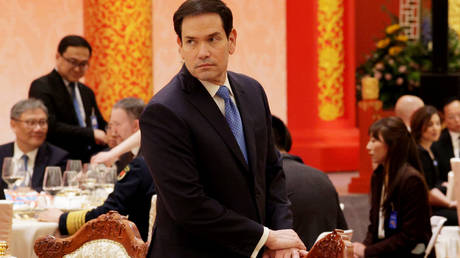
Democratic state representatives in Minnesota launched an overnight sit-in in the House chamber to force a vote on a sweeping gun violence prevention omnibus bill. Led by Representative Samantha Sencer-Mura, the demonstration targeted Republican House Speaker Lisa Demuth for blocking the legislation, which includes bans on semi-automatic assault weapons and large-capacity magazines. However, this high-profile protest is functionally dead on arrival. Because the Minnesota House is locked in a rigid 67-67 partisan tie, floor theatrics cannot alter the mathematical reality required to pass controversial gun legislation before the May 18 legislative deadline.
The sit-in captures public attention, but it masks a deeper institutional paralysis that has gripped the state capitol for months.
The Illusion of Momentum
Proponents of Senate File 4067 point to its narrow 34-33 passage in the Democratic-controlled Senate earlier this month as a sign of progress. The omnibus package is ambitious. It combines high-profile restrictions like bans on ghost guns and binary triggers with rapid-fire weapon prohibitions and safe-storage mandates. To outside observers, the momentum seemed real, fueled by public outrage following last August's mass shooting at Annunciation Catholic Church, which left two students dead.
But the legislative path ends abruptly at the house floor.
In the House, power is split exactly down the middle. Under the current power-sharing agreement, Republican Speaker Lisa Demuth controls which bills are reported to the floor. For more than a week, Demuth has kept the Senate-passed package pocketed, invoking the speaker's traditional prerogative to review comprehensive legislation.
On Thursday, House Democrats attempted a procedural maneuver to bypass Demuth by moving to suspend the rules to take up a clone bill, House File 5140. The effort required 90 votes. After six hours of bitter debate, the motion failed spectacularly, demonstrating that the floor strategy lacks the bipartisan leverage needed to break the procedural deadlock.
The Math of a Tied Chamber
The fundamental flaw in the protest strategy is the assumption that public pressure can bend a tied chamber. In a 67-67 environment, party discipline is total. For the gun omnibus to pass, Democrats would need to secure every single one of their own members while flipping at least one Republican.
That flip is not coming.
Speaker Demuth is currently a candidate for governor. Her political brand is tied directly to holding the line for the conservative base, which views the omnibus package as an existential threat to the Second Amendment. The Minnesota Gun Owners Caucus has aggressively lobbied vulnerable frontline Republicans, framing SF 4067 not as a safety compromise, but as a sweeping attack that criminalizes ordinary gun ownership and builds a state-run registry. For a suburban or rural Republican lawmaker, voting to suspend the rules or approving an assault weapons ban is a career-ending move.
The Strategy of the Perpetual Standoff
What we are witnessing is not a legislative negotiation. It is a dual-track campaign strategy for the upcoming election cycle.
Democrats are utilizing the sit-in to dramatize the gridlock, deliberately painting House Republicans as obstructionists who are indifferent to the tragedy at Annunciation Church. By forcing continuous, failed procedural votes, the DFL is building a cache of campaign material designed to target moderate suburban districts where gun control polling is favorable. The goal is to break the 67-67 tie in November by turning the legislative building into a stage for political performance art.
Conversely, Republicans are playing to their own strengths. Demuth has pointed out that individual components of the gun package were introduced in House committees earlier in the session and failed to secure bipartisan support. By framing their opposition around school safety funding and mental health resources rather than flat resistance to security, House Republicans are keeping their caucus unified. They have effectively insulated their members from having to take a direct floor vote on an assault weapons ban, denying Democrats the specific roll-call data they want for fall attack ads.
Preemption and the Local Illusion
While the state capitol remains locked in a stalemate, local municipalities are trying to force the issue, creating a chaotic regulatory environment. Just this week, Minneapolis Mayor Jacob Frey signed a sweeping local gun control ordinance that mirrors the Senate's banned weapons package.
The ordinance is legally meaningless.
Minnesota has strict state preemption laws that prevent cities from establishing their own firearms regulations. The St. Paul City Council passed a similar measure last year, which was instantly met with a lawsuit from the Minnesota Gun Owners Caucus and remains tied up in court. Minneapolis officials acknowledge that their ordinance faces an immediate legal challenge and cannot be enforced unless state preemption is lifted by the legislature. It is a symbolic gesture passed to appease an angry local constituency, echoing the empty nature of the legislative sit-in across the river.
Historical Precedent and the Reality of 2026
This is not the first time Minnesota lawmakers have used a sit-in to protest stalled gun control legislation. In April 2018, then-Representative Erin Maye Quade held a 24-hour floor protest following a wave of national gun violence. That demonstration generated national headlines, local rallies, and a flood of constituent calls.
It changed absolutely nothing.
The Republican-controlled legislature in 2018 ignored the protest, allowed the session clock to run out, and the bills died without a vote. The internal mechanics of the legislature are designed to withstand public pressure campaigns when the partisan stakes are sufficiently high. In 2026, with the governor's mansion on the horizon and an evenly divided house, the walls between the two factions are even higher and more deeply entrenched.
Activists delivered a petition with 7,000 signatures to the capitol on Thursday, accompanied by faith leaders, medical professionals, and students demanding action. Their anger is authentic, rooted in the genuine trauma of the Annunciation shooting. But the institutional reality of the Minnesota legislature treats these demonstrations as external noise. With the constitutional adjournment deadline of May 18 looming, the clock is the Speaker's most effective weapon. The sit-in will likely conclude just as it did eight years ago, leaving the state's gun laws exactly where they were when the session began.