The World Health Organization just declared the Ebola surge in the Democratic Republic of the Congo and Uganda a Public Health Emergency of International Concern because local containment protocols failed long before the virus reached an airport. Bureaucratic missteps, broken laboratory logistics, and a total absence of stockpiled vaccines for this specific viral strain allowed the pathogen to quiet fly under the radar. By the time emergency sirens sounded in May 2026, the Bundibugyo virus had already hitched a ride across borders on public transport, landing patients in intensive care units as far away as Kampala.
This is not a story of a sudden, unstoppable super-bug. It is a chronicle of systemic diagnostic failures and administrative delays that turned a preventable local cluster into a regional crisis.
The Blind Spot in the Laboratory
When patients in the northeastern Ituri province of the DRC began dying of hemorrhagic fever earlier this spring, the frontline defenses did exactly what they were trained to do. They took blood samples.
They ran the tests.
The results came back negative.
A major vulnerability in global health security is that diagnostic tools are only as good as the specific genetic data fed into them. Local laboratories in Ituri were operating with diagnostic assays calibrated almost exclusively for the Zaire strain of Ebola—the culprit behind most of the historic headline-grabbing outbreaks in the region. Because the current crisis is driven by the rarer Bundibugyo virus, the initial tests misread the pathogen entirely.
This diagnostic blind spot created a false sense of security for weeks. While local health officials assumed they were dealing with a severe localized outbreak of malaria or typhoid, the virus was quietly multiplying.
The logistical chain broke down further when local teams attempted to send confirmation samples across the country to the national laboratory, the Institut National de la Recherche Biomédicale in Kinshasa. Internal sources reveal that samples were subjected to improper storage and severe shipping delays. Weeks evaporated. In the interim, the virus did what filoviruses do best when unmonitored: it utilized the region’s dense web of trade, family obligations, and public transport to find new hosts.
The Mirage of Readiness
Global health agencies frequently praise the DRC for its vast institutional memory regarding Ebola. Having survived sixteen distinct outbreaks since the discovery of the virus near the Ebola River in 1976, the country possesses some of the most seasoned field epidemiologists on the planet.
But experience cannot substitute for tools.
"Unlike for the Zaire strains, where we can deploy highly effective vaccines like Ervebo, there are currently no approved Bundibugyo-specific therapeutics or vaccines ready for mass deployment."
The response teams deployed to Ituri entered the field empty-handed. The medical counter-measures that successfully blunted recent outbreaks in Équateur and North Kivu simply do not exist for this strain.
This lack of specific pharmaceutical defenses shifted the entire burden of containment onto old-school public health measures: strict isolation, meticulous contact tracing, and safe burial practices. Yet, in a region heavily affected by long-standing conflict, active rebel groups, and deep-seated community mistrust, these intrusive measures require immense political capital. When community members saw health workers arriving without the life-saving vaccines that saved lives in neighboring provinces just years prior, skepticism turned into outright resistance.
Death in the Clinics and the Crowds
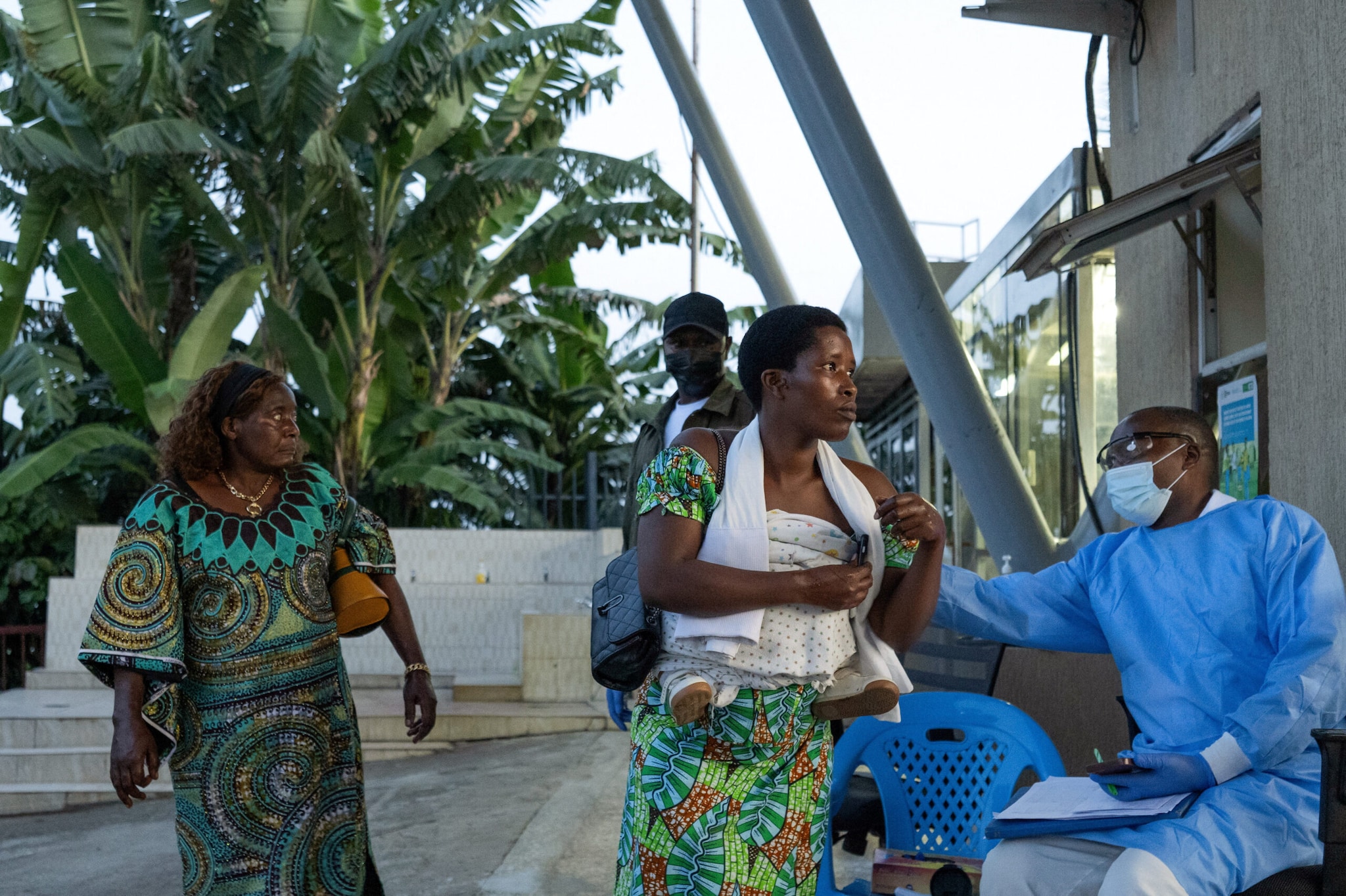
The human cost of the delayed diagnosis manifested first among those trying to help. At least four healthcare workers in Ituri died after treating patients without adequate personal protective equipment. When a clinic becomes an amplification point rather than a zone of healing, an outbreak enters its most dangerous phase.
Traditional burial rituals, which involve washing and touching the bodies of the deceased, further accelerated the spread. Because the virus remains highly concentrated in bodily fluids long after a patient dies, these funerals acted as super-spreader events. Alarms were not raised until unusual clusters of community deaths became impossible to ignore.
By the second week of May, the virus had successfully broken out of Ituri's semi-urban centers.
- Bunia: The provincial capital saw immediate suspected clusters.
- Kampala: Two infected travelers from the DRC bypassed border screenings entirely, checking into intensive care units in Uganda's capital within 24 hours of each other.
- Kinshasa: Suspected cases traveled west, pushing the laboratory infrastructure to its absolute limit.
The Fiction of Hard Borders
The international response to cross-border transmission almost always defaults to political theater: tightening border checkpoints, demanding health declarations, or threatening travel bans.
These measures fail because they ignore the socioeconomic reality of the region. The frontier between northeastern DRC and western Uganda is not a clean line on a map; it is a porous, fluid economic ecosystem. Thousands of people cross informal border points every day to sell produce, visit family, or seek basic medical care.
A traveler carrying an incubating virus will show zero symptoms at a thermal-imaging checkpoint. The incubation period for the Bundibugyo strain lasts anywhere from 2 to 21 days. During this window, an individual is completely asymptomatic and non-infectious, yet fully capable of traveling hundreds of miles via public minibuses before the first fever strikes.
Locking down official border posts merely pushes traffic to unmonitored bush paths, rendering contact tracing completely impossible. Containment cannot be achieved at the border; it must be achieved at the source.
The Strategy That Must Change
The current emergency exposes a structural flaw in how the international community funds and prepares for epidemic threats. Global health mechanisms are fundamentally reactive, pouring hundreds of millions of dollars into a region only after an outbreak hits international news.
To break this predictable cycle of spillover and panic, the operational framework needs an immediate pivot toward decentralized diagnostic independence.
Every regional laboratory in high-risk zones must possess multiplex diagnostic panels capable of identifying all five human-infecting species of Ebola simultaneously, rather than screening for one and guessing the rest. Furthermore, the clinical pipeline for pan-ebolavirus therapeutics must be funded with the same urgency applied to pandemic influenza. Until field teams can offer communities concrete treatment options for rarer strains like Bundibugyo or Sudan, the cycle of mistrust, hidden cases, and cross-border spread will repeat itself.
The immediate priority for response teams in Kampala and Bunia is the aggressive, low-tech tracking of every individual who shared a vehicle with the confirmed cases. They are racing against a 21-day clock, and the margin for error has already been spent.