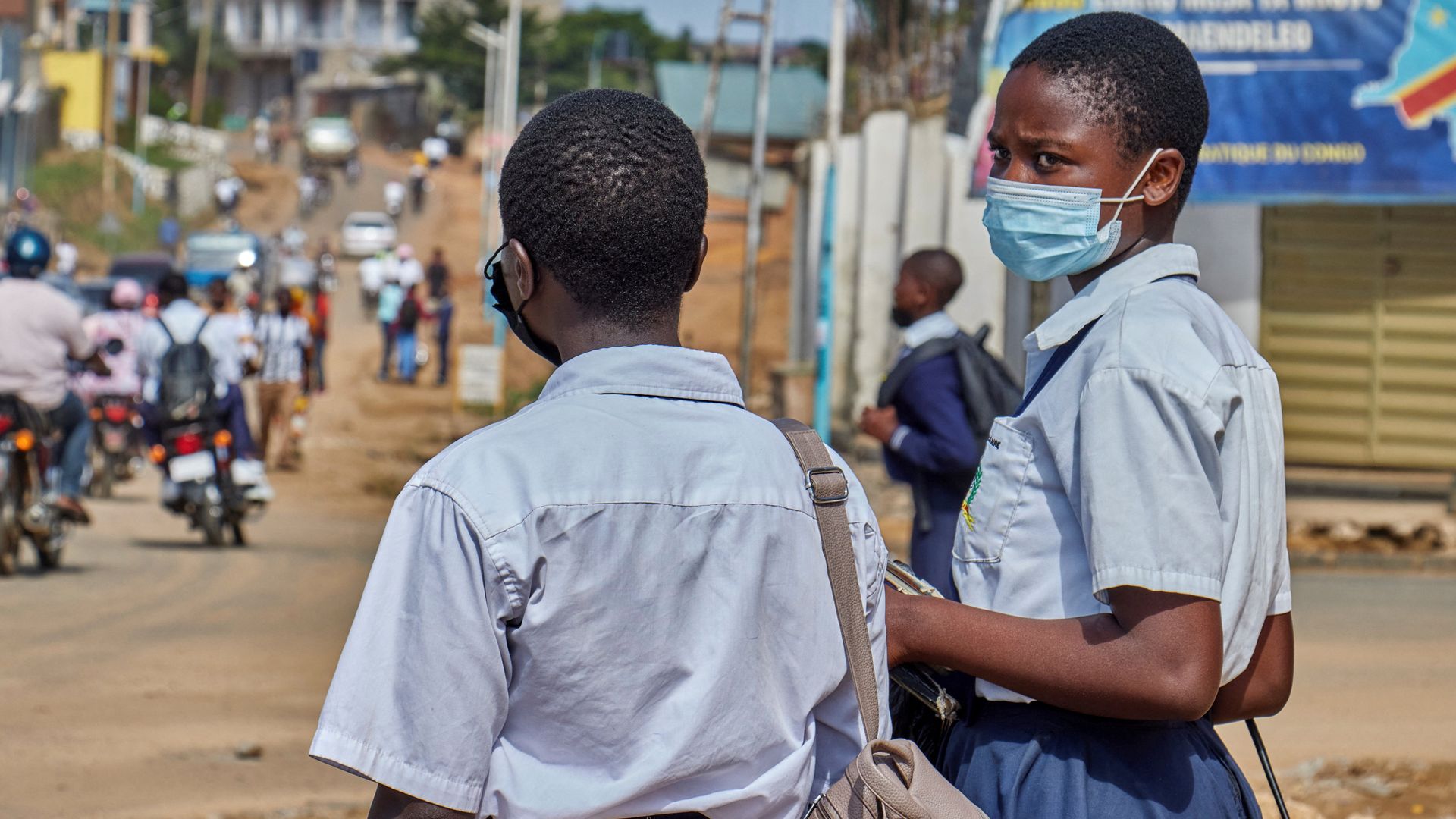
The World Health Organization declaration of a global health emergency over the latest Ebola outbreak in the Democratic Republic of the Congo and Uganda did not happen because a lethal pathogen suddenly mutated. It happened because the early warning system built to catch it was systematically dismantled.
When the rare Bundibugyo strain of the virus began circulating in northeastern Congo, it did not trigger immediate alarms. Instead, it quietly spread through remote villages and urban health zones for six to eight weeks before laboratory testing finally confirmed its presence. By the time the international community realized what was happening, dozens were dead and hundreds of suspected cases had cropped up across a highly volatile border region.
This dangerous visibility gap is the direct result of a collapsed American foreign aid infrastructure. The absolute shutdown of the U.S. Agency for International Development alongside massive budget slashes to the Centers for Disease Control and Prevention effectively blinded the world's most sophisticated disease surveillance apparatus. While political leaders debate the domestic cost of international spending, the operational reality on the ground shows that pulling back global health funding does not insulate a nation from threats. It merely ensures those threats are invisible until they arrive.
The Blind Spots Left Behind by Bureaucratic Rescissions
For decades, the standard protocol for an emerging hemorrhagic fever outbreak relied on an aggressive, multi-layered American presence. Epidemiologists stationed in high-risk zones worked alongside local health ministries to maintain sample transport networks, diagnostic laboratories, and rapid-response logistics.
That network no longer exists.
The decision to eliminate USAID and transfer diminished responsibilities to a non-operational State Department structure severed the actual physical links required to catch a virus early. Field-level testing did not fail because the science changed. It failed because the people who knew how to run the supply chains were stripped of their funding or forced out of their positions entirely.
When administrative changes reshuffled the federal workforce, high-risk outbreak specialists were systematically removed from foreign fields. The loss of these individuals meant that when local doctors in the Congo began noticing an uptick in unexplained, hemorrhagic deaths, there was no direct pipeline to relay that data to international networks.
A stark contrast exists between the current crisis and historical containment successes. During previous major outbreaks, federal agencies deployed hundreds of field officers within days to set up mobile testing units and secure transmission perimeters. Today, those positions are empty. The institutional knowledge required to navigate complex geopolitical conflict zones while tracking a highly contagious virus was dismissed under the guise of fiscal optimization.
The Fiction of Restored Funding
Defenders of the recent administrative overhauls have argued that the containment failures are being overblown, pointing to late-stage corrections and assertions that emergency funds were never truly interrupted. In early 2025, assertions were made that any accidental cancellations of global health initiatives had been corrected.
The data from the field contradicts this narrative.
A bureaucratic line item can be restored with the stroke of a pen, but a depleted network of human assets cannot be reconstituted overnight. Public health experts operating in Uganda noted that throughout 2025, critical funding for routine biological screenings and border monitoring remained absent. The capital simply was not there to pay for basic laboratory reagents or to keep local surveillance officers on the payroll.
Surveillance Asset Degradation (2024–2026)
--------------------------------------------------
Asset Class               Status
--------------------------------------------------
USAID Field Specialists   Terminated / Not Re-hired
Regional Testing Labs     Defunded / Lacking Reagents
Border Screenings         Suspended due to Capital Deficit
CDC Country Office Staff  Severely Reduced
--------------------------------------------------
The administration recently highlighted a new commitment to funnel resources into a United Nations fund for up to 50 temporary treatment clinics in the affected areas. While any material aid is useful, building treatment beds after a pathogen has already crossed international borders is a defensive failure. It addresses the consequences of an unchecked spread rather than preventing the spread itself.
Early detection is the only metric that matters in an outbreak of a virus with a high mortality rate. If a disease is permitted to move across provincial lines and international borders for two months without a formal diagnosis, the containment strategy has already failed.
The Breakdown of International Data Cooperatives
The isolationist approach to global health extends beyond the gutting of domestic agencies. The official withdrawal of the United States from the World Health Organization earlier this year removed American personnel from the primary global clearinghouse for epidemiological intelligence.
The federal government maintained that independent, bilateral agreements would replace the functionality of the global body. This theory collapsed under the weight of a live biological event.
Bilateral agreements require active negotiation, distinct regulatory approvals, and individual operational frameworks for every single nation involved. In contrast, a centralized global network allows for the instantaneous sharing of genomic sequencing and geographic mapping data. By removing itself from this cooperative structure, the domestic public health apparatus chose to operate with partial information.
The CDC country offices that remain open are functioning with a fraction of their historical footprint, severely limiting their ability to verify rumors of disease clusters. Without the logistical backing of a dedicated development agency to manage fuel, vehicles, and security detail, researchers are confined to major urban centers. The virus, conversely, originates in the deep interior.
The True Cost of Tactical De-escalation
Every dollar removed from international disease surveillance is frequently marketed to taxpayers as a domestic victory. The reality of infectious disease biology makes this a profound miscalculation. Pathogens do not recognize national sovereignty, nor do they respect changes in administrative philosophy.
The current economic fallout of this containment failure is already outstripping the savings generated by shutting down specialized health programs. Border closures, emergency mobilizations, and the sudden necessity of funding reactive medical infrastructure are incredibly expensive endeavors.
The strategy of waiting for a threat to become large enough to notice before funding a response ignores the fundamental law of epidemiology. The growth curve of an uncontained virus is exponential.
$ = Initial Outbreak Prevention (Proactive)
$$$$$$$$$$$$$$$$ = Crisis Containment & Border Defense (Reactive)
The current outbreak involves the Bundibugyo variant, which historical data indicates has a lower mortality rate than the more common Zaire strain, but still carries a significant risk of death and severe illness. The true danger is that the exact same surveillance blind spots that allowed this strain to walk across East Africa undetected would apply to a far more lethal pathogen. The system is broken across the board; the specific virus that exposed the fracture is merely a matter of chance.
Moving Past Rebuilding
Fixing the global health security architecture requires moving past the empty rhetoric of restructuring. The assumption that traditional diplomatic channels can replicate the work of specialized development and health agencies has been thoroughly disproven by the events of the last eight weeks.
The immediate tactical priority must shift toward establishing permanent, independent funding mechanisms for pandemic tracking that are insulated from political turnover. If disease surveillance is treated as a discretionary foreign policy chip rather than a core element of national defense, these visibility gaps will become a permanent fixture of international travel.
The current containment efforts in the Democratic Republic of the Congo and Uganda are lagging behind the physical progression of the disease. The clinical reality is stark: you cannot fight a virus you did not know was there, and you cannot find a virus when you have fired the people holding the lanterns.