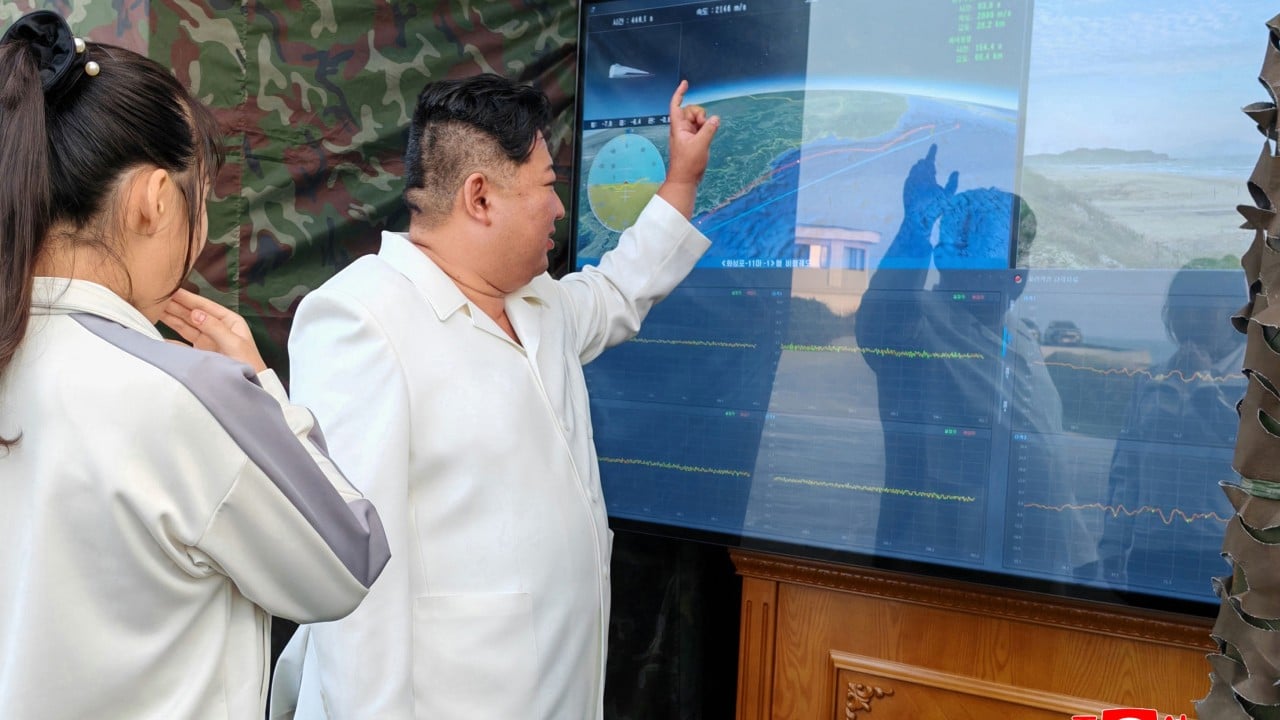
North Korea’s recurring ballistic missile tests ahead of high-level diplomatic encounters are not random accidents of military scheduling. They are deliberate, calculated strikes against the conference table. When Pyongyang fires short-range or medium-range rockets on the eve of major engagements, such as bilateral summits between Washington and Beijing, the message is visceral. Pyongyang intends to shatter any bilateral consensus before it can even form.
Diplomacy has rules. Military theater ignores them.
For decades, foreign policy analysts have debated whether North Korea’s provocations are defensive reactions or offensive tantrums. Neither explanation suffices. The timing reveals a much sharper tactical objective. Whenever American and Chinese leaders prepare to sit across from each other to negotiate regional stability, trade, or security architecture, the Korean Peninsula erupts.
The Anatomy of Diplomatic Sabotage
Consider the mechanics of summit diplomacy. Preparations take months. Secret channels draft communiques. Trade deficits, tariffs, and security guarantees dominate briefing books. In that fragile ecosystem, North Korea represents an inconvenient truth. Neither Washington nor Beijing wants the issue on the table, yet neither can ignore it. Pyongyang understands this vulnerability with chilling precision. By launching missiles into the Sea of Japan hours before a summit, Kim Jong Un ensures that the ghost at the feast occupies every chair in the room.
The shockwaves hit Beijing hardest. For Chinese leadership, these tests create an acute diplomatic crisis. Beijing presents itself to the world as a stabilizing anchor in Northeast Asia, the sole regional power capable of keeping Pyongyang under strict control. When North Korea launches missiles right as Xi Jinping meets with an American president, that narrative collapses. It exposes the limits of Beijing's influence. It demonstrates that the Kim regime answers to its own internal logic, treating its primary economic lifeline with contemptuous independence.
Western media often frames these actions as erratic outbursts. That assessment is dangerously lazy. Every launch carries a specific calibration. Range, payload, trajectory, and timing are adjusted to maximize political noise while staying just short of a full-scale regional conflagration.
Months before a scheduled U.S.-China summit, intelligence agencies begin picking up telemetry chatter at key test sites like Tongchang-ri or Sunan. Engineers roll out mobile transporter-erector-launchers. Fuel trucks move into position. These preparations are rarely hidden. Pyongyang wants orbital satellites and foreign intelligence assets to see the machinery stirring. The regime operates on a philosophy of forced visibility. If the world is looking elsewhere, North Korea creates a spectacle bright enough to blind them.
When the missiles clear the launcher rails, the diplomatic calculus shifts instantly. Joint communiques drafted by career diplomats are suddenly shredded. Press conferences that were supposed to focus on bilateral trade agreements are hijacked by questions about deterrence, missile defense, and nuclear proliferation. The summit's original agenda is buried under a mountain of urgent security briefs.
This is the core objective. Pyongyang refuses to allow great powers to negotiate the future of the Korean Peninsula behind its back. By injecting kinetic volatility into the diplomatic calendar, North Korea forces itself into the center of the room. It demands a seat at the table by threatening to smash it.
Beijing's Uncomfortable Tightrope
The historical record offers undeniable proof of this pattern. Ahead of historic face-to-face meetings, the rhythm of rocket fire has consistently accelerated. Whether testing Hwasong-series systems or launching solid-propellant short-range ballistic missiles from multiple rocket launchers, the cadence matches the political calendar with clockwork precision.
Critics of this analysis argue that Washington brings it upon itself through aggressive joint military drills or hawkish rhetoric. There is an element of truth to that friction. Action and reaction form a continuous loop on the peninsula. Yet, blaming American military posture misses the deeper structural reality. Even during periods of diplomatic outreach, when Washington pulls back exercises and offers concessions, the missile tests continue. The weapons program is not merely a bargaining chip. It is the core identity of the state.
The ideological foundation of the Kim regime rests upon permanent siege mentality. A normal, peaceful integration into the global economy would dilute internal control. Totalitarian authority requires an external enemy to justify pervasive internal rationing, surveillance, and labor mobilization. If the nuclear threat vanishes, the ideological justification for the dynasty’s absolute grip on society begins to fray. Therefore, disarmament is treated in Pyongyang as an existential threat to the regime itself.
This brings us to the core contradiction in Western policy. For decades, successive American administrations have chased the mirage of complete, verifiable, and irreversible denuclearization. That goal is dead. It died quietly years ago, buried under serial nuclear tests and advancing missile guidance systems. Yet, diplomatic orthodoxies die even harder. State Department briefing notes still cling to the language of denuclearization, treating it as a non-negotiable baseline rather than an abandoned historical milestone.
Pyongyang knows this. When Kim Jong Un's administration issues public statements rejecting denuclearization outright, they are speaking with absolute clarity. Western capitals choose not to listen. They prefer the comforting fiction that sanctions enforcement and diplomatic pressure will eventually force a historic epiphany in Pyongyang.
History shows otherwise. Sanctions bite, but they do not break. They merely compel the regime to innovate its illicit revenue streams, turning state-sponsored cyber theft, cryptocurrency laundering, and clandestine ship-to-ship oil transfers into a highly functional shadow economy. Russia’s war in Ukraine has added a dangerous new dimension to this resilience. By supplying conventional artillery shells and ballistic missiles to Moscow in exchange for advanced aerospace technology, fuel, and diplomatic protection at the United Nations, Pyongyang has broken out of its international isolation.
The security architecture of Northeast Asia has fundamentally transformed.
When a summit occurs now, it takes place against a backdrop of active military-industrial cooperation between Moscow and Pyongyang. This axis complicates Beijing's calculations even further. China does not want a completely destabilized North Korea that might collapse and trigger a refugee crisis on its border, nor does it want a rogue nuclear state dragging Beijing into a direct military confrontation with Washington and its regional allies like Seoul and Tokyo.
Beijing is trapped in a strategic paradox. It provides the food, fuel, and diplomatic cover keeping the regime afloat, yet it absorbs the geopolitical fallout of North Korea's belligerence. Whenever Pyongyang tests missiles on the eve of a summit with Washington, it is testing Beijing just as much as it is testing America. It is a public reminder to Zhongnanhai that China does not dictate North Korean strategy.
The Strategic Asymmetry of Time
The international press corps frequently misses this subtext, preferring to reduce complex geopolitical friction into simple binaries of good versus evil or strength versus weakness. The reality is far messier. It involves competing survival strategies, bureaucratic inertia, and cold-blooded cost-benefit calculations.
Consider the role of South Korea in this dynamic. Seoul occupies the most vulnerable position on the chess board. Capital city Seoul sits within range of thousands of conventional artillery pieces and short-range rockets, long before factoring in nuclear capabilities. Every missile test sends shockwaves through South Korean financial markets and political discourse. Yet, successive administrations in Seoul oscillate wildly between engagement policies and hardline deterrence, creating policy whiplash that Pyongyang exploits with practiced ease.
When a conservative government takes power in Seoul, the door to dialogue slams shut, replaced by fiery rhetoric and upgraded joint defense exercises with the United States. When a progressive administration takes the helm, the pendulum swings toward summit diplomacy, inter-Korean economic zones, and cultural exchanges, which Pyongyang often exploits to buy time for missile development. The North Korean regime reads this democratic cyclicality as a structural weakness. They know that American and South Korean administrations change every few years, while the Kim family dynasty remains fixed, patient, and ruthless.
This asymmetry of time is Pyongyang's greatest strategic asset. Democratic leaders are shackled by election cycles, public opinion polls, and economic pressures. Autocrats are bound by no such constraints. Kim Jong Un can afford to wait out a hostile U.S. president, endure years of tightening economic sanctions, and time his provocations with surgical precision to disrupt diplomatic breakthroughs.
The September 2026 missile launches serve as a textbook illustration of this asymmetric warfare. Fired hours apart ahead of high-level diplomatic windows involving the United Nations and bilateral U.S.-China discussions, those short-range ballistic missiles were not fired in a vacuum. They were a deliberate declaration that Pyongyang refuses to be sidelined.
The international community must confront this reality. Continuing to treat North Korea as a temporary aberration that can be coaxed back to the negotiating table through punitive measures is a form of institutional self-deception. The regime has crossed the nuclear threshold. It possesses fissile material, miniaturized warheads, solid-fuel engines, and diversified delivery systems capable of striking regional bases and threatening the American homeland.
Accepting this reality does not mean granting formal recognition or abandoning regional allies. It means discarding naive diplomatic assumptions. It means shifting from an objective of total denuclearization—which is no longer achievable through peaceful diplomatic pressure—to a policy of strict containment, deterrence, and risk reduction.
Until Western capitals internalize the truth behind Pyongyang's timing, every future summit will remain vulnerable to ballistic sabotage. The missiles will keep flying. The agendas will keep breaking. And the regime in Pyongyang will continue to dictate the terms of engagement on the peninsula, one rocket at a time.