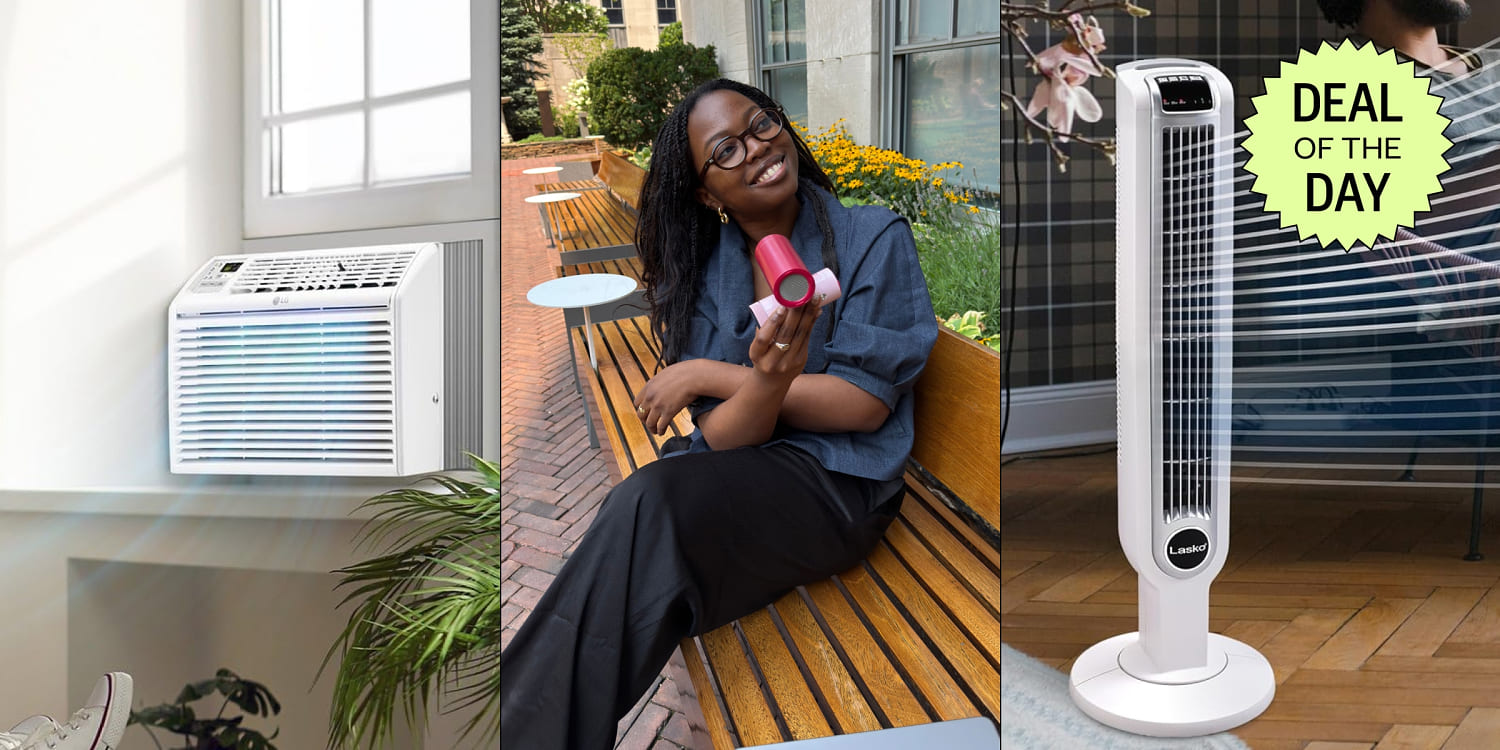
Major online retailers are heavily discounting air conditioners and portable fans right now, but the standard consumer advice to "buy now to beat the heat" misses the structural reality of the modern supply chain. The sudden appearance of these "secret" price drops is not a gesture of goodwill. It is a calculated inventory clearing mechanism designed to offload aging, high-maintenance hardware before autumn storage fees eat into corporate margins.
Understanding why these specific cooling units go on sale—and how retail algorithms manipulate pricing based on regional weather patterns—is the only way to avoid buying an inefficient lemon.
The Invisible Pressure of Warehouse Carrying Costs
Retail logistics operates on a brutal timeline. Every square foot of warehouse space occupied by a boxy, fifty-pound portable air conditioner is space that cannot be used for high-margin autumn apparel or early holiday inventory. By mid-summer, the financial math shifts.
The primary driver of deep discounts on cooling appliances is the avoidance of long-term storage fees. Major fulfillment networks charge exponential penalties for items that sit in warehouses for more than six months. For a bulky appliance, these holding fees can quickly surpass the wholesale cost of the unit itself.
Faced with this math, retailers deploy algorithmic markdown strategies. The goal is to find the exact price floor where inventory moves fast enough to clear the shelves, but high enough to claw back the original manufacturing and shipping costs.
How Dynamic Pricing Capitalizes on Regional Disasters
Dynamic pricing algorithms monitor localized weather patterns in real-time. If a severe heatwave is forecasted for the Pacific Northwest, the discount on a specific smart window unit in that zip code may instantly vanish, even as the exact same unit is marked down by forty percent in a cooler, rainier region.
Consumers often assume a sale is nationwide. In reality, it is highly targeted. The algorithm is designed to exploit local urgency while quietly dumping excess inventory in regions where demand has stalled.
The Technical Reality of Cheap Air Conditioning
When you buy a heavily discounted cooling unit, you are often purchasing older compressor technology. To truly understand what you are paying for, you have to look at the mechanics of heat transfer and energy efficiency.
The Single-Hose Portable Air Conditioner Trap
The most common units featured in mid-summer clearance sales are single-hose portable air conditioners. They are cheap, easy to install, and fundamentally flawed.
A single-hose system pulls warm air from inside your room, passes it over cooling coils, and blows the cold air back into the room. To cool those coils, however, it must exhaust hot air out of the window through its single hose. This creates a critical structural problem: negative air pressure.
[Outside: Warm Air]  ---> (Infiltration through cracks/doors) ---> [Inside: Room]
                                                                       |
[Window Exhaust Hose] <--- (Hot air expelled out) <--------------------+
Because the unit is constantly throwing air out of the room, new air must enter to replace it. This replacement air is sucked in from the outside through cracks under doors, window seals, and floorboards. You are essentially trying to cool a room while simultaneously pulling hot, humid outdoor air back into the house.
A dual-hose unit solves this by using one hose to draw in outdoor air to cool the condenser, and a second hose to exhaust it, keeping the indoor air pressure perfectly balanced. But dual-hose units are more expensive to manufacture, meaning they are rarely the ones discounted to eye-catching price points on clearance pages.
Deciphering the Seasonal Energy Efficiency Ratio
To separate a genuine bargain from a long-term electricity bill disaster, you must look past the list price and calculate the Seasonal Energy Efficiency Ratio (SEER2).
Older clearance stock often operates on outdated efficiency standards. For example, a cheap unit might have a low efficiency rating of 8.5. A modern, variable-speed inverter unit might carry a rating of 14 or higher.
To illustrate the financial difference, consider a hypothetical comparison between a cheap clearance unit and a modern high-efficiency unit operating under identical conditions over a standard summer season:
| Metric | Legacy Clearance Unit (Hypothetical) | Modern Inverter Unit (Hypothetical) |
|---|---|---|
| Cooling Capacity | 10,000 BTU | 10,000 BTU |
| Efficiency Rating (SEER2) | 8.5 | 14.3 |
| Power Consumption | 1,176 Watts | 700 Watts |
| Estimated Summer Running Cost | $240 | $142 |
The cheap unit saves you sixty dollars upfront, but costs you nearly double that in utility bills over the first two summers. The discount is an illusion; you are simply shifting your payment from the retail checkout to your electric utility provider.
How to Outsmart the Retail Algorithm
Getting a functional, efficient cooling system without overpaying requires bypassing the promotional banners and analyzing the hardware directly.
- Prioritize U-Shaped Window Units: Traditional window units prevent you from opening your window and block your view. Newer U-shaped designs allow the window to close directly through the center of the unit, keeping the noisy compressor outside while maintaining a tight seal. These are increasingly common but require careful searching to find on sale.
- Insist on Variable-Speed Inverters: Standard air conditioners operate like a noisy furnace: they are either running at one hundred percent capacity or completely off. This constant cycling consumes massive amounts of start-up energy. Inverter-driven compressors can throttle down to run continuously at ten percent capacity, maintaining a dead-silent, steady temperature while using a fraction of the power.
- Look for Dual-Hose Configuration on Portables: If you must buy a portable unit because of homeowner association rules or narrow windows, do not buy a single-hose model. If a dual-hose model is not on sale, purchase an aftermarket dual-hose conversion kit.
The industry wants you to buy under pressure, driven by a spiking thermometer and a ticking clearance clock. The smart play is to look past the "percentage off" sticker and calculate the true cost of ownership before dragging a heavy, inefficient box into your home.