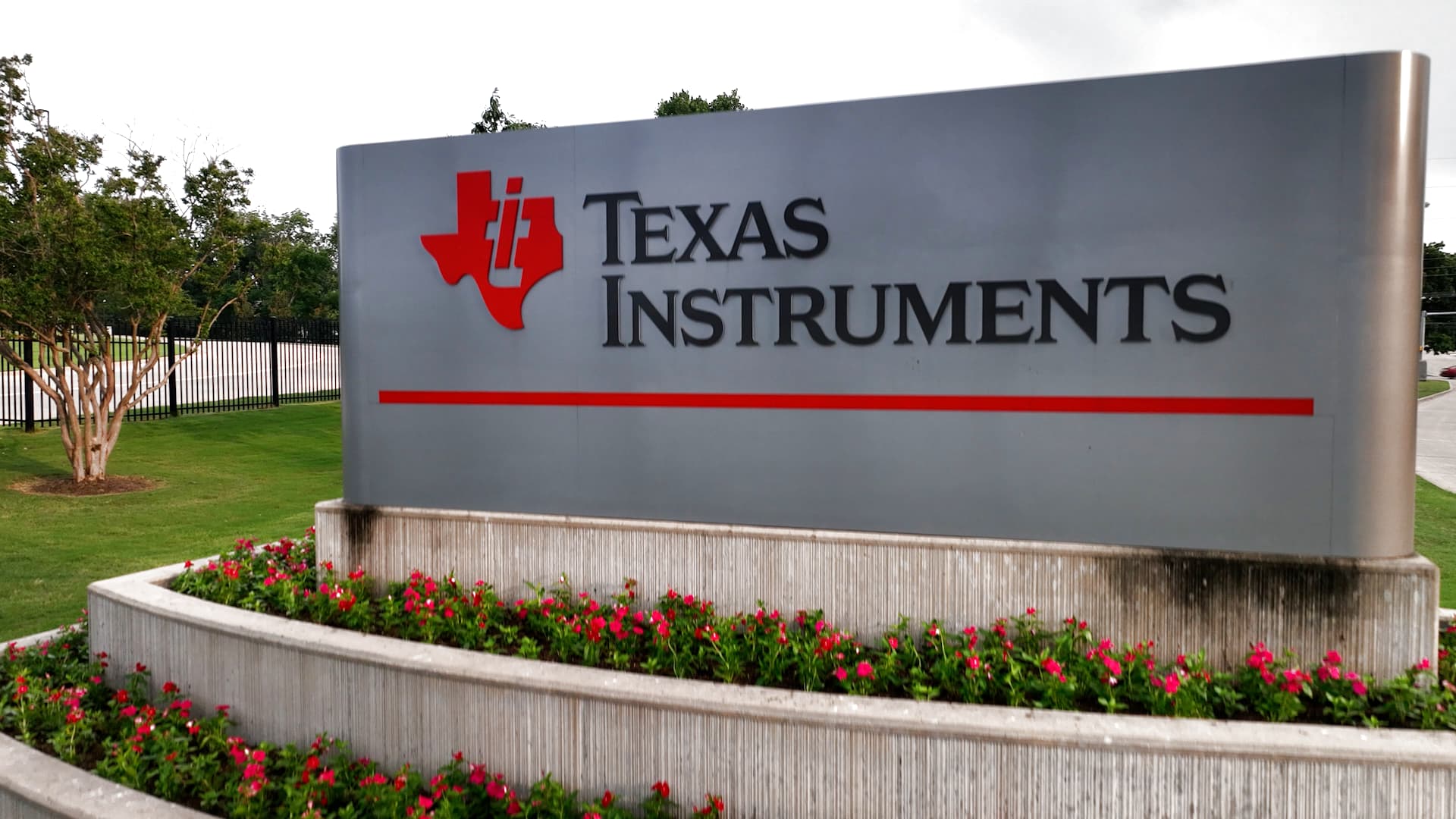
While the rest of the semiconductor industry was busy panicking about high interest rates and a glut of inventory in 2024, Texas Instruments (TI) was quietly building a fortress. That patience just paid off. The company’s stock recently surged 19%, marking its most explosive single-day gain since the turn of the millennium. Wall Street is framing this as a simple "AI rally," but that narrative misses the grit of the actual strategy. This wasn't a lucky break driven by a sudden interest in chatbots; it was a calculated, multibillion-dollar bet on the boring but essential hardware that keeps AI data centers from melting down.
Texas Instruments is not Nvidia. It does not make the flashy H100 GPUs that serve as the "brains" of artificial intelligence. Instead, TI dominates the nervous system. Every high-powered AI server requires a massive array of analog chips to manage power delivery, monitor thermal levels, and ensure that data flows without interference. As power consumption in data centers reaches levels previously seen only in heavy industrial plants, TI’s analog dominance has transformed from a stable utility into a high-growth engine.
The Data Center Power Grab
The numbers tell a story of a pivot that is finally hitting its stride. In its latest quarterly report, TI revealed that its data center revenue grew by a staggering 90% year-over-year. To put that in perspective, this segment now generates over $1 billion in annual revenue, roughly 9% of the company's total business. This growth didn't happen by accident.
While competitors like Analog Devices and NXP were scaling back capital expenditures during the 2023-2024 downturn, TI CEO Haviv Ilan doubled down on internal manufacturing. The company poured billions into 300mm wafer fabs in Texas and Utah. This is the "why" behind the stock jump. 300mm wafers are larger and more cost-effective than the 200mm industry standard, providing a 40% cost advantage per chip.
By owning the factories, TI avoided the supply chain bottlenecks that currently plague firms relying on third-party foundries. When the AI infrastructure buildout accelerated in early 2026, TI had the inventory and the capacity to meet demand immediately. They didn't just have the better product; they were the only ones who had the product on the shelf.
Beyond the AI Hype Cycle
The market is currently obsessed with AI, but TI’s resurgence is actually a two-pronged attack. The second, and perhaps more important, factor is the "Great Industrial Reawakening." For the past two years, the industrial sector—TI’s largest market at roughly 33% of revenue—was in what Ilan described as a "long hibernation." Factories were working through old stock, and new orders were non-existent.
That cycle has flipped. Revenue in the industrial segment rose 30% this quarter. From robotics in logistics hubs to advanced sensing in aerospace, the demand for "embedded processing"—the chips that allow machines to interact with the physical world—is rebounding across all geographies.
- Robotics: Increased precision requirements in automated warehouses.
- Grid Infrastructure: The push for "smart grids" to handle renewable energy.
- Aerospace and Defense: A global surge in procurement for autonomous systems.
This recovery provides a massive floor for the stock. Even if the AI frenzy cools, the fundamental electrification of the global economy remains a secular tailwind that TI is uniquely positioned to capture.
The 300mm Strategy and the Margin Question
Critics have long argued that TI’s massive spending on new factories—reaching $5 billion annually at its peak—was a drag on free cash flow. They weren't entirely wrong. Depreciation costs from these new plants did squeeze net income in previous quarters. However, the 19% stock jump represents the moment the market stopped viewing those factories as liabilities and started seeing them as high-yield assets.
The math is straightforward. TI is aiming to produce 95% of its wafers internally by 2030. By cutting out the middleman (foundries like TSMC), TI can maintain higher margins even if they lower prices to crush smaller competitors. In a commodity business like analog chips, being the lowest-cost producer is the only moat that matters.
Risk Factors the Market is Ignoring
It would be a mistake to assume TI is now untouchable. The 19% jump has pushed the valuation into territory that assumes perfect execution over the next three years. There are three primary risks that could derail this momentum:
- Utilization Rates: TI’s business model depends on keeping its massive factories running at high capacity. If global demand for industrial goods dips, those "cost-saving" factories become incredibly expensive idle assets.
- China’s Domestic Surge: Chinese firms like Silergy are aggressively moving into the low-to-mid-range analog space. While they can't match TI’s reliability in automotive chips yet, they are eating away at the margins in consumer and simple industrial applications.
- The CHIPS Act Strings: TI is a major beneficiary of U.S. government subsidies. These funds come with strict geopolitical strings, specifically regarding expansion in China, which remains a massive market for analog semiconductors.
The Brutal Truth About the Rally
The stock didn't jump because TI "discovered" AI. It jumped because TI proved it could survive a brutal cyclical downturn without abandoning its long-term manufacturing roadmap. While others optimized for the next quarter's earnings call, TI optimized for the next decade's supply chain.
Investors are finally realizing that the AI era isn't just about who can design the smartest software; it’s about who can reliably supply the millions of tiny, unglamorous components that keep the hardware running. Texas Instruments has spent five years and billions of dollars to ensure they are the only answer to that question. The 19% gain wasn't a peak; it was a re-rating of what it means to be a semiconductor powerhouse in a world that can't get enough silicon.
Move your focus away from the software layer. The real money is being made in the power management and signal chain hardware that makes the software possible. TI has essentially become the toll booth operator for the AI highway. You can build a faster car, but you still have to pay the toll.