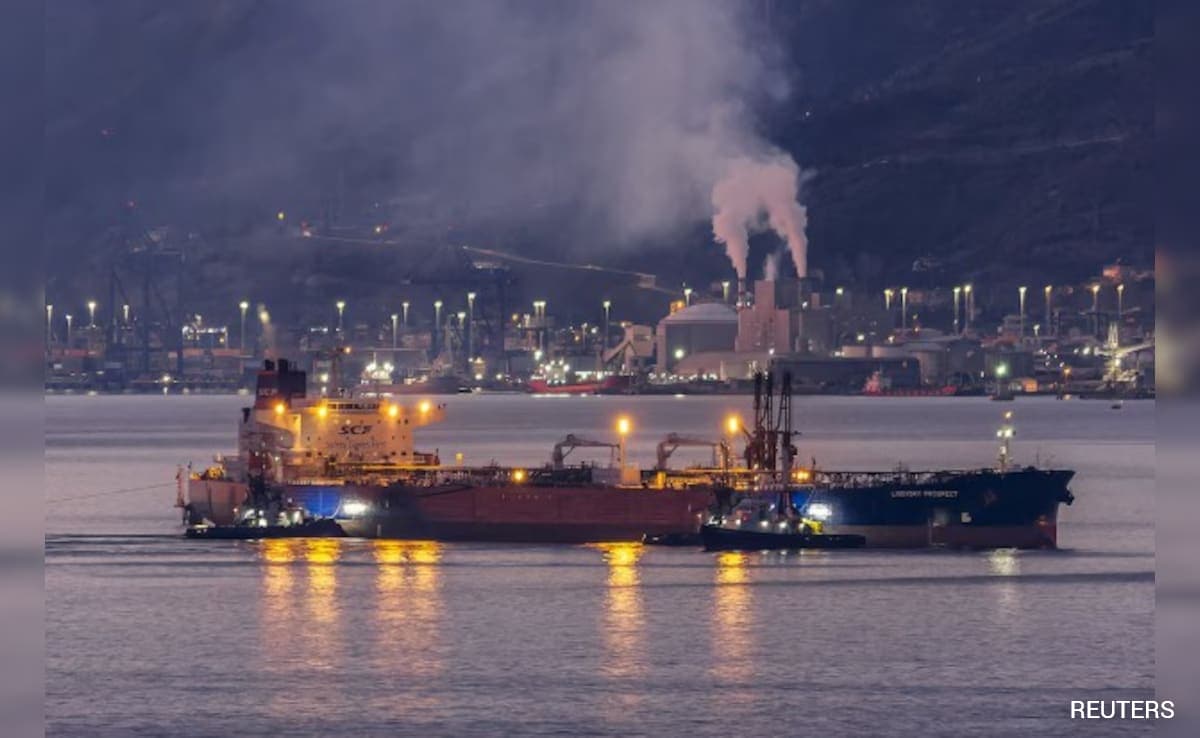
The United States government has once again extended its sanctions waiver on Russian seaborne oil for another 30 days, temporarily shielding stranded tankers from severe penalties. Treasury Secretary Scott Bessent announced the issuance of General License 134C, backward-dated to cover a lapse over the weekend, keeping the legal corridor open until June 17, 2026. While Washington frames the move as an act of humanitarian mercy for energy-vulnerable nations, the decision reveals a harsher reality. The global energy market is too fragile to absorb the total elimination of Russian crude while the Middle East burns, forcing American policymakers into a recurring cycle of geopolitical compromise.
This marks the second consecutive month that the Treasury Department allowed the waiver to expire, publicly vowed to end the exemption, and then quietly reversed course under intense international pressure.
Behind the bureaucratic language of General License 134C lies a brutal math. When the US and Israel engaged in military operations against Iran earlier this year, Tehran retaliated by choking off the Strait of Hormuz. That single move trapped roughly 20% of the world’s daily oil supply inside the Persian Gulf. With Middle Eastern crude effectively locked behind a geopolitical wall, global energy markets entered a state of structural deficit, driving Brent crude past $111 a barrel.
Washington discovered that it could not aggressively police its unilateral sanctions against Russian oil majors Rosneft and Lukoil without triggered hyperinflation at gas pumps worldwide. The 30-day extension is not an orchestrated strategy. It is an emergency pressure valve.
The Shell Game at Sea
To understand why these 30-day extensions keep happening, look at the physical crude market rather than the diplomatic statements coming out of Washington or Paris. When the Trump administration slapped sweeping sanctions on Russia's state-backed oil infrastructure late last year, the goal was simple: choke off the Kremlin's primary source of cash for the war in Ukraine.
Instead, it created a massive, floating logjam. Millions of barrels of Russian-origin crude and refined petroleum products, loaded onto tankers before the mid-April enforcement deadlines, found themselves trapped at sea. International banks refused to process the payments. Marine insurers canceled policies overnight. Salvage crews, tugboat operators, and bunkering facilities in the Mediterranean and Asia refused to touch the ships for fear of being cut off from the US dollar clearing system.
The Treasury Department's latest general license explicitly permits transactions "ordinarily incident and necessary" to offloading this stranded oil. It legalizes the basics of maritime survival: anchoring, docking, bunkering, insurance, and emergency repairs for blocked vessels.
"This general license will help stabilize the physical crude market and ensure oil reaches the most energy-vulnerable countries," Bessent argued on social media, defending a policy he had promised to terminate just weeks prior.
Yet the real target of the waiver is not the global South, but Beijing. By keeping this stranded oil legally accessible to alternative buyers, Washington is attempting to disrupt a massive Chinese hoarding operation.
When US sanctions hit Rosneft and Lukoil, Western buyers fled. China's state-owned refiners and independent "teapots" immediately moved in to buy up the stranded cargoes at steep, double-digit discounts, settling the trades in yuan. By providing a legal window for other nations to bid on these cargoes, the US Treasury is trying to force the price of stranded Russian oil back up, preventing China from building a massive, cheap strategic reserve that would insulate its economy from future Western leverage.
The Indian Intercept
The clearest beneficiary of this American policy whiplash is New Delhi. During the first iteration of the waiver, Indian refiners, including Reliance Industries, swooped in to purchase roughly 30 million barrels of discounted Russian crude that had been floating aimlessly in international waters. These refiners had spent the previous months scaling back their Russian imports to comply with Washington’s tightening sanctions regime. The moment the general license dropped, the buying resumed.
Hypothetically, imagine a state-owned refinery in a developing nation that relies entirely on a steady diet of heavy sour crude. If that refinery loses its scheduled shipments from Iraq or Kuwait due to the closure of the Strait of Hormuz, it faces a choice: buy whatever is available on the spot market at exorbitant premiums or shut down operations entirely, triggering rolling blackouts at home. When Washington offers a 30-day legal window to clear out stranded Russian tankers, that refinery buys the Russian oil. It keeps the lights on, but it also sends hard currency back to Moscow, completely undermining the core objective of the Western sanctions coalition.
This dynamic has triggered fierce blowback within Washington. Domestic critics see the short-term extensions as a failure of nerve. Democratic Senators Jeanne Shaheen and Elizabeth Warren publicly condemned the latest waiver extension, calling it an "indefensible gift" to Russian President Vladimir Putin. At the G7 finance ministers' meeting in Paris, Ukrainian Finance Minister Serhiy Marchenko stood alongside Western officials and pleaded for an end to the exemptions, demanding immediate, uncompromised economic pressure on the Russian energy sector.
The Trap of Permanent Volatility
The recurring nature of these 30-day extensions has broken the credibility of the broader sanctions regime. Sanctions only work as a deterrent when the market believes they are permanent and absolute. By continually blinking at the eleventh hour, the US Treasury has signaled to international commodity traders that Washington's tolerance for high oil prices is remarkably low.
Global Oil Market Disruptions (2026)
┌──────────────────────────┐     ┌──────────────────────────┐
│  Strait of Hormuz Blocked│ ──> │ 20% of Global Supply Lost│
└──────────────────────────┘     └──────────────────────────┘
                                               │
                                               ▼
┌──────────────────────────┐     ┌──────────────────────────┐
│ US Extends Oil Waivers   │ <── │ Brent Crude Passes $111  │
└──────────────────────────┘     └──────────────────────────┘
This creates an environment of perpetual uncertainty. Private shipping lines and tier-one maritime insurers cannot build long-term business plans on 30-day cycles. Instead, the temporary nature of General License 134C ensures that the "shadow fleet"—a network of aging, unflagged, and poorly insured tankers operating entirely outside Western jurisdiction—continues to expand. If the legal framework changes every four weeks, the legitimate maritime industry steps back, leaving the transport of global energy resources to less scrupulous actors.
Washington is caught in a trap of its own making. It cannot allow the waiver to become permanent without admitting defeat in its economic war against Moscow. Yet it cannot let the waiver truly expire without watching global energy costs spike to levels that could tip Western economies into a severe recession.
The 30-day extension is a confession that the global supply chain cannot be re-engineered by legislative decree while a shooting war blocks the world's most critical transit corridors. Until the crisis in the Persian Gulf finds a resolution and shipping lanes reopen, American economic warfare will remain subordinate to the realities of the physical oil market. Washington will keep signing these extensions, 30 days at a time.


