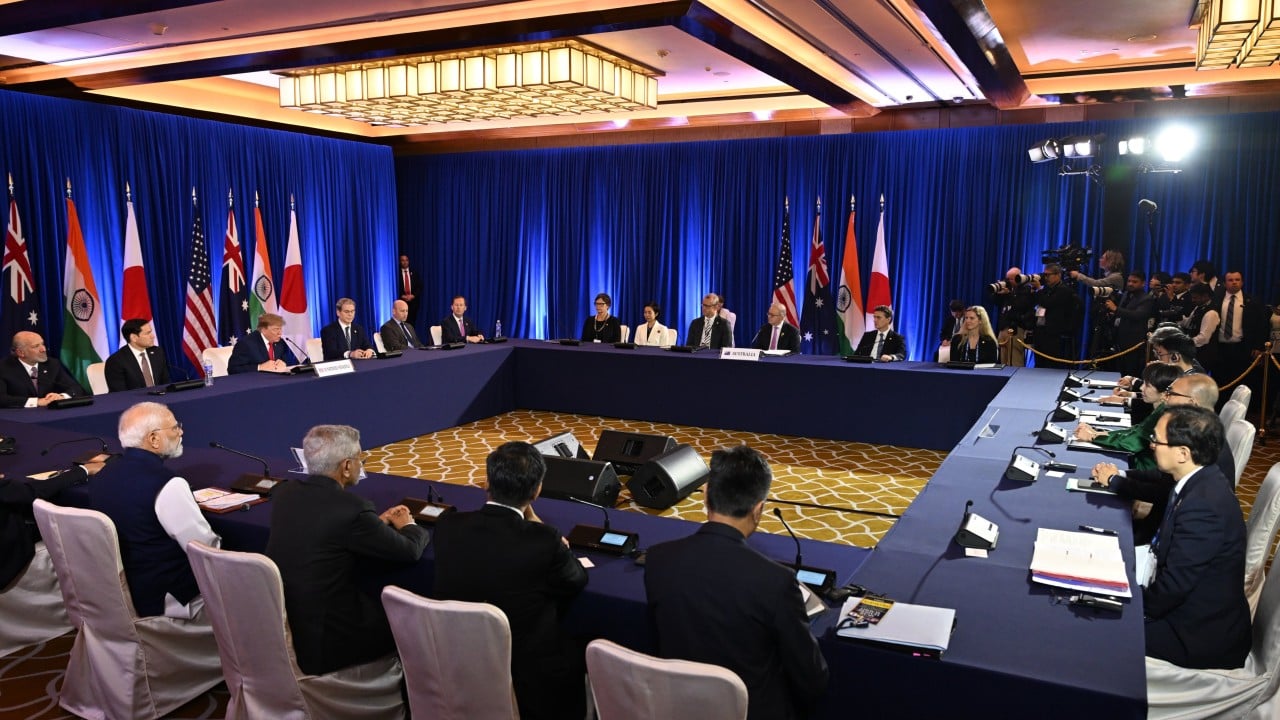
Most headlines about the start of President Donald Trump's Asia tour on November 17, 2026, read like a victory lap. A revived Quad alliance. New rare earth mineral agreements. A fresh trade framework with Thailand.
Look closer at what actually got signed in Manila, though, and a very different story emerges.
Surface-level coverage treats day one of Trump's Asia trip like a tidy diplomatic sweep. It wasn't. Behind the podium photos with regional leaders sat a mix of bold timelines that mining engineers would laugh at, trade statements still waiting on lawyers, and a deliberate signal sent straight to Beijing right before Trump flew north for APEC in Shenzhen. If you're trying to understand where Indo-Pacific supply chains and U.S. trade policy are actually heading, you need to separate the stagecraft from the ink on the paper.
Why Manila Mattered Before Shenzhen
Timing is everything in diplomacy. Trump didn't land at Villamor Air Base in Manila on Tuesday, November 17, by accident. He arrived on the final day of the 49th ASEAN Summit—skipping the formal U.S.-ASEAN Summit in favor of a leaders' dinner—specifically to lock arms with democratic allies before heading to China for the Asia-Pacific Economic Cooperation (APEC) Summit on November 18 and 19.
Think of Manila as the opening act designed to set the terms for Shenzhen.
For months leading up to November 2026, diplomats across Tokyo, Canberra, and New Delhi wondered whether the Quad—the security and economic grouping of the United States, Australia, India, and Japan—had quietly slipped onto life support. It had been two full years since the four leaders last sat down together. Worse, U.S.-India relations had hit noticeable friction since Trump returned to office, leaving analysts at places like the Center for Strategic and International Studies (CSIS) questioning whether Washington still valued coalition building.
Manila answered that question. Sort of.
Standing alongside Australian Prime Minister Anthony Albanese, Indian Prime Minister Narendra Modi, and Japanese Prime Minister Sanae Takaichi, Trump called the partnership "a force for good". The four leaders rolled out concrete operational updates rather than vague diplomatic prose:
- An inaugural Quad Business Leaders' Forum scheduled for 2027.
- The formal launch of the Indo-Pacific Maritime Surveillance Collaboration, expanding on their earlier maritime domain awareness work.
- Joint commitments on AI technologies, cybersecurity, and Indian Ocean connectivity.
- A pointed warning expressing "grave concerns about economic coercion, including through arbitrary export restrictions".
Nobody at the podium had to say the word "China" out loud. Everyone in the room knew exactly whose export curbs they were talking about.
The Rare Earths Reality Check
Here is where the headlines get ahead of the facts.
After meeting with Modi, Albanese, and Takaichi, Trump announced that the four Quad nations had signed "several new and critical rare earth trade deals" to prevent any partner from becoming vulnerable to supply chain coercion. Then he dropped a number that made commodity traders spit out their coffee: he claimed the United States would catch up to China on rare earth production within 10 months.
Let's be honest about how mining actually works.
You can't build a rare earth refining ecosystem in 10 months. Not even close. While Australia has rich deposits and Japan brings decades of processing know-how from its own 2010 rare earth crisis with Beijing, the actual text released after the Manila summit told a much quieter story. Officials named no specific counterparties, no specific minerals, and no tonnage commitments in those newly touted agreements. Earlier Quad economic releases had pointed to modest infrastructure commitments—like $10 million toward mineral recovery facilities in India and ASEAN nations—which is seed money, not an overnight industrial revolution.
Why Processing Matters More Than Digging
Most people confuse mining rare earths with refining them. That's the biggest misconception in this entire debate.
Digging ore out of the ground isn't the bottleneck. The U.S. and Australia already have plenty of raw rock. The real choke point is chemical separation and magnet manufacturing—messy, capital-intensive industrial processes that take years to permit, construct, and calibrate. Even with fast-tracked permitting and allied financing between Washington, Tokyo, and Canberra, bringing new separation plants to full commercial scale takes three to seven years, not 40 weeks.
So why make the 10-month claim in Manila? Leverage. Trump was speaking to a domestic audience ahead of trade talks in China, signaling that Beijing's dominance over critical minerals has an expiration date. As a negotiating tactic, it's loud and clear. As an industrial timeline, investors shouldn't bet their portfolios on it.
That Thailand Trade Deal Isn't Done Yet
The third pillar of day one's coverage—the U.S.-Thailand trade deal—suffers from the same gap between announcement and execution.
Alongside Thai Prime Minister Anutin Charnvirakul, Trump signed a Joint Statement on an Agreement Between the United States of America and the Kingdom of Thailand on Reciprocal Trade in Manila on November 17. Both sides also inked a separate Memorandum of Understanding on diversifying critical mineral supply chains. On paper, it looked like a clean bilateral win.
Except a joint statement isn't a finished treaty.
Anutin himself acknowledged that government lawyers were still drafting the final legal text. Worse, within days of the Manila photo op, the reality of Washington's tariff math hit Bangkok hard. By November 25, the Office of the United States Trade Representative (USTR) proposed tariffs of up to 18% on covered Thai goods under Section 301 of the U.S. Trade Act—leaving the door open to bump that rate to 25% if Washington decides Thailand's follow-through falls short.
Thai negotiators had braced for a 19% to 20% tariff ceiling, so 18% was barely a sigh of relief. Written public comments on those proposed duties run through January 5, 2027, with hearings starting January 25. If you're an electronics manufacturer or agricultural exporter shipping out of Bangkok to Los Angeles, your tariff costs aren't settled yet. Not by a long shot.
Bilateral Friction With the Host
Even meetings with the host nation carried mixed signals. Philippine President Ferdinand "Bongbong" Marcos Jr. welcomed Trump warmly at Malacañang Palace—even as violent anti-Trump protests outside the ASEAN venue led to over 200 arrests.
Trump later boasted that the Philippines had agreed to buy 100% of its agricultural imports from American farmers starting January 1, throwing in a blunt remark questioning whether Brazil would defend Manila in a skirmish with China. Marcos quickly walked that back, clarifying that while Manila plans to buy more U.S. soybeans, wheat, and energy products, nobody agreed to "100% of anything," and the fine print is still under negotiation.
What You Should Actually Watch Next
If you track Indo-Pacific geopolitics, supply chains, or global trade, skip the breathless summit summaries and watch three concrete benchmarks over the next 90 days:
- The USTR Section 301 docket on January 5, 2027. This is where the U.S.-Thailand joint statement meets actual customs enforcement. Watch which Thai export categories get carved out and whether Washington holds the 18% rate or threatens the 25% tier.
- Named commercial off-take agreements from Quad members. Press releases about "several critical mineral deals" mean very little until Australian miners, Japanese refiners, and U.S. defense or EV manufacturers announce binding, dollar-denominated supply contracts.
- Details on the Indo-Pacific Maritime Surveillance Collaboration. CSIS analysts noted that while the Quad formally launched this initiative in Manila, operational specifics remain thin. Watch for joint coast guard patrols or shared satellite data hubs in the South China Sea during early 2027.
Day one in Manila proved the Quad isn't dead and Washington is willing to use bilateral trade statements to corral Southeast Asian partners. Just don't confuse a framework signed at a summit with a finished deal on the factory floor.
For a visual recap of the leaders' arrival and bilateral talks in Manila, watch Trump's Asia Trip Day 1—POTUS Meets With Quad Leaders, which covers the opening schedule and summit remarks.


