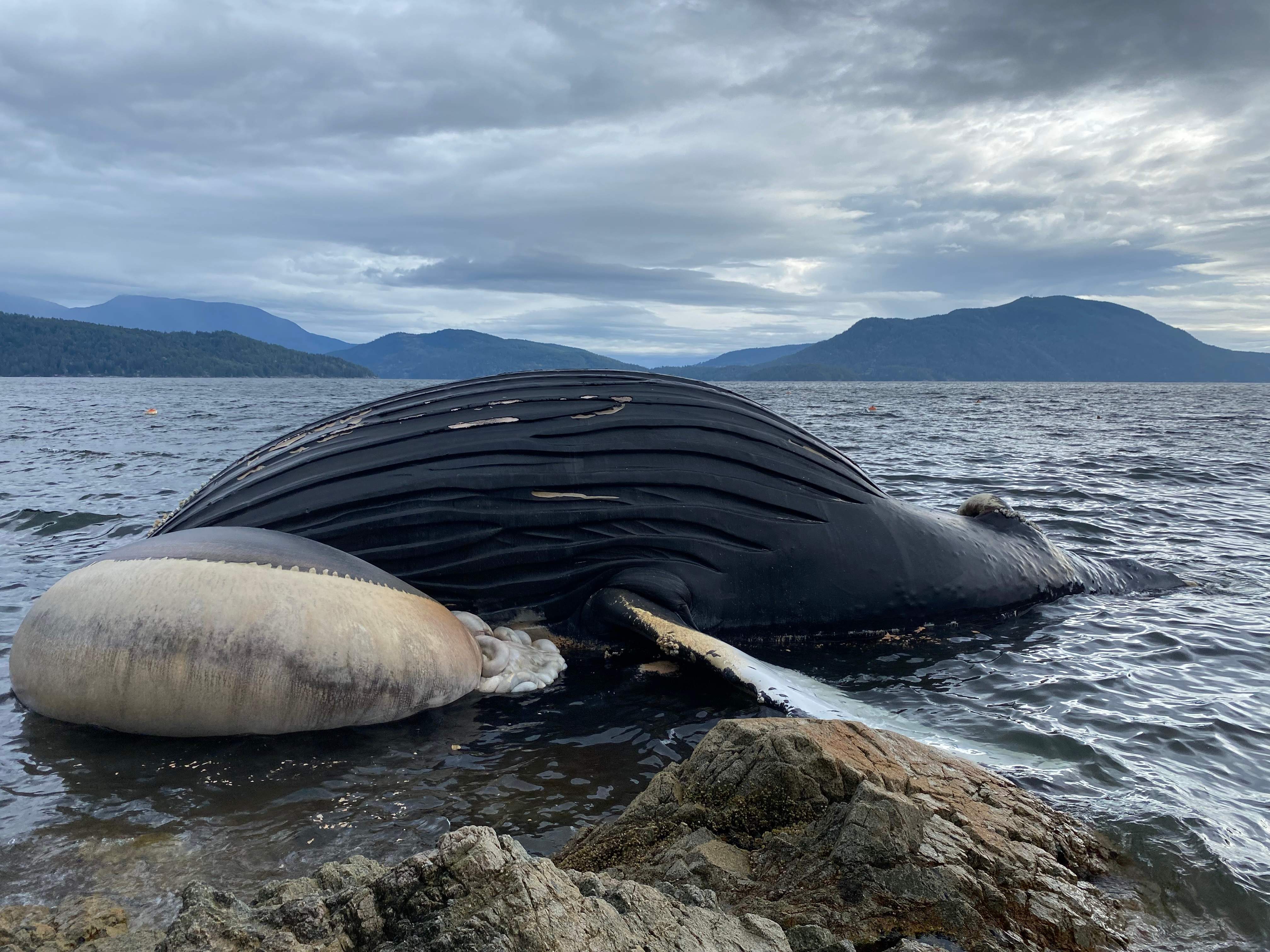
A 40-ton humpback whale doesn't stand a chance against a 10,000-ton steel ferry moving at 18 knots.
In September 2024, the coastal marine community in British Columbia lost one of its most recognizable residents. Notcho, a well-documented humpback whale cataloged as BCX1333, died after colliding with a BC Ferries vessel in the waters near Vancouver Island. The incident sparked immediate outrage among marine biologists, whale-watching operators, and coastal residents who have spent decades watching humpback populations bounce back from the brink of commercial whaling extinction.
Yet most news coverage treated Notcho's death as an isolated tragedy—a sad accident in busy shipping lanes. That framing misses the point entirely. Notcho wasn't just an unlucky whale in the wrong place at the wrong time. His death exposes a growing, predictable collision course between recovering whale populations and high-speed marine traffic along the British Columbia coast.
Who Was Notcho and Why Did His Death Hit Coastal Communities So Hard
If you've ever gone whale watching out of Vancouver, Nanaimo, or Campbell River, there's a solid chance you've seen Notcho. Marine researchers with the Marine Education and Research Society (MERS) first documented him years ago, and he became an instant favorite among spotters because of a distinctive notch on the trailing edge of his dorsal fin.
Unlike transient whales that pass through the Salish Sea for a few weeks before heading south, Notcho was a regular. He returned season after season to feed in the nutrient-rich waters of the Strait of Georgia and Johnstone Strait.
Researchers track individual humpbacks using the unique black-and-white pigmentation patterns on the underside of their tail flukes, along with dorsal fin scars. Over years of photo-identification work, organizations like MERS and Fisheries and Oceans Canada (DFO) built a detailed life history for BCX1333. He wasn't an anonymous number in a database. Spotters knew his feeding habits, his preferred channels, and his resilience—having survived previous entanglements and close calls before the fatal vessel strike.
When news broke that a BC Ferries ship had struck and killed him, the grief across the Pacific Northwest felt personal. When a recognizable individual dies from a preventable human cause, it forces everyone paying attention to confront the math of vessel strikes.
How the BC Ferries Collision Happened
Vessel strikes rarely look the way people imagine. Crew members on massive passenger ferries don't always feel an impact, and passengers on the sun deck almost never see a whale directly in front of the bow.
BC Ferries confirmed that one of its vessels reported a whale strike while transiting its regular route. Following standard protocol, the ferry operator notified Fisheries and Oceans Canada and marine mammal response teams immediately. Later verification of the carcass confirmed the worst fears of local researchers—the distinct dorsal notch and fluke markings belonged to Notcho.
Here's the brutal physics behind why these collisions turn fatal so quickly.
A commercial passenger ferry cruising between 15 and 20 knots generates massive hydrodynamic forces around its hull. When a whale surfaces to breathe near the bow, the suction effect—known as hydrodynamic drawdown—can actually pull the animal toward the hull rather than pushing it away. Even if a bridge crew spots a blow 500 meters ahead, a vessel displacing thousands of tons needs considerable distance to alter course or bleed off speed safely without endangering hundreds of passengers onboard.
Blunt-force trauma from the bulbous bow or catastrophic lacerations from twin propellers leave virtually zero margin for survival. In Notcho's case, the impact proved fatal.
The Humpback Comeback Nobody Prepared Our Shipping Lanes For
To understand why BC Ferries and commercial shipping companies are suddenly hitting more whales, you have to look at what happened in the North Pacific over the last thirty years.
Commercial whaling wiped out roughly 90 percent of North Pacific humpbacks before international protections took hold in the 1960s and 1970s. For decades, seeing a humpback in the Salish Sea was front-page news. Shipping routes, ferry schedules, and speed regulations were built during an era when the waters were largely empty of large baleen whales.
Then conservation actually worked.
Humpback whales returned to British Columbia waters in what researchers call the "Humpback Comeback." According to data compiled by the Marine Education and Research Society and Fisheries and Oceans Canada, hundreds of individual humpbacks now feed in BC coastal waters every year between spring and late autumn.
The problem? Our marine infrastructure didn't adapt to their return.
- Ferry schedules remain tight: BC Ferries operates on strict timetables connecting Vancouver Island, the mainland, and the Gulf Islands, leaving little room for unscheduled slowdowns.
- Feeding grounds overlap transit corridors: Humpbacks follow herring and krill into narrow passes and deep channels—the exact same geographic bottlenecks ferries must navigate.
- Humpbacks are terrible at dodging boats: Unlike Dall's porpoises or Pacific white-sided dolphins that actively surf bow waves, humpbacks are slow-moving grazers. When they're locked onto a bait ball or resting at the surface between deep dives, they barely react to approaching engine noise.
Honestly, calling these incidents "accidents" feels disingenuous when you put dense shipping lanes right on top of critical feeding habitat without changing speed limits.
Why Vessel Speed Is the Single Biggest Factor in Whale Survival
Marine biologists have studied ship strikes across the globe—from North Atlantic right whales off New England to blue whales outside the Port of Los Angeles. Every credible peer-reviewed study points to the exact same conclusion.
Speed kills whales.
Research published in Marine Mammal Science demonstrates that the probability of a vessel strike turning lethal drops dramatically when ships slow down to 10 knots or less. At 15 knots, a collision with a large whale carries roughly an 80 percent chance of death. Drop that speed to 10 knots, and the lethality rate falls below 30 percent.
Slowing down gives bridge crews extra seconds to spot a blow or a dark silhouette just beneath the surface. It gives the whale a fighting chance to dive out of the way. And if contact still happens, the reduced kinetic energy significantly lowers the severity of internal injuries.
Yet asking a major ferry corporation to slow down by five or eight knots across dozens of daily sailings triggers immediate pushback. Slower crossings mean missed connections, delayed commercial freight, overtime pay for crews, and angry commuters. So operators rely heavily on observer programs and alert networks instead of mandatory speed reductions.
What BC Ferries Actually Does to Avoid Hitting Whales
It would be unfair to pretend BC Ferries ignores the issue. Compared to many global shipping operators, the company actually invests considerable resources into whale mitigation.
BC Ferries participates in the Whale Report Alert System (WRAS), an initiative developed by Ocean Wise. When spotters, lighthouse keepers, researchers, or commercial mariners log a whale sighting into the WhaleReport app, the system pushes real-time notifications directly to the bridges of participating vessels within a set radius.
Bridge officers on BC Ferries vessels also undergo specialized training through MERS to recognize whale blows, understand humpback behavior, and adjust course when animals are spotted near transit lanes. When crews receive an alert or spot a whale visually, standard procedure calls for posting dedicated lookouts, altering heading where channel width permits, and reducing speed when safe to do so.
Here's where theory runs straight into reality on the water.
Alert systems only work if someone sees the whale first and logs it before the ferry arrives. In choppy seas, fog, rain, or after sunset, visual detection drops close to zero. Humpbacks don't carry transponders. They spend 80 to 90 percent of their time underwater, surfacing unpredictably for a few breaths before sounding again. A ferry captain can follow every rule in the book, monitor WRAS religiously, and still have a 40-ton whale surface fifty yards off the bow in rough water.
Common Misconceptions About Whale Strikes in British Columbia
Whenever a high-profile whale dies, social media fills up with bad takes from people who don't spend time on the coast. Clearing up a few persistent myths helps keep the focus on solutions that actually work.
Whales Can Hear Big Ships Coming and Swim Away
You'd think a massive ferry churning through the water would sound like a freight train underwater, giving whales plenty of warning. In practice, acoustic physics works against them. Large vessels radiate most of their propeller noise backward and to the sides, creating an acoustic shadow zone—a "quiet cone"—directly in front of the bow. A whale resting or feeding right in the ship's path often doesn't hear the vessel until it's already looming overhead.
Only Recreational Boaters Cause Problems
Small pleasure craft definitely harass whales when careless boaters ignore the mandatory 100-meter or 200-meter approach distances required under Canadian Marine Mammal Regulations. Small boats cause stress, disrupt feeding, and occasionally inflict propeller wounds. However, large commercial vessels—ferries, cruise ships, container vessels, and tugs—account for the vast majority of instant, blunt-force fatalities because of their mass and draft.
Reporting a Dead Whale Doesn't Change Anything
Some boaters hesitate to call in sightings or carcasses because they assume government agencies already know or won't act. That's dead wrong. Every verified necropsy and photo-ID confirmation feeds directly into Transport Canada and DFO risk models. Those datasets are the exact evidence regulators use to justify seasonal slowdown zones and shipping lane adjustments—like the mandatory slowdowns already enforced in parts of the Salish Sea to protect endangered Southern Resident killer whales.
What Needs to Change Before More Whales Like Notcho Die
Losing Notcho should be a wake-up call, not just another sad headline that fades after a weekend news cycle. Protecting recovering humpback populations in British Columbia requires moving past voluntary measures and reactive alerts.
First, Transport Canada and Fisheries and Oceans Canada need dynamic seasonal slowdown zones in high-density humpback feeding corridors—not just for killer whales, and not just voluntary guidelines. When aerial surveys or acoustic buoys confirm high concentrations of feeding humpbacks in specific channels between May and November, commercial vessels and ferries should face mandatory speed caps of 10 to 12 knots through those hotspots.
Second, thermal imaging and automated blow-detection cameras need wider deployment on ferry bridges. Infrared systems have improved dramatically over the last few years, capable of picking up the warm plume of a whale's exhale in darkness or moderate sea states long before human eyes catch it.
Third, schedule padding during peak whale months has to become part of operational planning. Building an extra 10 to 15 minutes into select routes during peak autumn feeding season gives captains the operational freedom to slow down without blowing up the entire coastal transit schedule.
How You Can Help Protect BC Whales Right Now
If you live on the coast, travel by ferry, or spend time on the water in British Columbia, you don't have to sit around waiting for federal policy updates to make a difference.
- Download the WhaleReport app by Ocean Wise. Even if you're standing on the outer deck of a BC Ferries vessel or walking a coastal trail, logging a whale sighting sends an immediate alert to commercial captains operating nearby.
- Respect the legal distance buffers on the water. If you operate a kayak, sailboat, or powerboat, stay at least 100 meters away from humpbacks—and 200 meters away if they're resting or accompanied by a calf. Put your engine in neutral if a whale surfaces unexpectedly near your hull.
- Report injured, entangled, or deceased whales immediately. Save the DFO Marine Mammal Incident Hotline (1-800-465-4336) in your phone before you head out on the water. Fast reporting allows trained response teams to document injuries, perform necropsies, and gather the hard evidence required to enforce stronger shipping protections.
- Support organizations doing the frontline tracking. Groups like the Marine Education and Research Society (MERS) and Ocean Wise rely heavily on public funding to maintain whale catalogs, train mariners, and push evidence-based policy changes.
Notcho survived decades of ocean hazards, industrial noise, and fishing gear only to be killed in a transit lane humans refused to slow down for. Until coastal regulators treat speed limits in whale habitat as non-negotiable, he won't be the last.


