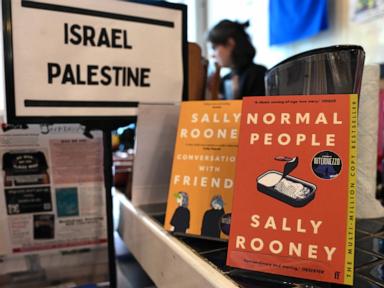
Walk past a British bookshop window right now and you're likely to see readers asking for Normal People or Conversations With Friends only to hit a sudden, legal brick wall.
In October 2026, Irish novelist Sally Rooney announced she can no longer sell her books in the UK after her publisher, Faber, determined that supplying her titles and transferring UK royalties risked breaching Britain's counter-terrorism laws over her public backing of Palestine Action.
That single announcement triggered an immediate scramble across British bookselling. Independent shops rushed to reorder stock while stock counters dipped toward zero, readers hurried to grab remaining copies, and publishers, civil liberties groups, and critics clashed over where free expression ends and terrorist financing or support laws begin.
Why UK Bookstores Scrambled When Rooney's Books Were Withdrawn
When a major literary name disappears from a publisher's supply chain overnight, bookshops don't move in lockstep. Some see an urgent run on existing inventory, while others worry about compliance and legal exposure.
Following the October 14, 2026 news, booksellers at shops like London Review Bookshop and Henry Pordes Books spoke openly about how the withdrawal played out on the ground. At London Review Bookshop, staff rushed to put in orders the moment the news broke, watching availability drop toward zero and anticipating strong demand they wouldn't be able to replenish through Faber. Meanwhile, booksellers at Henry Pordes Books noted that existing copies in stock weren't directly tied to paying Rooney new proceeds on those items, even as they weighed the politics and legality of the ban.
Honestly, this is where real-world bookselling gets messy. In theory, a "book ban" sounds like police storming into Waterstones and hauling paperbacks off shelves. In practice, British publishing and retail operate through licensing contracts, wholesale distribution, royalty accounting, and strict statutory liability. When a publisher concludes that fulfilling contracts or channeling funds could cross a criminal line under proscription rules, the supply tap turns off—even if readers already own copies or shops still have leftover stock.
The Legal Trigger Behind the Withdrawal
To understand how novels by one of the biggest literary sellers of the past decade ended up caught in counter-terrorism enforcement, you have to look back to July 2025.
That was when the UK proscribed the direct-action protest group Palestine Action as a terrorist organisation. Once a group is proscribed under UK counter-terrorism law, supporting it—or dealing with funds connected to that support—carries severe criminal penalties.
Rooney hadn't been quiet about her stance. In an August 2025 piece for The Irish Times, she stated plainly that she intended to use proceeds from her work and her public platform to continue supporting Palestine Action and direct action against genocide. That explicit link between literary earnings and a proscribed group is what turned a political debate into a publishing and financial crisis for Faber.
Faber confirmed that UK legislation prevents the house from transferring Rooney's British sales earnings to her, calling the situation "unconscionable". Rooney herself had already canceled a planned trip to Britain to accept a literary award out of concern she could face arrest over her support for the group.
Two Clashing Views on Free Speech and Counter-Terrorism
People reading about this story tend to split sharply, and both sides think the other is missing the point.
On one side are critics of the ban—including Rooney, civil liberties advocates like Amnesty International, Palestine Action co-founder Huda Ammori, and sympathetic booksellers. From their angle, proscribing a direct-action protest group and then blocking a celebrated novelist's books and royalties amounts to heavy-handed censorship and a chilling blow to freedom of expression. Critics have also pointed to the scale of arrests linked to Palestine Action protests—reporting roughly 2,500 people charged largely over placards expressing opposition to genocide and support for the group while legal challenges play out—arguing the law sweeps far too broadly.
On the other side are defenders of strict enforcement, such as Campaign Against Antisemitism, which reported Rooney to counter-terrorism police over her vow to direct proceeds toward Palestine Action. Their argument is straightforward: once Parliament designates a group as a terrorist organization, an author cannot pledge book profits to support it and claim immunity from the legal consequences.
What's debatable here isn't whether the withdrawal happened—Faber and Rooney have both spoken publicly about it. What remains contested is whether applying counter-terrorism restrictions to an author's commercial publishing relationship is a necessary enforcement of law or an overreach that punishes literary speech and political dissent. With a Supreme Court challenge to the proscription pending, the legal boundaries are still being tested.
What This Means for Readers, Writers, and Bookshops
If you're a reader or someone watching how publishing handles political flashpoints, a few practical realities stand out right now.
First, don't confuse a wholesale supply halt with a total erasure of every copy in circulation. Existing physical books sitting in independent shops, charity shops, libraries, or secondhand listings aren't the same thing as a publisher shipping new stock or remitting new author royalties under a live contract. Still, if a shop's distributor cuts off replenishment, new copies dry up fast.
Second, authors with global platforms face real cross-border friction when domestic laws clash with political commitments. Rooney writes from Ireland, yet the UK market has long been central to English-language publishing and book tours. Stepping away from UK sales and travel isn't just symbolic; it changes how books reach British readers and how earnings move.
Third, if you're tracking this story or running a bookshop or reading group, stick to primary updates and legal milestones. Watch how the UK Supreme Court challenge to Palestine Action's proscription progresses, check official statements from Faber and reputable news outlets rather than social media rumors, and if you're trying to source a copy legally in the UK, check with independent booksellers about remaining stock before assuming what is or isn't available.