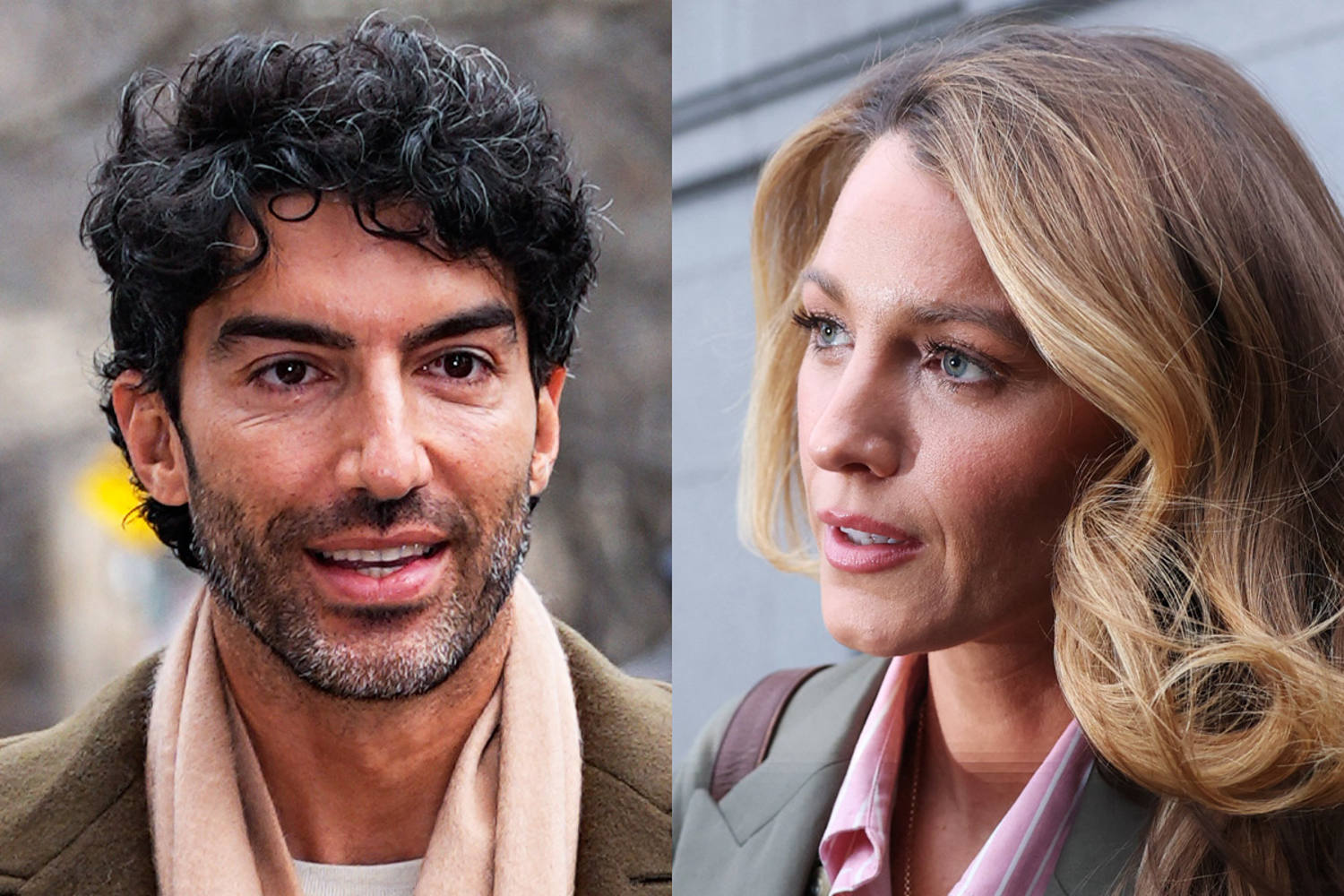
The camera flash is a predatory thing. It doesn’t just capture a moment; it hunts for the flicker of an eye, the tightening of a jaw, or the microscopic distance between two people standing on a step-and-repeat. For months, the world watched Justin Baldoni and Blake Lively through the lens of a press tour that felt increasingly like a hostage situation. Now, the smiles have officially been retired. The stylists have packed away the floral couture. The battle has moved from the bright lights of a premiere to the fluorescent hum of law offices where the only thing being "it ends" is a professional partnership.
Behind every legal filing is a human ego in crisis.
When we talk about Justin Baldoni and Blake Lively’s legal teams hashing out details ahead of a trial, it is easy to view it as a boardroom chess match. We see the headlines about "creative differences" or "on-set friction" and treat them like scores in a game. But to understand the true weight of this collision, you have to look at the psychological architecture of a film set. Imagine a high-stakes workplace where two people are told they are both the boss, but only one of them gets to hold the final scissors.
Baldoni wasn’t just the leading man; he was the director. He lived with the source material, It Ends With Us, for years. He saw it as his mission, a gritty exploration of domestic trauma. Lively, a titan of industry with her own brand and a massive, loyal following, came in as a producer. In the alchemy of Hollywood, power is rarely distributed equally. It is seized.
The friction began in the edit suite. It’s a small, dark room where the soul of a movie is decided. One person wants a scene to linger on a bruise to highlight the pain. The other wants to pivot to a moment of hope to protect the commercial viability of the film. Neither is inherently wrong. But when those two visions grind against each other for sixteen hours a day, the friendship doesn't just fray. It vaporizes.
The legal teams aren't just arguing over percentages or backend points. They are fighting over the narrative of who is the "hero" of the production and who is the "villain." In a post-social media world, a trial isn't just about a judge’s ruling. It is about the court of public opinion. If Baldoni can prove that his directorial vision was undermined, he preserves his reputation as a serious filmmaker. If Lively can prove that the environment was unmanageable, she protects the shimmering, relatable brand she has spent two decades building.
Consider the hypothetical assistant on that set—let's call her Sarah. Sarah spends twelve hours a day fetching green juices and printing script revisions. She sees the way the air changes when the two stars enter the same room. She hears the sharp, polite tone of a "producer's note" that is actually a demand. For Sarah, this isn't a celebrity gossip item. It’s a memory of a toxic workplace that she is still trying to process. The trial represents a public accounting of those private tensions. It is the moment where the "vibe" becomes a "violation."
Money is rarely the primary motivator in these clashes. These are wealthy individuals. The fight is about legacy. Baldoni took a massive risk on a sensitive subject. To have the narrative of the film’s success hijacked by rumors of a feud is a professional heartbreak. Lively, meanwhile, found herself at the center of a PR firestorm that questioned her empathy and her creative control. When the legal teams sit across from each other, they are trying to put a price tag on a damaged reputation. How much is a "likability" rating worth?
The law is a blunt instrument for such delicate ego work.
The trial looms like a storm front because the discovery process is a digital autopsy. Every text message sent in a moment of frustration, every disparaging email about a co-star’s performance, and every frantic call to an agent will be laid bare. There is no privacy in a lawsuit of this magnitude. The legal teams are currently in the "weighing" phase—deciding if the risk of total exposure is worth the reward of a "win."
In the middle of this stands the book itself and the millions of readers who saw their own survival reflected in the pages. To them, the legal bickering feels like a betrayal of the story’s core message. While the lawyers argue about contract nuances and creative approval rights, the fans are left wondering how a story about breaking the cycle of abuse became a cycle of professional acrimony.
The lawyers are currently locked in a dance of "pre-trial motions," which is really just a fancy way of saying they are trying to hide the ugliest parts of the story before the jury gets to see them. They are fighting over which witnesses can speak and which emails can be admitted. It is a desperate attempt to curate a mess that has already spilled over the sides of the bucket.
We often think of celebrities as untouchable icons, but these legal maneuvers reveal them as deeply, almost embarrassingly, human. They are susceptible to the same insecurities as anyone else: the fear of being replaced, the sting of being ignored, and the desperate need to be right. The "details" being hashed out are the wreckage of a broken trust.
There is a specific kind of silence that happens when a partnership dies. It’s not the absence of noise, but the presence of cold, calculated communication. No more "great job today" texts. No more collaborative lunches. Just a series of formal letters signed by people who charge six hundred dollars an hour. That silence is what a trial sounds like before it starts.
The tragedy of the situation isn't that a movie had drama. Every movie has drama. The tragedy is that the art became secondary to the armor. Both sides have spent so much time preparing for battle that they have forgotten the vulnerability that made the project worth doing in the first place.
As the trial date approaches, the leverage shifts daily. A new leak, a new social media trend, or a new witness statement can change the settlement value in an instant. The lawyers are playing a game of chicken, waiting to see who will blink first and agree to a quiet, confidential settlement that keeps the most embarrassing details out of the public record.
But some bells cannot be un-rung.
Regardless of who "wins" in a courtroom, the image of the two stars standing on that red carpet, miles apart in spirit while inches apart in body, will be the lasting memory of this era. It serves as a reminder that in the world of high-stakes entertainment, the most expensive thing you can own is your own version of the truth.
The ink on the court documents is dry, but the blood under the skin is still hot. This isn't just about a movie. It’s about the terrifying realization that you can work with someone, create something beautiful with them, and still end up as strangers staring at each other through the eyes of a legal team.
The courtroom doors will eventually open. The lights will dim. But this time, there will be no popcorn, no soaring score, and no happy ending written in the script. There will only be the cold, hard facts of two people who reached for the same dream and ended up pulling it apart.