The air inside the mall smells exactly the same as it did in 1996. It is a specific blend of ozone, synthetic carpet fibers, pretzel dough, and the faint, chemical phantom of brand-new plastics. For anyone who grew up in Canada during the final decades of the twentieth century, that scent profile is a time machine.
On a rainy Thursday morning in Toronto, a crowd is gathering. They are not waiting for a sneaker drop. They are not queued up for a tech launch or a concert ticket. They are standing in line for a department store that technically died a decade ago.
When the metal security gates slowly roll upward, revealing the familiar, bold red typography of Zellers, a collective sigh ripples through the crowd. An elderly woman in a plastic rain bonnet clutches her canvas tote bag. A young father with a toddler balanced on his hip points to a wall of stuffed bears. There is an odd, electric tension in the air. It looks like consumerism, but it feels like a wake where the guest of honor just walked through the front door.
We live in an era of hyper-efficiency. You can press a button on a glass screen and have an algorithmic distribution center dispatch a tube of toothpaste to your porch within four hours. The modern retail experience is designed to minimize friction. It wants to eliminate human contact entirely. But in stripping away the friction, we accidentally stripped away the texture of our lives.
The return of Zellers inside select Hudson’s Bay locations across Toronto is not merely a corporate restructuring story or a clever play for market share by a struggling parent company. It is a case study in acute, collective nostalgia. It is proof that in our rush to build a frictionless future, we left something vital behind in the fluorescent-lit aisles of our youth.
The Geography of the Subconscious
Every Canadian of a certain vintage has a Zellers map burned into their brain.
To the left was the pharmacy, always smelling faintly of wintergreen rubbing alcohol. Straight ahead were the towering walls of toys, where the plastic smell was strongest. To the back, past the racks of stiff denim and fleece hoodies, was the holy grail: the restaurant.
It was called the Skillet, or simply the Zellers Restaurant. It featured faux-wood laminate booths, vinyl seats that cracked if you leaned back too hard, and a menu that did not care about your cholesterol. It was a place where grandmothers took their grandchildren for a grilled cheese sandwich after a grueling hour of coupon clipping. It was a place where retired men met at 7:00 AM to drink bottomless black coffee and complain about the municipal budget.
Consider a hypothetical shopper named Sarah. In 1994, Sarah was twelve years old. Her mother worked two jobs, and Saturdays were their only protected time together. That time was spent at the local plaza. They did not have the budget for high-end boutiques, and the gleaming Eaton’s store felt too formal, too restrictive. Zellers was the default setting. It was the place where you could wander without a security guard tracking your movements. It was safe. It was ordinary.
When Target bought out the leaseholds of most Zellers locations in 2011, it was hailed as a corporate triumph. The American giant was going to modernise the northern retail landscape. They were bringing cheap chic across the border. Canadians eagerly anticipated the arrival of the sleek red bullseye.
We all know how that story ended. The Target expansion was one of the most spectacular disasters in retail history, a multi-billion-dollar miscalculation that left hundreds of massive storefronts vacant across the country within two years. But the tragedy was not just financial. The real loss was the quiet erasure of a community hub. Target failed because it assumed Canadians wanted a glossy, idealized version of American consumerism. What they actually wanted was their own messy, predictable backyard.
When Zellers faded away, it took a specific kind of social architecture with it. It was one of the last places where low-income families, suburban teenagers, and fixed-income seniors shared the same physical space without anyone checking their bank balances at the door.
The Chemistry of the Comeback
Nostalgia is a powerful drug, but it is also a volatile business strategy.
The corporate architects behind the Zellers revival understand this. They are not trying to rebuild the massive, standalone warehouses of the past. Instead, they are inserting nostalgic boutiques inside existing Hudson’s Bay department stores. It is a Russian nesting doll of Canadian retail history.
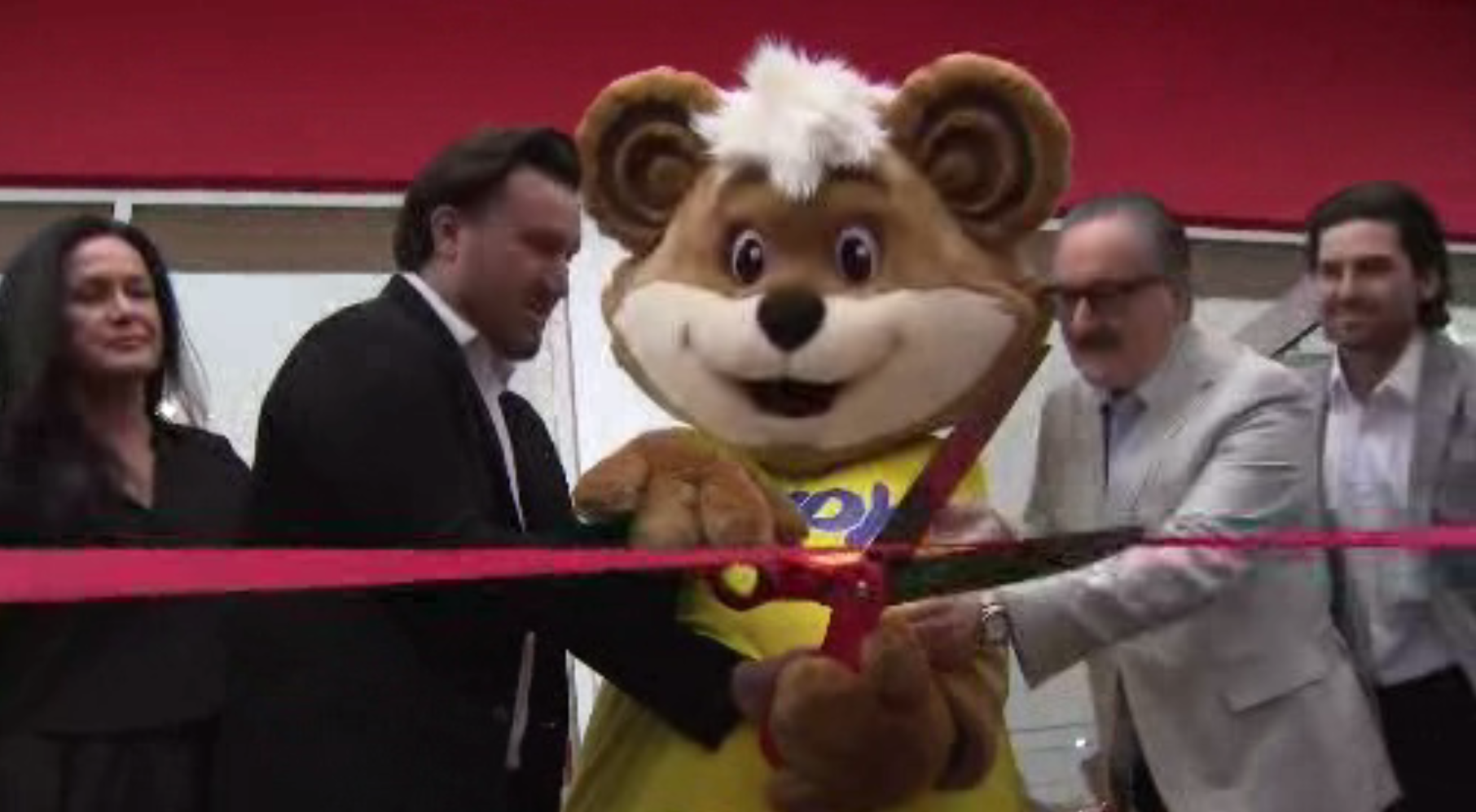
The new spaces are bright, minimalist, and heavily curated. You can buy the classic red-and-white striped blankets. You can buy nostalgic toys and graphic tees featuring Zeddy, the vintage teddy bear mascot who used to advocate for children’s charities from the side of a mechanical ride that cost a quarter.
But the physical reality of the new store creates an immediate cognitive dissonance. The original Zellers was glorious because it was unpretentious. It was slightly disorganized. The floors were linoleum, not polished hardwood. The lighting was harsh, unflattering fluorescent tubes, not the soft, ambient LED spots of a modern department store.
Standing in the middle of the new Toronto location, you see people trying to reconcile the memory with the merchandise. A man in his late late-forties picks up a nostalgic diner-style mug. He turns it over in his hands, checking the price tag. He smiles, but his eyes look slightly distant.
He is not looking at the mug. He is looking at his deceased grandfather, who used to sit across from him in a vinyl booth, pouring half-and-half into a heavy ceramic cup while the rain beat against the shopping center skylight.
This is the invisible currency of the nostalgia economy. Companies are not selling products; they are selling access to a version of yourself that no longer exists. They are selling the feeling of security you had when someone else was paying the mortgage and the world felt small enough to be contained within a single suburban postal code.
The danger of going home again is that the house always feels smaller than you remember. The new Zellers captures the aesthetic markers of the past, but it cannot replicate the social context. The Skillet restaurant is gone, replaced in some locations by a mobile food truck that parks outside the mall, serving simplified versions of the classic crinkle-cut fries and hot chicken sandwiches. It is a clever marketing gimmick, but a food truck on an asphalt parking lot is not a community living room. You cannot sit in a food truck for three hours arguing about the hockey game.
The Loss of the Middle
The emotional response to the return of Zellers reveals a deeper, more troubling economic reality. The enthusiasm is driven by a profound sense of loss, not just for a brand, but for an entire economic stratum.
Zellers was the quintessential middle-market retailer. It was positioned precisely between the basement-bargain liquidation centers and the aspirational department stores. It catered to the solid, comfortable working class. Its slogan was simple: "Where the lowest price is the law." It was a promise that you didn't need to be wealthy to provide your family with dignity, decent clothes, and a hot meal.
In the decades since Zellers disappeared, the Canadian economic landscape has bifurcated. The middle has been systematically hollowed out. Today, shoppers are forced to choose between the ultra-discount dollar store chains or the high-end, lifestyle-branded boutiques. The space where average people could shop with a sense of pride and community has largely vanished.
The crowd gathered in Toronto is a physical manifestation of that missing middle. There are young couples facing an astronomical housing market, seniors navigating inflation on fixed incomes, and immigrants looking for a foothold in a city that grows more expensive by the hour. They are drawn to the red sign because it represents an era when life felt manageable.
But a boutique corner inside a premium department store cannot fix a structural economic shift. It can provide a brief, comforting hit of dopamine. It can spark a conversation between strangers who both remember the specific taste of the Zellers club sandwich. It can make us feel, for an hour or two, like the ground beneath our feet is solid.
The afternoon sun begins to cut through the high glass atrium of the Toronto mall, casting long shadows across the display racks. The initial rush has slowed to a steady stream of browsers. People run their fingers over the plush fur of reproduction Zeddy bears. They pick up retro board games. They talk in hushed, reverent tones, using the specific vocabulary of shared memory.
A mother exits the store, holding her young daughter’s hand. The little girl is clutching a small, red-and-white souvenir bag. She is happy because she got a toy. The mother looks satisfied, but as they walk toward the exit, she pauses for a moment to look back at the big red letters above the entrance.
She remembers a different mall, a different city, and a hand that used to hold hers when she was exactly that small. The store is back, but the hand is gone.
The security gates will come down tonight at nine. The staff will tidy the shelves, smoothing out the rumpled clothing and lining up the mugs so the logos face forward. The red dot on the horizon will remain, a small, bright beacon of what used to be, floating in a sea of polished marble and digital screens. We will keep coming back to it, not because we need to buy anything, but because we are still looking for the way back home.